


SDG 4.3.5 Lifelong Learning Access
Universitas Islam Internasional Indonesia
Commitment to Lifelong Learning and Inclusive Access to Education
Our Commitment
Universitas Islam Internasional Indonesia (UIII) recognizes lifelong learning as an essential dimension of inclusive, equitable, and sustainable education. Learning is not confined to formal academic programmes or to a particular stage of life; rather, it is a continuous process through which individuals develop knowledge, skills, perspectives, and capacities to contribute meaningfully to society.
As an international university committed to advancing Islamic scholarship, humanity, and peace, UIII believes that access to knowledge and educational opportunities should extend beyond the boundaries of the university campus and its formally enrolled student population. The University therefore supports lifelong learning through its academic activities, public engagement, community outreach, institutional partnerships, and various initiatives that facilitate broader access to education.
UIII's commitment to lifelong learning is closely connected to its institutional principles of equality, inclusivity, non-discrimination, and respect for human dignity. These principles are reflected in the University's existing institutional regulations and guidelines, which promote a safe, respectful, and inclusive educational environment for students, academic and administrative staff, and members of the wider community.
UIII's commitment to lifelong learning is reflected in its existing policy framework and ongoing programmes. The University continues to strengthen these foundations by promoting equal opportunities to participate in educational activities, regardless of gender, religion, ethnicity, nationality, disability, socioeconomic background, or other personal circumstances.
Contextual Identity and Statutory Mandate
Universitas Islam Internasional Indonesia (UIII) is a state university with an international character, established under Presidential Regulation No. 57 of 2016 and governed by Government Regulation No. 23 of 2019 on its Statute. Its mission is to advance Islamic scholarship, humanity, and peace both within Indonesia and across the global community. Central to this mission is the synthesis of high-level academic research with transformative public empowerment. UIII recognizes that technical knowledge, civic responsibilities, and professional competencies evolve at an unprecedented pace, necessitating continuous education throughout an individual's lifetime. Consequently, UIII seeks to provide flexible, non-discriminatory lifelong learning (LLL) opportunities that serve non-traditional learners, working professionals, alumni, local communities, and international scholars on equal terms.
Strategic Alignment: International Frameworks and National Legislation
UIII’s commitment to lifelong learning connects global sustainability benchmarks and national statutory mandates:
• International Frameworks & Sustainable Development Goals (SDGs): UIII aligns its approach with UNESCO's understanding of lifelong learning, which encompasses all learning activities undertaken throughout life, across formal, non-formal, and informal settings, to enhance knowledge, skills, and competencies for personal, civic, social, and employment-related purposes. This commitment contributes to United Nations Sustainable Development Goal 4 (SDG 4: Quality Education), specifically Target 4.3 (equal access to affordable and quality technical, vocational, and tertiary education) and Target 4.5 (eliminating gender disparities and ensuring equal access to education for the vulnerable).
• National Education System Mandate: UIII's approach reflects Law No. 20 of 2003 on the National Education System, specifically Article 4(3), which provides that education is conducted as a process of cultural cultivation and empowerment of learners that lasts throughout life.
• Higher Education Statutory Obligations: Law No. 12 of 2012 on Higher Education embeds Community Engagement (Pengabdian kepada Masyarakat) as an essential pillar of the Tri Dharma (the three fundamental obligations of Indonesian higher education institutions). This obliges UIII to deploy its intellectual assets, research facilities, and pedagogical resources for direct public benefit.
Institutional Principles and Policy Framework
UIII's approach to lifelong learning is grounded in the understanding that education must be accessible, inclusive, and responsive to the diverse needs of individuals and communities. The University seeks to ensure that educational opportunities are not restricted by discriminatory practices or unnecessary barriers to participation.
This commitment is supported by institutional regulations and initiatives addressing equality, non-discrimination, campus safety, and accessibility. Among the relevant instruments are Rector's Circular No. 1c/Rek/UIII/SE.01/1/2025 on Strengthening an Inclusive and Anti-Discriminatory Campus, Rector's Regulation No. 17 of 2021 on New Student Admissions, Rector's Regulation No. 12 of 2025 on the Prevention and Handling of Sexual Violence, and Rector's Decree No. 40A/R/2025 establishing the Disability Services Unit.
Together, these instruments provide an institutional foundation for fostering an educational environment in which individuals are treated with dignity, differences are respected, and opportunities for learning and participation are made available on an equitable basis.
In this context, UIII's commitment to lifelong learning is guided by the following principles:
1. Equal Opportunities and Non-Discrimination. UIII promotes equal access to educational opportunities and University-organised learning activities. The University strives to prevent discrimination based on gender, religion, ethnicity, nationality, disability, socioeconomic circumstances, or other personal characteristics. Participation in educational and public engagement activities is encouraged on fair and transparent terms.
2. Inclusivity and Respect for Diversity. UIII values the diversity of backgrounds, experiences, cultures, and perspectives within its academic community and the wider society. The University encourages learning environments that are welcoming, respectful, and conducive to meaningful interaction among people from different social, cultural, religious, and national backgrounds.
3. Accessibility for Persons with Disabilities. UIII recognizes the right of persons with disabilities to participate in education and public activities on an equal basis with others. The University supports efforts to improve accessibility, facilitate appropriate assistance, and develop cooperation with relevant institutions to address barriers to participation.
4. Gender Equality and a Safe Learning Environment. UIII is committed to fostering an educational environment free from gender-based discrimination, harassment, and sexual violence. Through its institutional regulations, awareness-raising initiatives, and dedicated mechanisms for prevention and response, the University promotes respect, safety, and equal participation for all members of its community.
5. Community Engagement and Public Access to Knowledge. UIII believes that universities have a responsibility to share knowledge and contribute to the educational development of society. Through public lectures, community engagement, educational outreach, partnerships, and other learning initiatives, the University seeks to extend educational opportunities beyond its formal academic programmes and campus community.
6. Continuous Learning and Capacity Development. UIII encourages continuous learning and the development of individual and collective capacities. Its educational and community-oriented activities seek to support the acquisition of knowledge, intercultural understanding, professional development, and the ability to respond constructively to changing social needs.
National Regulatory Framework for Lifelong Learning
Universitas Islam Internasional Indonesia (UIII) supports the principles of lifelong learning as reflected in Indonesia's national higher education quality assurance framework. The national regulatory framework recognizes lifelong learning as an important dimension of higher education, both in terms of graduate competencies and the flexibility of educational processes.
Minister of Education, Culture, Research, and Technology Regulation No. 53 of 2023 on Higher Education Quality Assurance, in force until 2 September 2025, and its successor, Minister of Higher Education, Science, and Technology Regulation No. 39 of 2025 on Higher Education Quality Assurance, address lifelong learning in the same provisions:
7. Article 7(d) establishes that graduate learning outcomes include the intellectual ability to think independently and critically as lifelong learners.
8. Article 14(1)(b) requires equal learning opportunities without distinction of educational, social, economic, cultural, or linguistic background, admission pathway, or students' special needs.
9. Article 14(1)(d) requires flexibility in educational processes to facilitate continuing education throughout life.
10. Article 16(1) recognises diverse forms of learning, including seminars, research, student exchange, internships, entrepreneurship, and community service. These provisions establish a national framework that connects higher education with continuous learning, independent intellectual development, and the recognition of diverse learning experiences.
UIII's Integration of Lifelong Learning into Academic Programmes
In line with this national framework, UIII incorporates lifelong learning opportunities into its academic programmes through structured curricular activities and experiential learning. An example is the Master of Finance in Sustainable Finance programme, which explicitly includes dedicated Lifelong Learning courses throughout its curriculum. These courses provide opportunities for students to broaden their knowledge, participate in academic and practical forums, undertake sustainable finance projects, engage in community and international academic activities, improve their academic writing, and gain professional exposure through internships and involvement with corporations, international governmental organisations (IGOs), and non-governmental organisations (NGOs). The integration of these activities into the curriculum reflects the principle that learning extends beyond conventional classroom instruction. It provides students with opportunities to develop their knowledge, apply academic concepts in practical settings, and strengthen competencies relevant to their academic and professional development. Students are required to provide supporting documentation to demonstrate their participation and achievements. Such evidence may include photographs, letters of acceptance, business models, execution canvases, or other relevant supporting documents.
Furthermore, students may propose eligible extracurricular activities undertaken in previous semesters for recognition under the course requirements, provided that the activities have not already been claimed or recognized under another lifelong learning scheme.
This arrangement allows students to demonstrate learning acquired through different experiences and encourages the integration of academic knowledge, practical engagement, and personal development.
| No. | Course | Description |
|---|---|---|
| 1 | Curriculum Map – Master of Finance in Sustainable Finance | Demonstrates the incorporation of dedicated Lifelong Learning courses into the academic curriculum. |
| 2 | Course Assignment Guidelines – Sustainable Finance | Establishes opportunities for students to participate in community activities, international conferences, and sustainable finance business projects. |
| 3 | Course Assignment Guidelines – Supporting Documentation | Specifies the documentation required to demonstrate students' participation and learning achievements. |
| 4 | Course Assignment Guidelines – Previous Semester Activities | Allows eligible extracurricular activities undertaken in previous semesters to be considered for course requirements, subject to the stated conditions. |
UIII's curricular arrangements and course assignment provisions demonstrate practical alignment with the principles established in Indonesia's higher education regulatory framework.
| National regulatory provision | Institutional implementation at UIII |
|---|---|
| Article 7(d): Intellectual ability to think independently and critically as lifelong learners. | Academic enrichment, academic writing enhancement, international conference participation, and independent project development encourage continuous intellectual development. |
| Article 14(1)(b): Equal learning opportunities regardless of background, admission pathway, or special needs. | Admission under Rector's Regulation No. 17 of 2021 is open on equal terms, Rector's Circular No. 1c/Rek/UIII/SE.01/1/2025 prohibits discrimination, and the Disability Services Unit supports students with disabilities. |
| Article 14(1)(d): Flexibility in educational processes to facilitate lifelong learning. | Dedicated Lifelong Learning courses provide structured opportunities to learn beyond conventional classroom instruction, and students may propose eligible extracurricular activities from previous semesters under the course assignment provisions. |
| Article 16(1): Diverse forms of learning, including seminars, research, internships, entrepreneurship, and community service. | UIII incorporates academic forums, international conferences, sustainable finance business projects, community participation, and professional engagement into its learning activities. |
Through these arrangements, UIII translates the national principles of lifelong learning into identifiable curricular components and student learning activities.
Working Definitions
1. Lifelong Learning Activities: Any educational, instructional, or skill-building activity organized or co-organized by UIII that is open to individuals who are not currently enrolled as formal degree-seeking students of the University. This includes public lectures, academic seminars, conferences, workshops, short courses, summer schools, executive education, vocational and professional training, certificate programs, library and physical study-space services, open digital resources, and educational outreach targeting external schools and local communities.
2. Participant: Any individual who registers for, attends, or takes part in a lifelong learning activity organized by UIII, regardless of whether they are a member of the general public, an alumnus, a professional practitioner, or an internal member of the University community.
3. Organising Unit: Any faculty, study program, research centre, administrative directorate, library, office, or specialized training unit within UIII that plans, finances, advertises, or delivers a lifelong learning activity.
4. Reasonable Accommodation: Any appropriate, necessary modification or operational adjustment that enables a person with a disability to participate in a lifelong learning activity on an equal and non-discriminatory basis with others.
These working definitions describe how terms are used in this statement. They apply alongside the University's regulations on non-discrimination, admissions, the prevention of sexual violence, and disability services.
Lifelong Learning in Practice
UIII puts its commitment to lifelong learning and inclusive access to education into practice through open learning facilities, short courses and professional training, funded community engagement, educational outreach, public academic engagement, religious learning, and educational partnerships.
This commitment is reflected in a range of programmes and activities undertaken by its academic and administrative units, often in collaboration with government institutions, civil society organisations, and other partners.
These initiatives demonstrate the University's efforts to make education, knowledge, and opportunities for personal and social development accessible to a wider range of participants.
Open Learning Assets & Facilities
UIII Jusuf Kalla Library
The UIII Jusuf Kalla Library (JK Library) provides free public access to physical reading rooms, specialized research collections, study environments, and digital library catalogues upon simple public registration. It is more than a conventional university library. It provides public visitors with access to physical reading collections, dedicated reading spaces, individual and collaborative study areas, and specialized academic collections.
The library recorded 133,914 visits in 2025 from students, staff, and the public. On 12 September 2025 it received grade A (Excellent) accreditation, the highest national rating, from the National Library of Indonesia.
The library reflects UIII's commitment to lifelong learning, accessible education, community engagement, and the provision of learning facilities beyond its enrolled student population. The library has several types of reading and study spaces; each designed for different learning activities.
Reading and study spaces
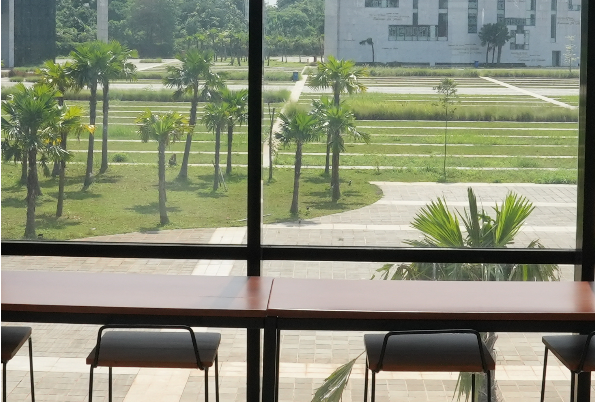
1. Great Reading Hall: The main reading area, featuring spacious reading tables, ergonomic chairs, natural lighting, and a quiet environment. Suitable for individual reading, academic research, and focused study.

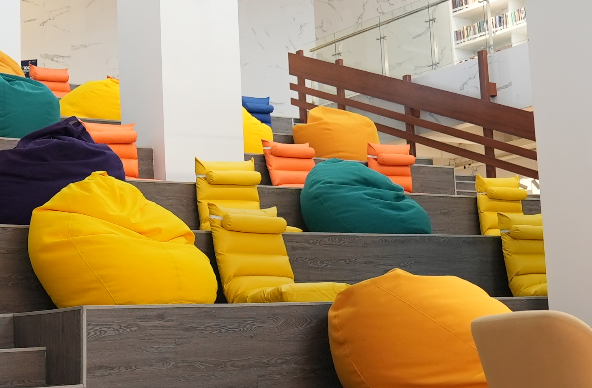
2. Tribunes (Informal Reading Area): A tiered reading and seating area equipped with colourful bean bags. Visitors can enjoy casual reading, independent learning, and informal knowledge-sharing activities. It can also accommodate presentations and public readings.
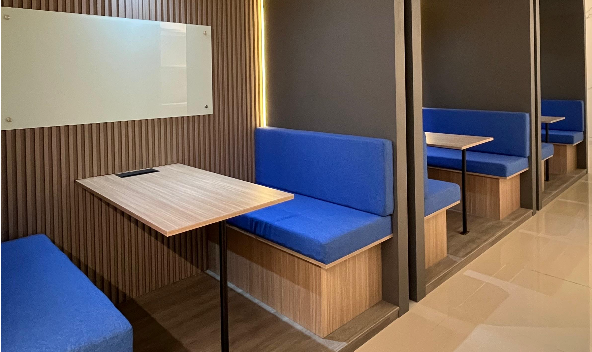
3. Carrel / Individual Study Booths: Semi-enclosed study booths offering a more private environment for reading, working, and concentrating on individual assignments or research.
4. Small Common Room: A quieter, more intimate study and relaxation space with comfortable seating and individual study lamps. The room is suitable for individual or small-group activities.
5. Children's Reading Area: A dedicated reading space with colourful furniture and age-appropriate books, encouraging children to develop reading habits, curiosity, and early literacy skills.
Specialized reading and research collections
In addition to general reading rooms, JK Library provides several distinctive collections that are particularly valuable for academic research.
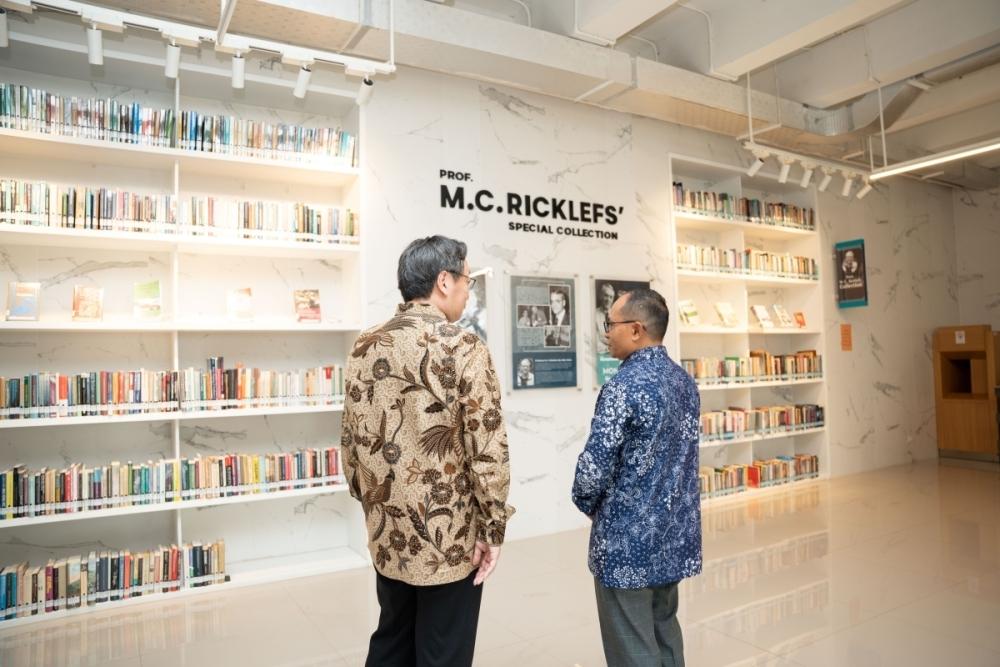
1. Prof. M.C. Ricklefs Collection: A collection of publications on Indonesian history, Islam, and politics, donated by the family of the late Professor M.C. Ricklefs.
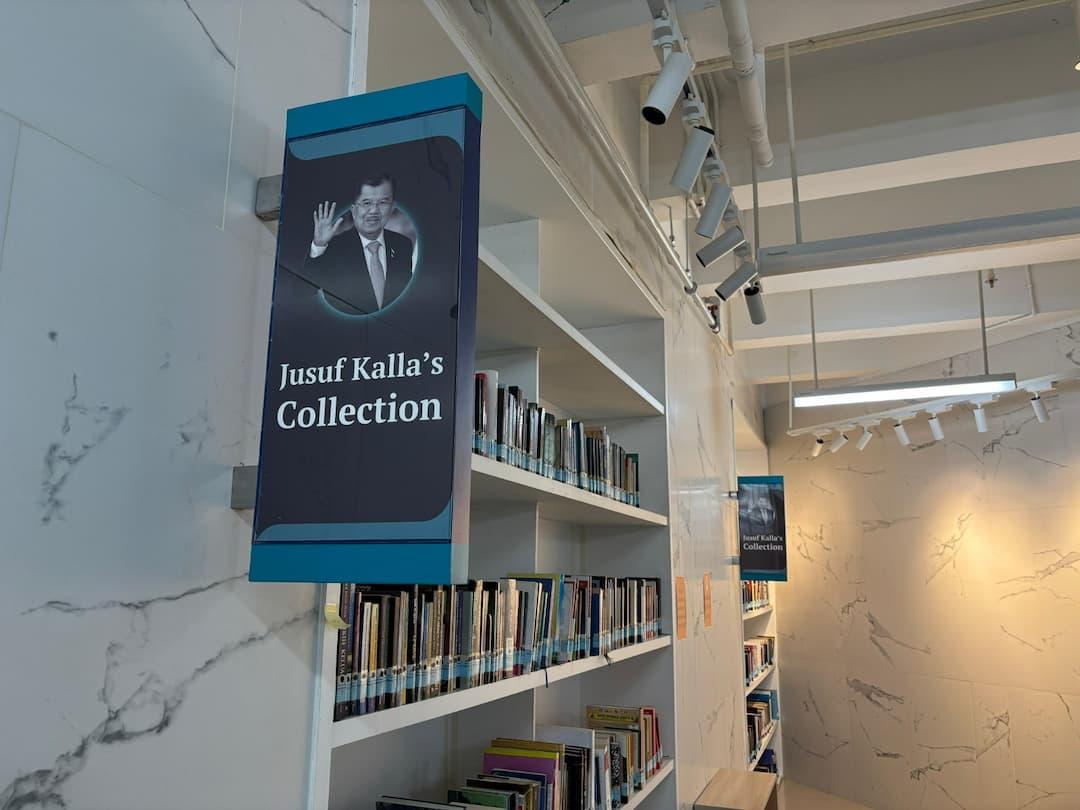
2. Jusuf Kalla Collection: A personal collection donated by H.E. Jusuf Kalla, covering Islam, politics, economics, and his intellectual journey.
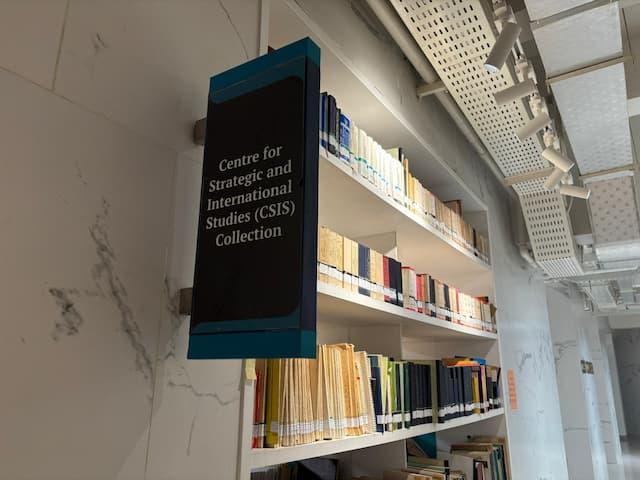
3. CSIS Collection: Publications on Indonesian and Southeast Asian politics, economics, strategic affairs, and international relations.
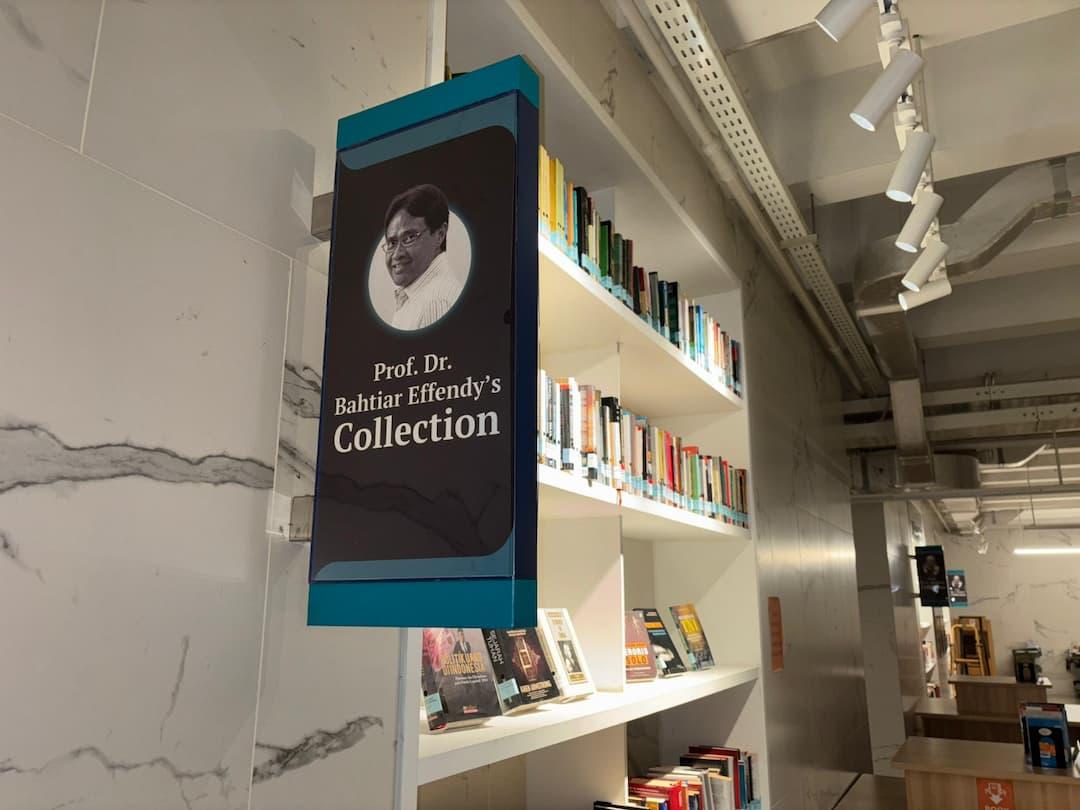
4. Prof. Dr. Bahtiar Effendy Collection: Academic works covering politics, Islam, history, and civic development.
Other collections include Rare Books and Special Collections, Children's Collection, and Jeffrie Geovanie Collection. These resources provide opportunities for visitors, researchers, and the wider community to explore specialized academic literature beyond general reading materials.
Other supporting facilities
Beyond reading rooms, the library provides additional facilities that support lifelong learning and knowledge-sharing.
| Facility | Function |
|---|---|
| Working Space | Individual work, research, and project activities |
| Computer Area | Access to computers for information and learning activities |
| Classrooms | Workshops, lectures, and group discussions |
| Podcast Studios | Academic and educational content production |
| Tribunes | Presentations, public readings, and knowledge-sharing events |
| Daycare | Childcare support for visitors using the library |
These facilities demonstrate that the library supports different learning needs, including formal education, independent learning, collaborative activities, and family-oriented access.
Digital library services
The JK Library also provides digital services that extend access to its collections beyond the reading rooms:
1. Online Public Access Catalog (OPAC)
- Online searching of books, journals, theses, and conference proceedings through the Jusuf Kalla Library website.
2. Electronic Resources
- Access to subscribed e-books, e-journals, and academic databases, including JSTOR, Cambridge Core, and Emerald Publishing.
3. Institutional Repository
- Digital academic outputs produced by UIII's academic community, including theses, dissertations, and research publications. Note: Public visitors can use the physical collections on-site and search the public catalogue. Access to subscribed academic databases and other member-only services may be subject to UIII membership or access arrangements.
Short Courses and Professional Training
In 2025 UIII faculties and units offered short courses and executive training that were open to participants from outside the University:
| Programme and organiser | Date |
|---|---|
| Summer Training on Qualitative and Quantitative Methods (STQ2M), fourth edition, 18 modules; Faculty of Social Sciences | 30 June – 28 August 2025 |
| SCRIPTS Summer Course on Islamic Manuscripts and Texts; Faculty of Islamic Studies | 15–17 July 2025 |
| Executive Training on IFRS S1 and S2 Sustainability Reporting; Faculty of Economics and Business, UIII Sustainability Center, and the Indonesian Institute of Management Accountants (IAMI) | 22–24 July 2025 |
| Masterclass in Digital Humanities, “[Re]searching Digital Islam in Contemporary Indonesia”; Faculty of Islamic Studies | 19–20 August 2025 |
| Mixed Methods Research Training (five sessions); Faculty of Social Sciences | 10–24 November 2025 |
The executive training on IFRS S1 and S2 trained 16 professionals in sustainability disclosure, climate-risk and scenario analysis, and greenhouse gas accounting.
Community Engagement Grant Scheme
Universitas Islam Internasional Indonesia (UIII) extends learning opportunities beyond its degree programmes through funded community engagement. The Community Engagement Grant Scheme enables lecturers and project teams to work with community partners on practical education, skills development, and the sharing of knowledge.
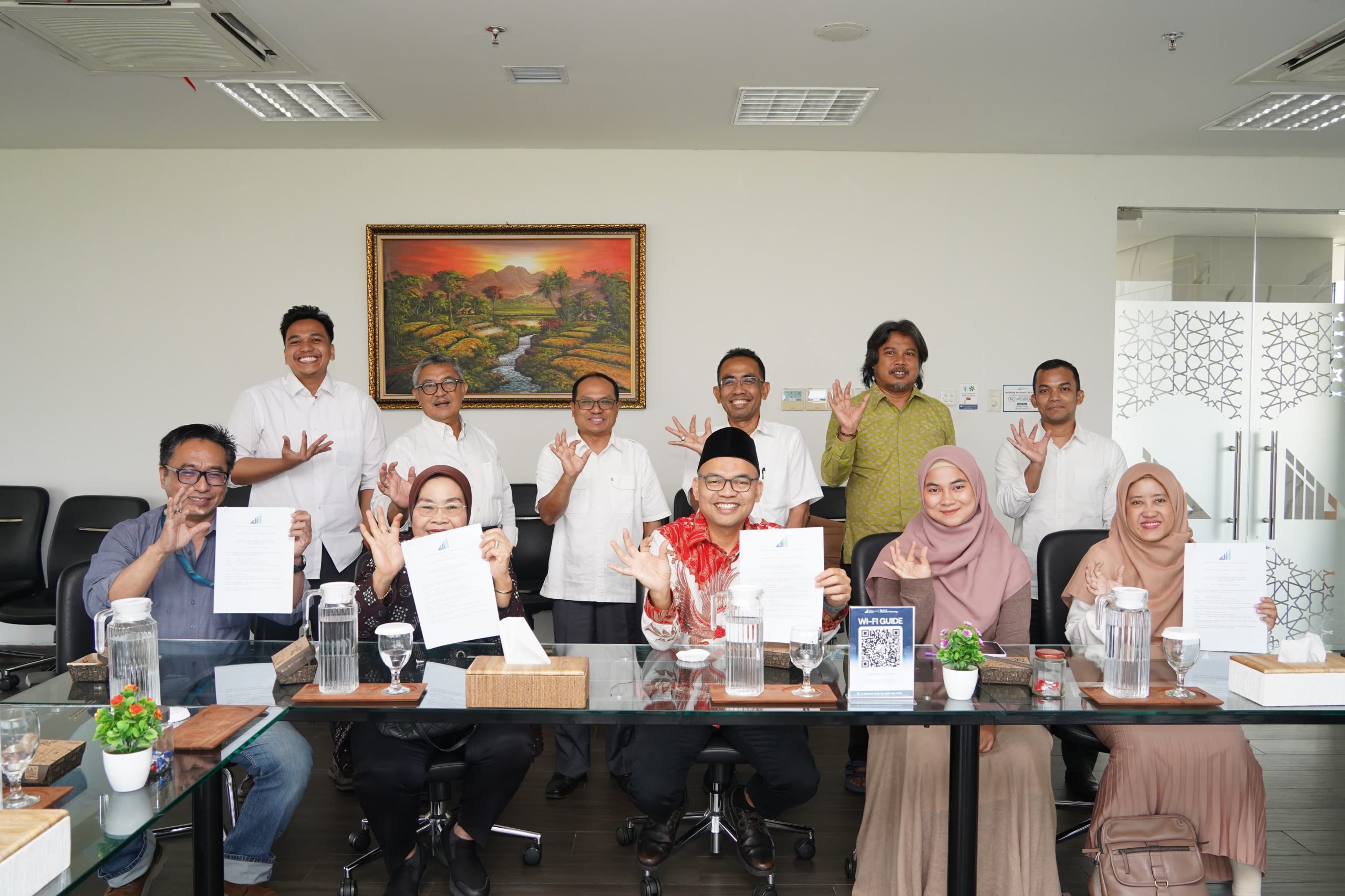
In 2025, UIII gave 15 collaborative community engagement grants after proposal evaluation. Rector’s Decision No. 62/R/2025, dated 6 August 2025, approved the recipients and funding assistance from the University’s 2025 budget. Grant contracts were signed on 11 August 2025. The Directorate of Research, Cooperation, and Community Engagement coordinated the scheme, while faculties and project teams delivered activities with their community partners.
Grant-supported learning reached schoolteachers, parents, and pesantren learners through workshops, mentoring, collaborative exercises, and the development of educational and business materials. The following activities illustrate how UIII’s funding supported continued learning in professional, family, and community settings.
Continuing professional learning for primary school teachers
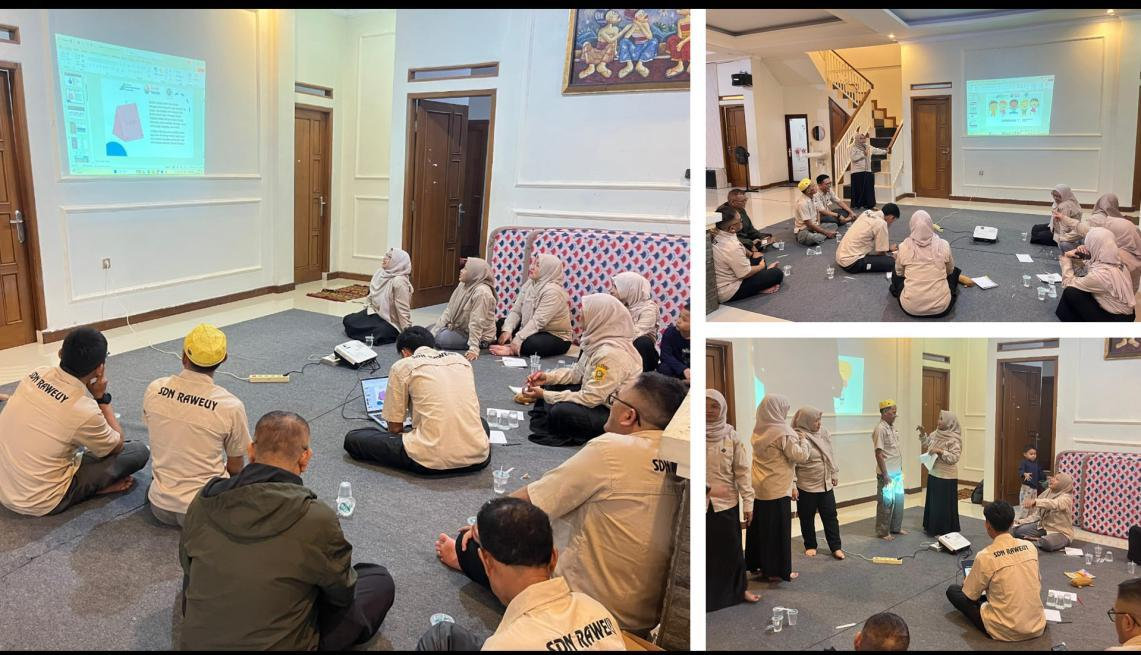
UIII’s Faculty of Education delivered Bridging Cultures and Classrooms, led by Dr. Destina Wahyu Winarti with Faradillah Haryani, in collaboration with Gerakan Berantas Buta Matematika (Gernastastaka) and Jonggol Reformer Educators (JRE). The programme engaged 25 teachers from 12 public primary schools in Jonggol, West Java, in four workshops on culturally responsive mathematics teaching.
Teachers explored their mathematical experiences, connected numbers and classroom tasks with everyday life, and examined how teaching materials could reflect learners’ backgrounds. Practical activities, reflection, group discussion, and a gallery walk supported the design and evaluation of contextual learning tasks.
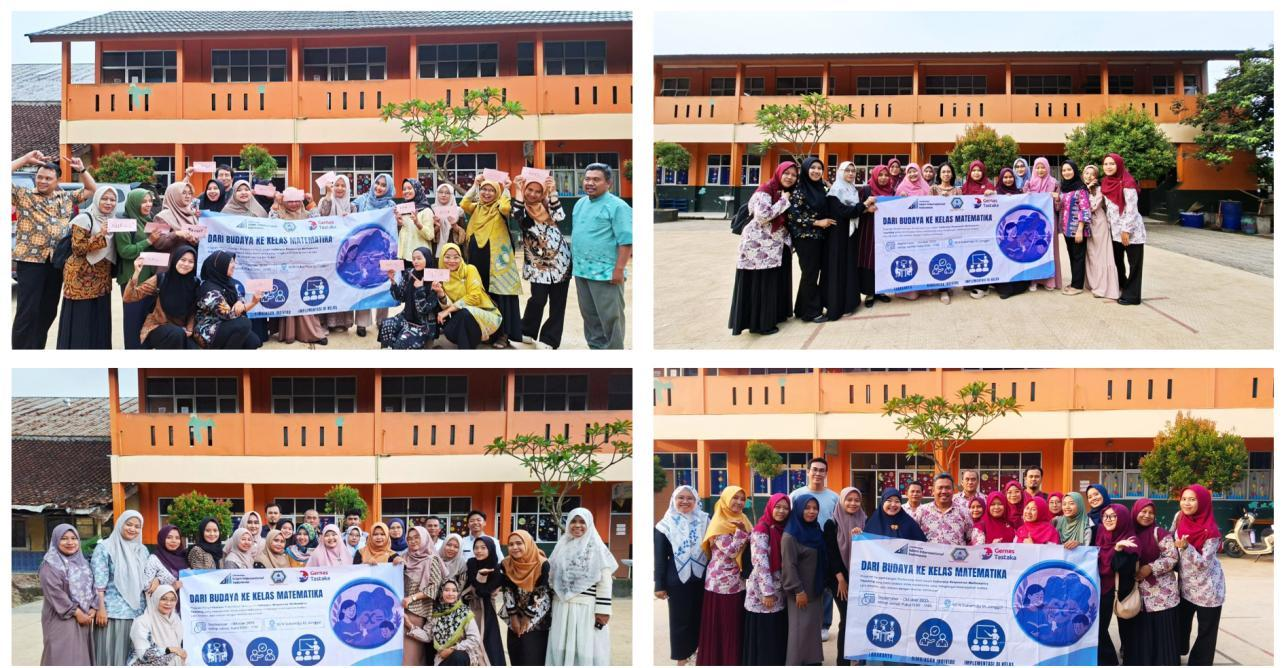
Participant reflections described a shift towards using daily experiences as resources for mathematics and designing learning beyond the textbook. Teachers subsequently shared workshop knowledge through peer-led sessions in their own professional networks. These activities extended professional learning beyond the initial workshops.
Parents as creators of children’s literature
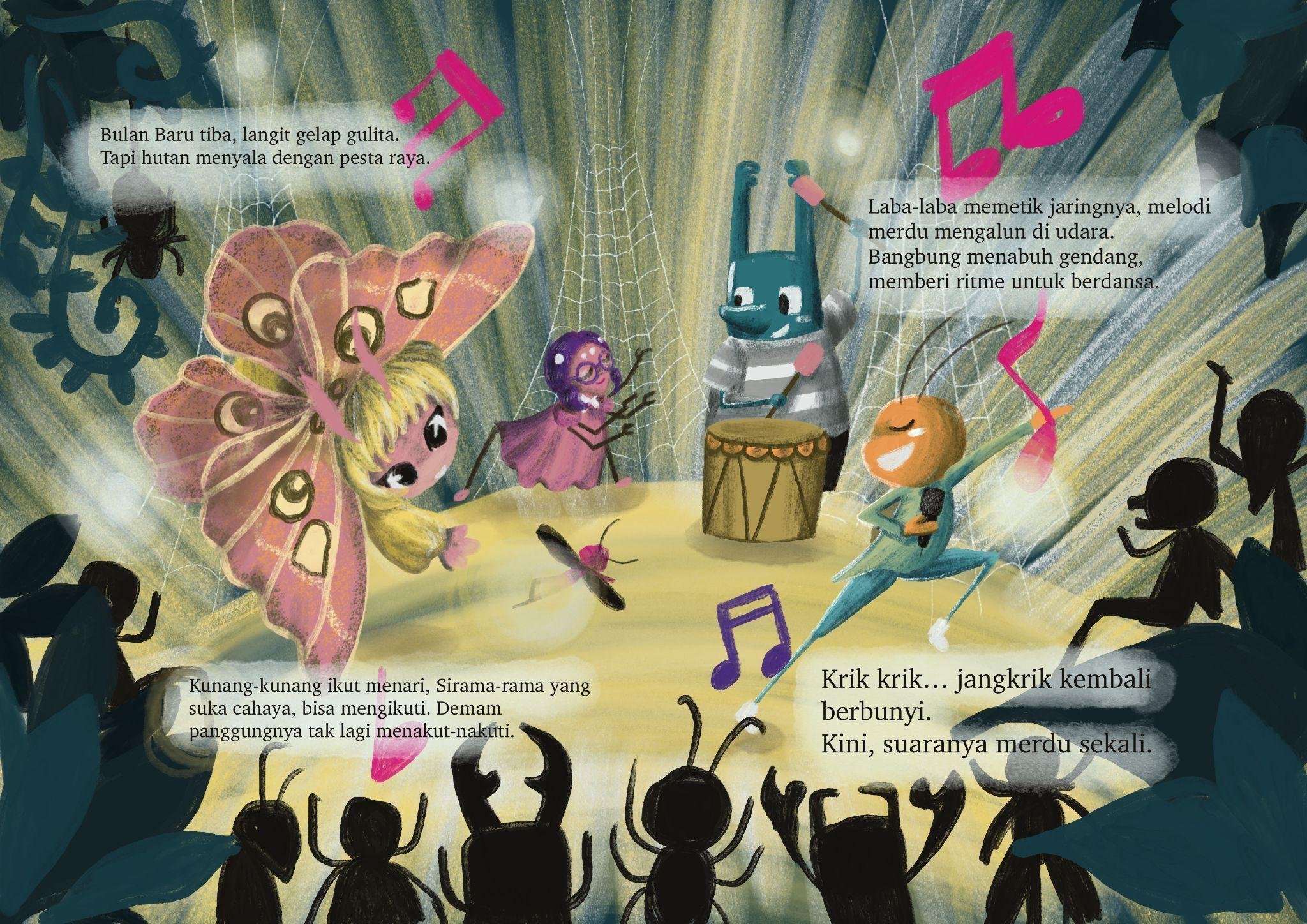
UIII’s Faculty of Education delivered Narratives for Change, led by Tati Lathipatud Durriyah, to strengthen parents’ ability to create children’s literature promoting tolerance, diversity, and moderation. Ten parents from Greater Jakarta participated in writing, illustration, and reading-aloud activities.
The programme combined onsite workshops on 26–27 September and 1 November 2025 with online mentorship on 17 and 24 October. Participants developed stories from children’s perspectives, discussed familiar experiences of difference and fairness, and practised integrating inclusive values into narratives and illustrations.
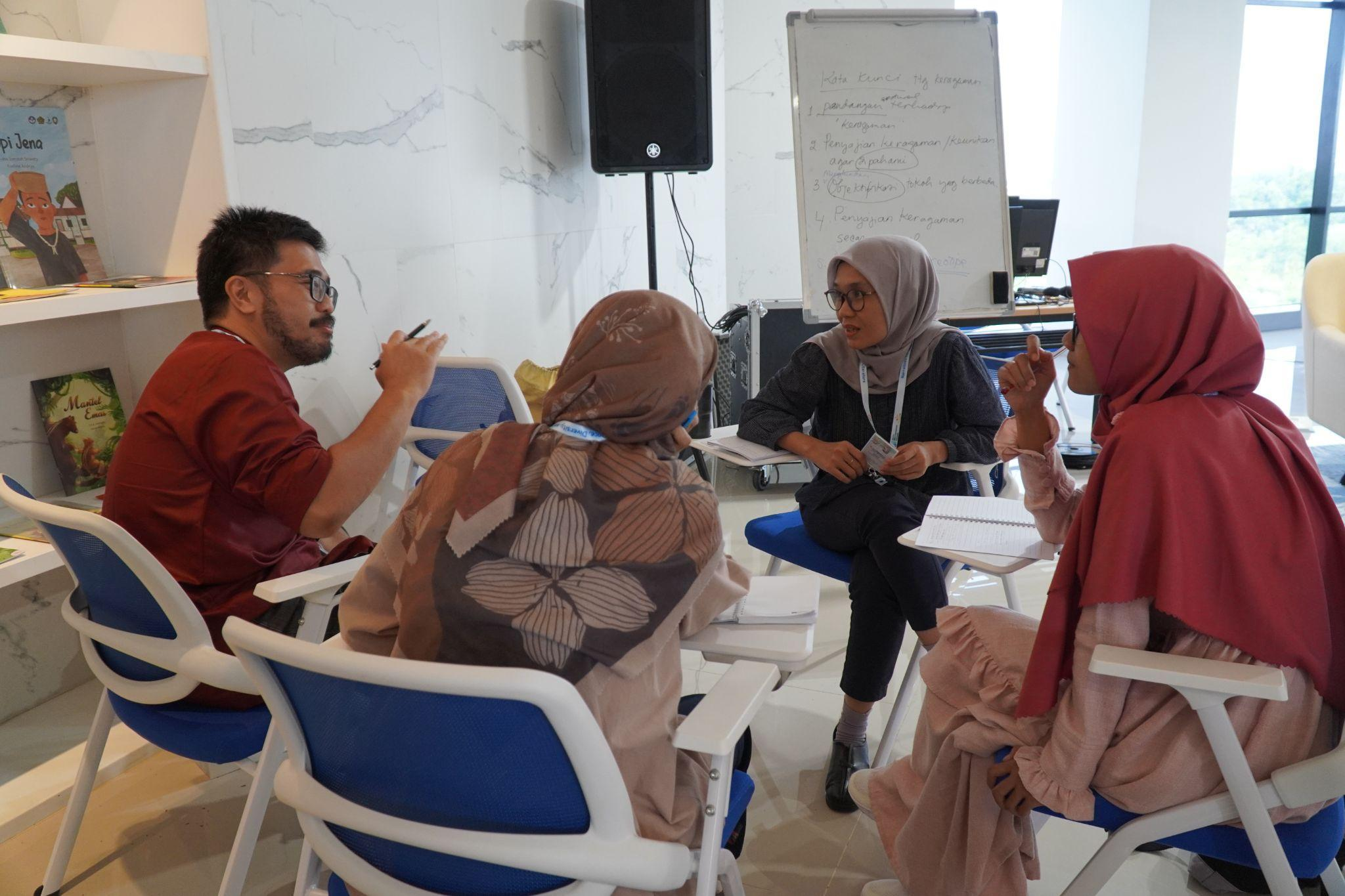
Participants produced illustrated story materials reproduced in the final report. Their average self-rated knowledge score increased from 4.075 to 4.725 on a five-point scale; a Wilcoxon signed-rank test indicated a statistically significant change in this measure (p = 0.028). The programme supported adult learning while equipping parents with resources for children’s literacy and discussions of tolerance.
Entrepreneurship learning with pesantren communities
UIII’s Faculty of Economics and Business delivered SantriPreneur Academy at Masjid Baitul Mukhlisin, Ponorogo, on 26–27 September 2025. Led by Assoc. Prof. M. Luthfi Hamidi, the programme engaged 40 santri from seven pesantren. Partners included BANKZISKA Ponorogo, LAZISMU Ponorogo, BAZNAS Ponorogo, and FEBI UIN Kiai Ageng Muhammad Besari Ponorogo.
Interactive workshops and mentoring introduced Islamic entrepreneurship, financial literacy, micro-business management, and social finance. Participants explored productive zakat, infaq, and cash waqf as potential financing instruments, then used the Business Model Canvas to develop and present community-oriented enterprise ideas.
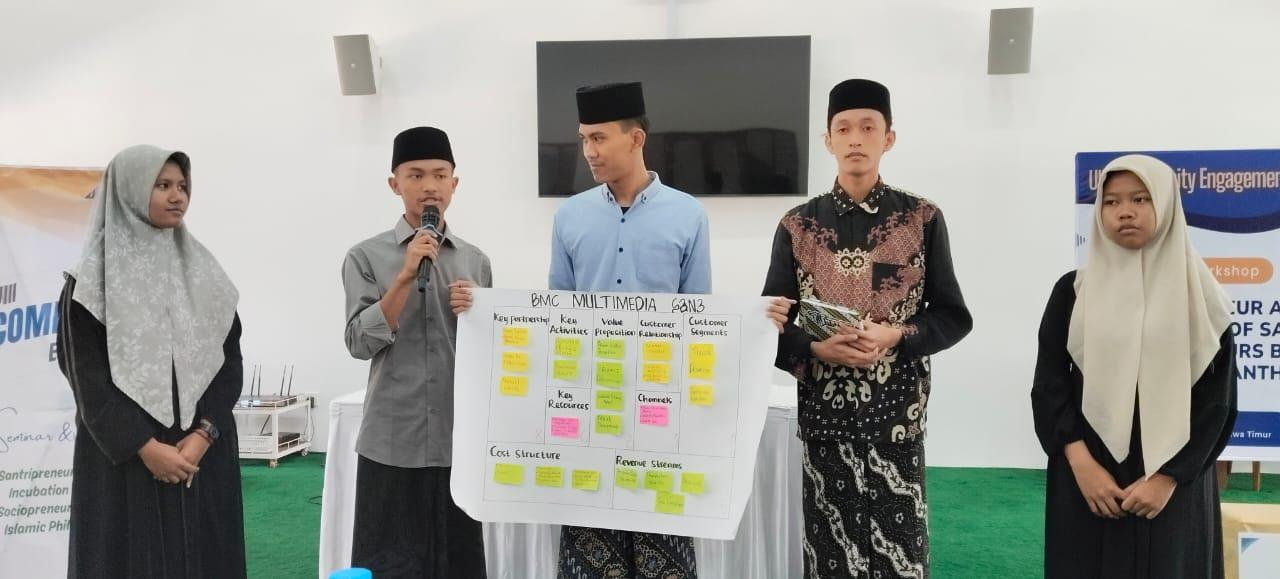
Working in seven groups, participants produced seven initial drafts of social enterprise concepts. Pre- and post-programme self-assessments recorded higher scores on five of six indicators, with one remaining unchanged. These results show participants’ reported learning and readiness after training. The programme provided practical opportunities to connect entrepreneurial skills with Islamic ethical principles and community needs.
Through these grant-supported activities, UIII enabled teachers, parents, and pesantren learners to acquire and share knowledge outside its formal degree programmes. Practical work, mentoring, and locally relevant learning materials connected the University’s expertise with continued learning in community settings.
Educational Outreach and Student Engagement
UIII Mengajar – Community-Based Educational Outreach and Lifelong Learning Initiative
UIII Mengajar (UIII Teaches) is a community-oriented educational outreach initiative organised by the Office of Student Affairs and International Services, Universitas Islam Internasional Indonesia (UIII). The programme aims to extend the University's educational contributions beyond its campus by facilitating teaching activities, knowledge-sharing, educational enrichment, and community engagement in collaboration with schools, local governments, and other community-based institutions.
The programme was initially implemented through an outreach initiative in Situbondo, East Java, on 16–20 August 2025, involving 10 representatives of the UIII Student Union. The programme engaged local educational institutions and communities, providing opportunities for UIII students to contribute directly to educational activities while introducing UIII and its higher education opportunities to local communities.
UIII Mengajar in Situbondo, East Java (16–20 August 2025)
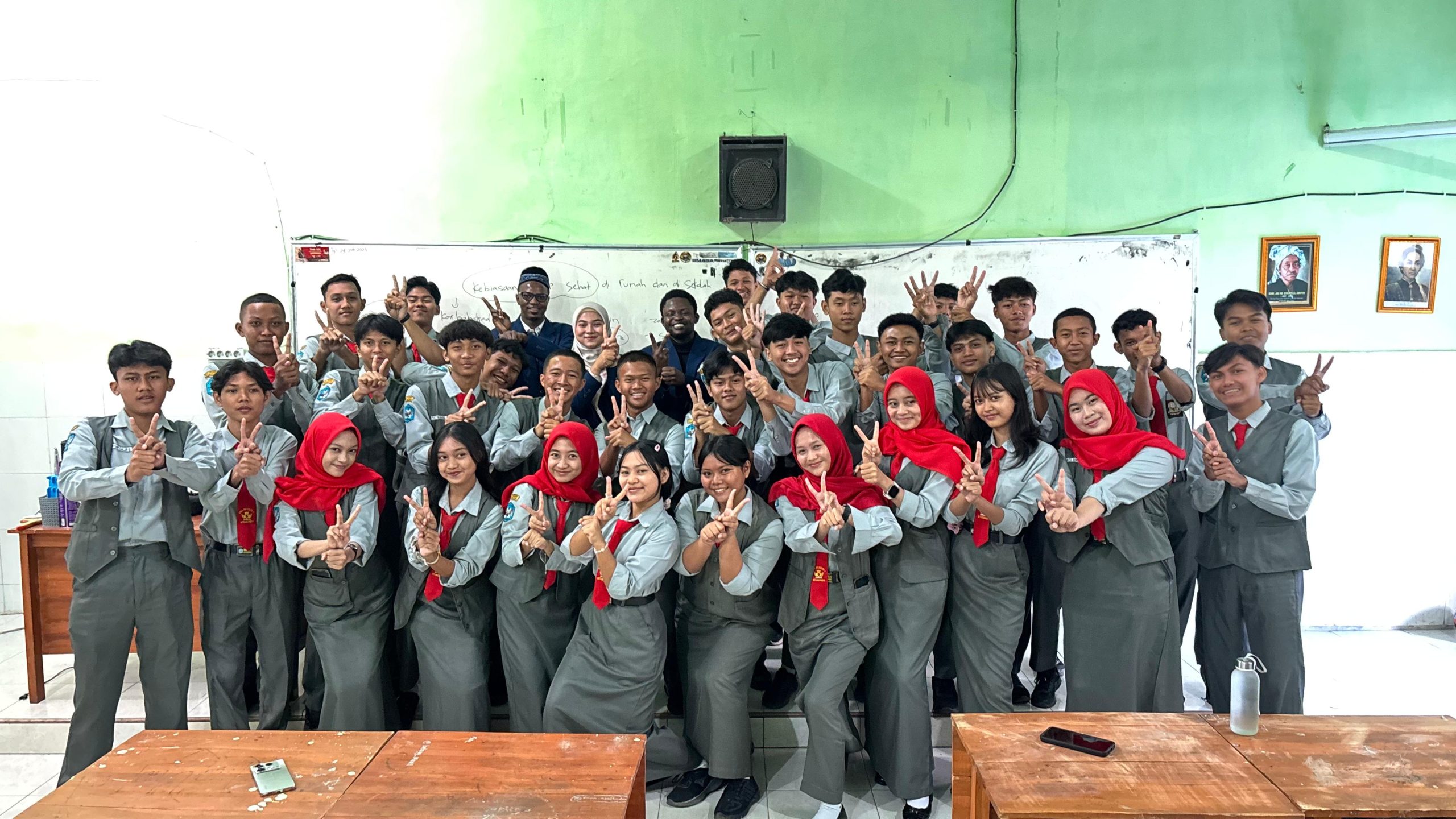
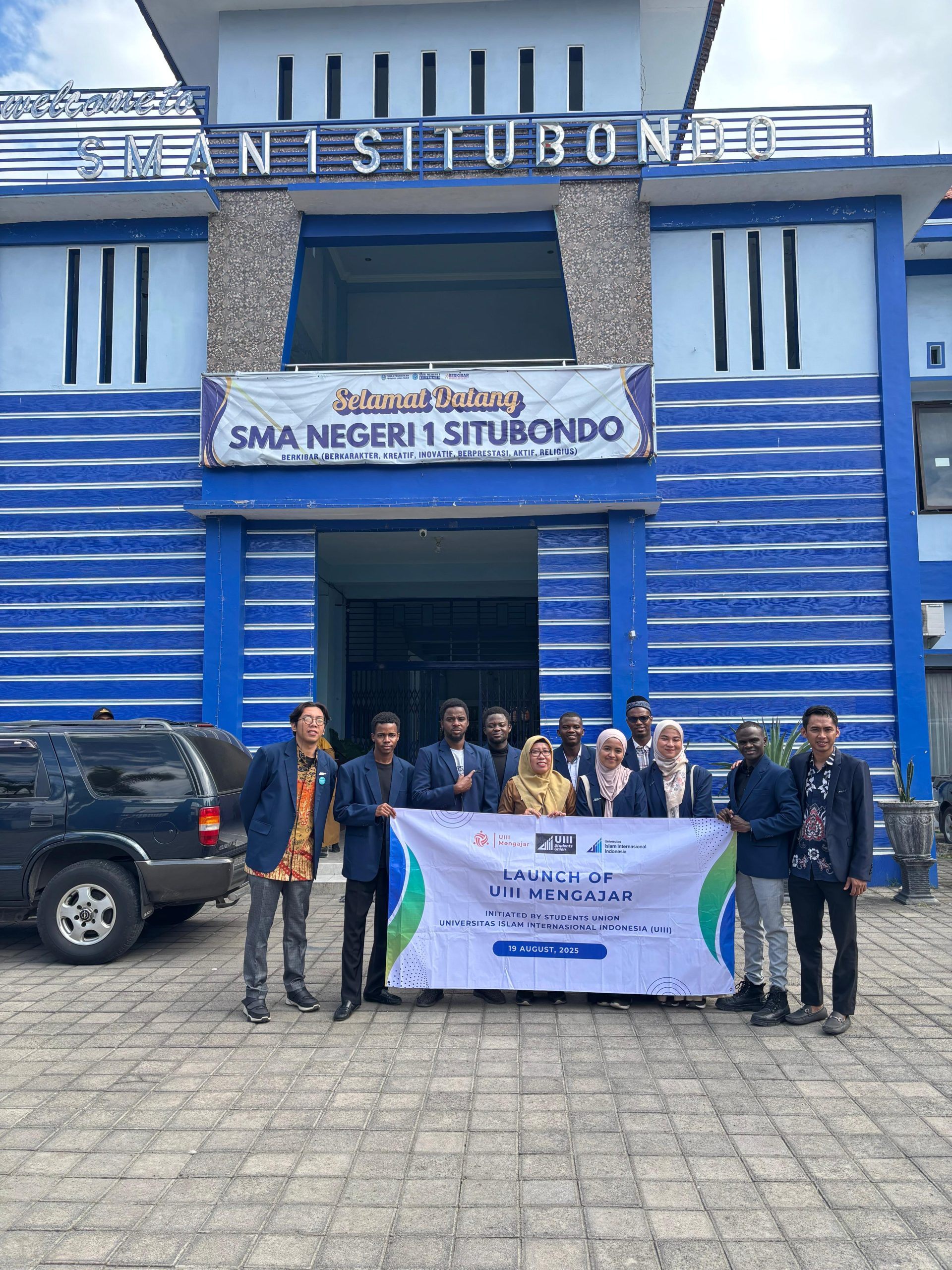
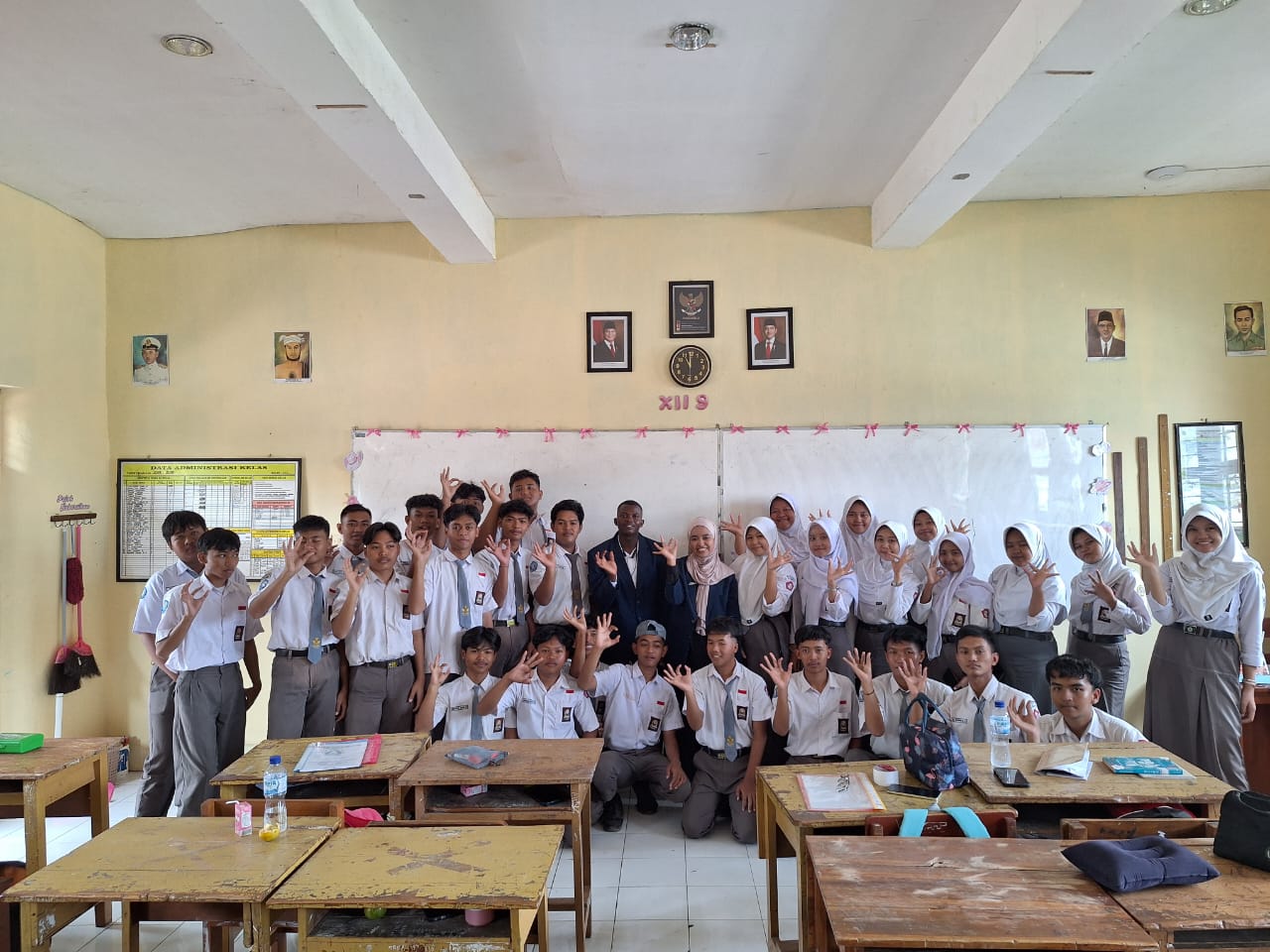
The Situbondo programme was designed as an educational outreach initiative targeting secondary-school students and Islamic boarding school communities. It brought together UIII student representatives to conduct classroom-based learning activities, introduce university-level education, and encourage young people to pursue further education.
The activities reached 20 classes across three educational institutions, as follows:
| Partner institution | Classes reached |
|---|---|
| SMA Negeri 1 Situbondo | 8 |
| SMA Panji | 6 |
| Pondok Pesantren Walisongo | 6 |
| Total | 20 |
The programme involved 10 UIII Student Union representatives who participated as volunteer educators and facilitators.
Main activities and contributions
a. Classroom teaching and educational enrichment. UIII student volunteers facilitated interactive classroom sessions for secondary-school and Islamic boarding school students. The activities provided opportunities for knowledge-sharing, educational interaction, and exposure to different learning experiences through direct engagement with university students.
b. Higher education awareness and university introduction. One of the programme's key objectives was to introduce UIII to local students and communities, particularly by providing information about higher education opportunities, university life, and the importance of continuing education. This initiative sought to broaden students' awareness of educational pathways and encourage them to consider pursuing university studies.
c. Youth motivation and educational inspiration. Through direct interaction with UIII students, participants were encouraged to develop confidence, aspirations, and motivation to pursue further education. The engagement also enabled local students to learn from the experiences and perspectives of university students.
d. Community and cultural engagement. Beyond formal classroom activities, the programme extended its engagement to local communities through a visit to a local arts studio, where volunteers participated in motivational and community interaction activities. UIII also participated in a sub-district food festival as an opportunity to introduce the University and strengthen its visibility and engagement within the local community.
These activities demonstrated that UIII Mengajar was not limited to classroom teaching but also incorporated broader community interaction and educational awareness.
UIII Mengajar with the Depok City Government
Following its initial implementation in Situbondo, UIII Mengajar has developed into a more sustained educational engagement programme in collaboration with the Depok City Government.
This development represents a shift from individual outreach activities towards a more structured and continuous partnership model, enabling UIII to contribute to local educational development through its international academic community, student volunteers, and institutional resources.
Activities in Depok
The programme facilitates educational activities in collaboration with local schools, including:
a. Guest Teaching: Inviting UIII international students to participate as guest teachers and share their knowledge, experiences, and cultural perspectives with school students.
b. English and Arabic Language Learning: Providing additional opportunities for students to practise foreign languages through interactive lessons, conversations, and classroom activities.
c. English Day: Supporting schools in creating an environment where students can practise English in everyday communication.
d. Classroom Assistance and Mentoring: Supporting teachers and students through interactive learning activities, guided discussions, and educational mentoring.
e. Cultural Exchange and International Exposure: Introducing students to different countries, cultures, languages, and international perspectives through direct interaction with UIII's international students.
f. Educational Motivation and Higher Education Awareness: Encouraging school students to develop their aspirations, confidence, and interest in pursuing higher education.
Immersion Talent Program
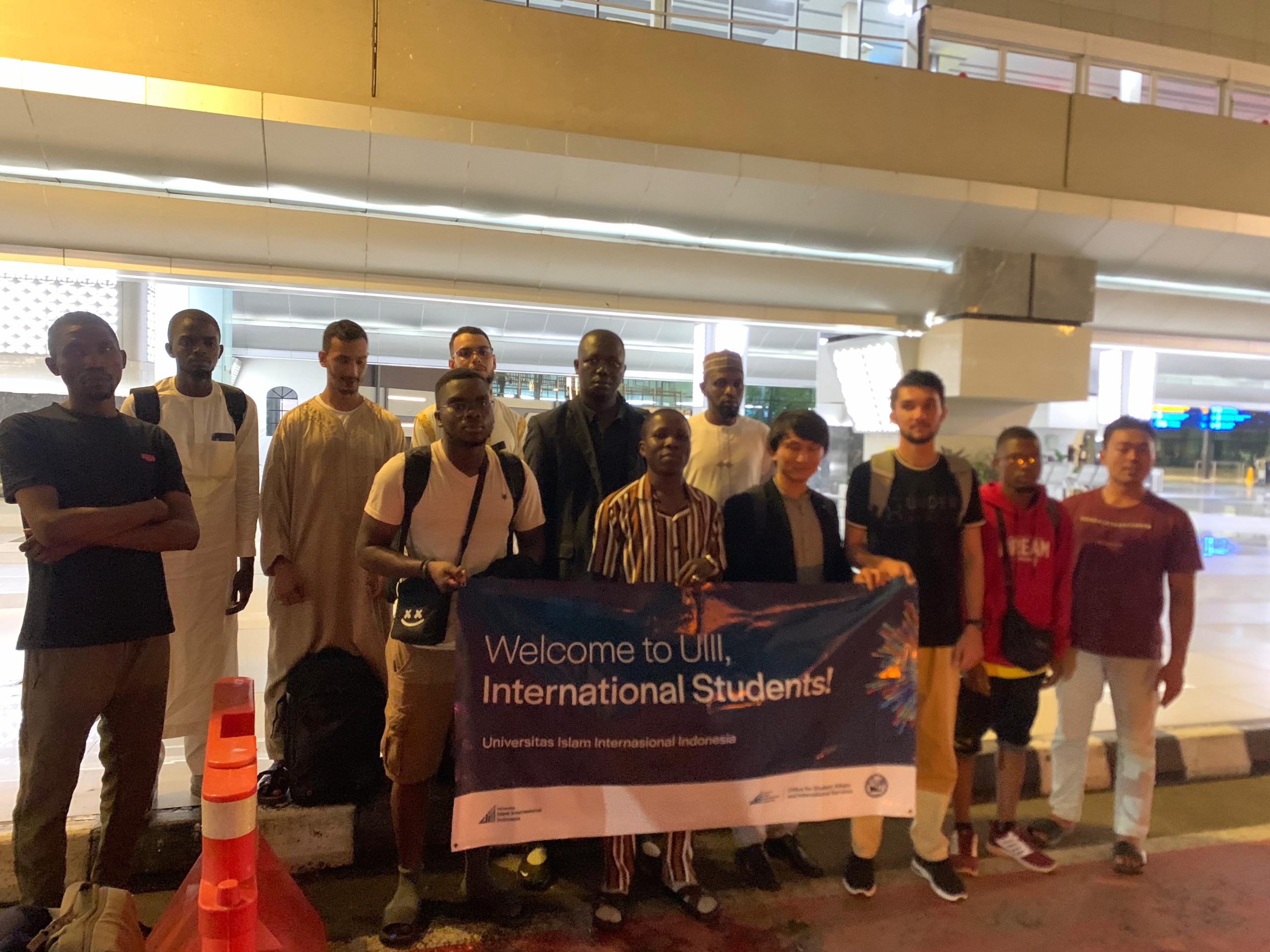
Organised by the Office of Student Affairs and International Services, the Immersion Talent Program provides opportunities for interaction, mutual learning, and intercultural engagement among members of the UIII community. Through a peer-support and engagement approach, the programme encourages participants to share experiences, develop interpersonal and intercultural competencies, and build meaningful connections across different backgrounds. Beyond supporting student integration, the programme reflects the University's recognition of peer learning, cultural exchange, and experiential learning as important dimensions of lifelong learning.
Public Lectures, Seminars, and Academic Engagement
Throughout 2025, Universitas Islam Internasional Indonesia (UIII), through its faculties, research programmes, library, and other institutional units, facilitated a range of public lectures, academic seminars, book forums, policy dialogues, and international conferences. These activities served as platforms for sharing knowledge, promoting intellectual exchange, and providing opportunities for students, academics, professionals, and wider audiences to engage with contemporary issues.
In 2025 the faculties ran more than 60 free public lectures, seminars, and dialogues, and ten public conferences, webinars, and national dialogues. Many sessions offered online participation, recordings, or e-certificates, allowing people beyond the campus to take part.
The topics addressed were diverse, covering Islamic thought and Qur'anic interpretation, educational leadership and professional development, historical and cultural connections, climate-responsive economic development, human fraternity, and global challenges. By involving scholars, policymakers, international experts, diplomats, and practitioners, UIII sought to connect academic knowledge with broader societal discussions and practical concerns.
Selected activities in 2025
| Activity | Date |
|---|---|
| Public Lecture: Fostering Dialogue and Academic Collaboration | 19 February 2025 |
| Public Lecture: The Qur'an in a Changing World | 24 February 2025 |
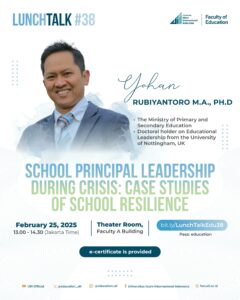
| Faculty of Education Lunch Talk #38: School Principal Leadership during Crisis | 25 February 2025 |
| Faculty of Education Lunch Talk #39: Empowering EFL Teachers | 25 March 2025 |
| Book Forum: From Brazil to Java | 9 April 2025 |
| Faculty of Education Lunch Talk #41: Environment and Sustainability in Higher Education | 20 May 2025 |
| International Conference on Human Fraternity | 29–30 July 2025 |
| Annual Seminar on Research and Community Engagement Findings 2025 | 9 December 2025 |
| KOMITMEN–IGC Dialogue on a Climate-Responsive Economy | 11 December 2025 |
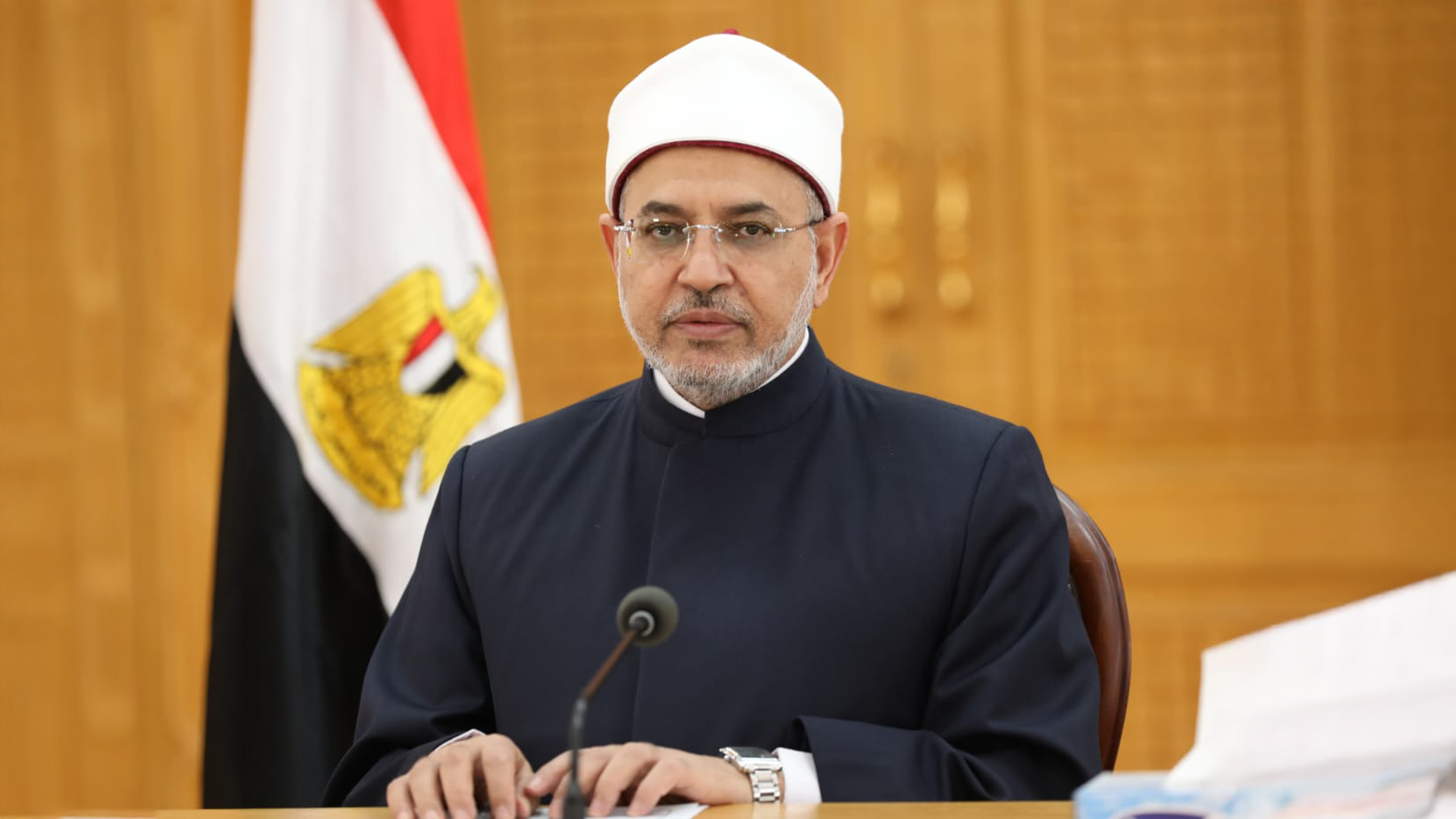
Public Lecture: Fostering Dialogue and Academic Collaboration, 19 February 2025. The lecture featured Sheikh Prof. Dr. Salamah Dawud, Rector of Al-Azhar University, and addressed academic collaboration between Al-Azhar and UIII and the future of Islamic scholarship.
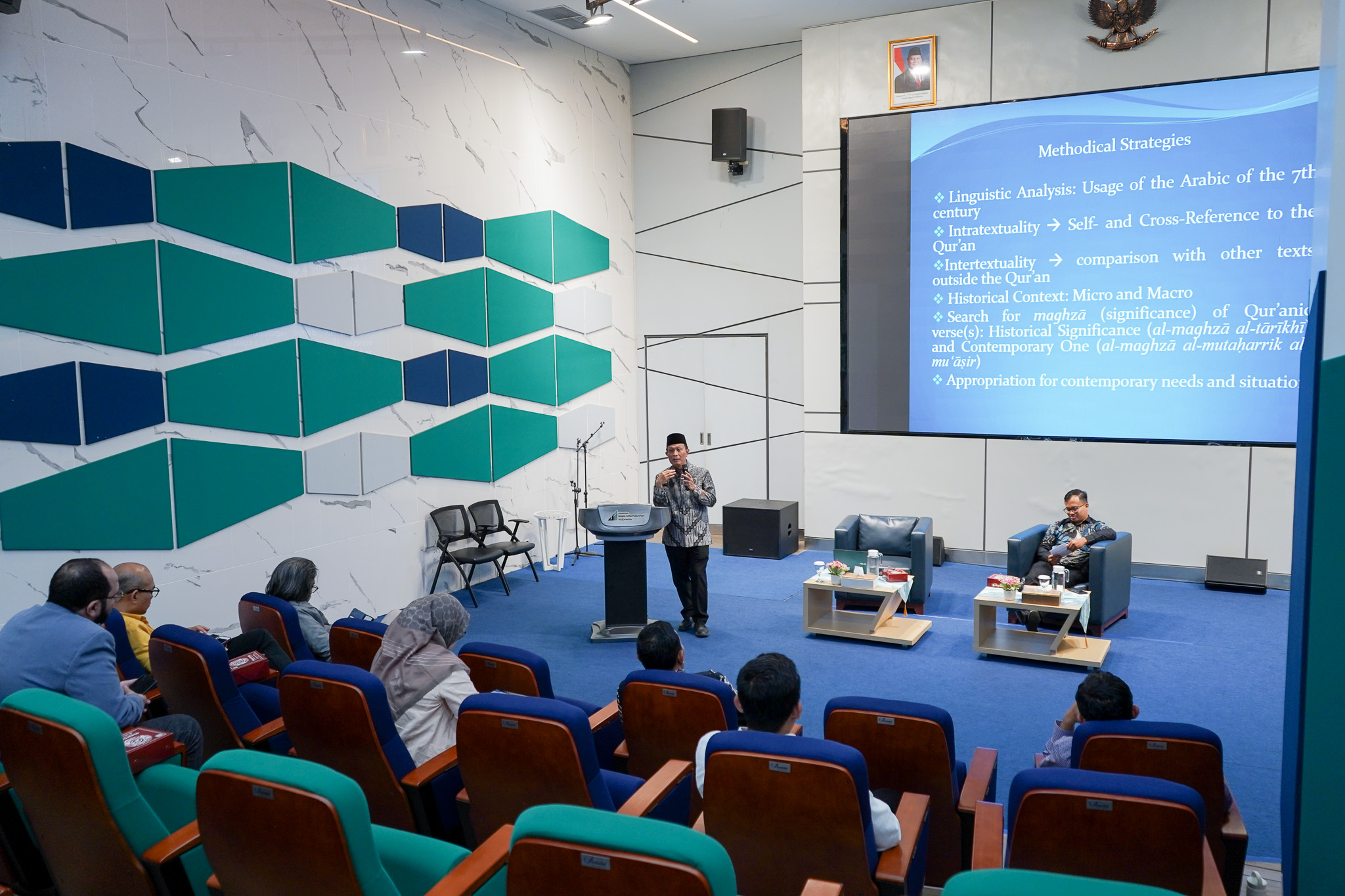
Public Lecture: The Qur'an in a Changing World, 24 February 2025. The public lecture featured Prof. Dr. Phil. Sahiron Syamsuddin and explored contemporary approaches to Qur'anic interpretation, including the Ma‘nā-cum-Maghzā method.
Faculty of Education Lunch Talk #38: School Principal Leadership during Crisis. 25 February 2025 | Faculty of Education. This session discussed school leadership and resilience during crises, drawing on research involving participants from Indonesian schools. The event provided an online participation option and a recorded YouTube session.
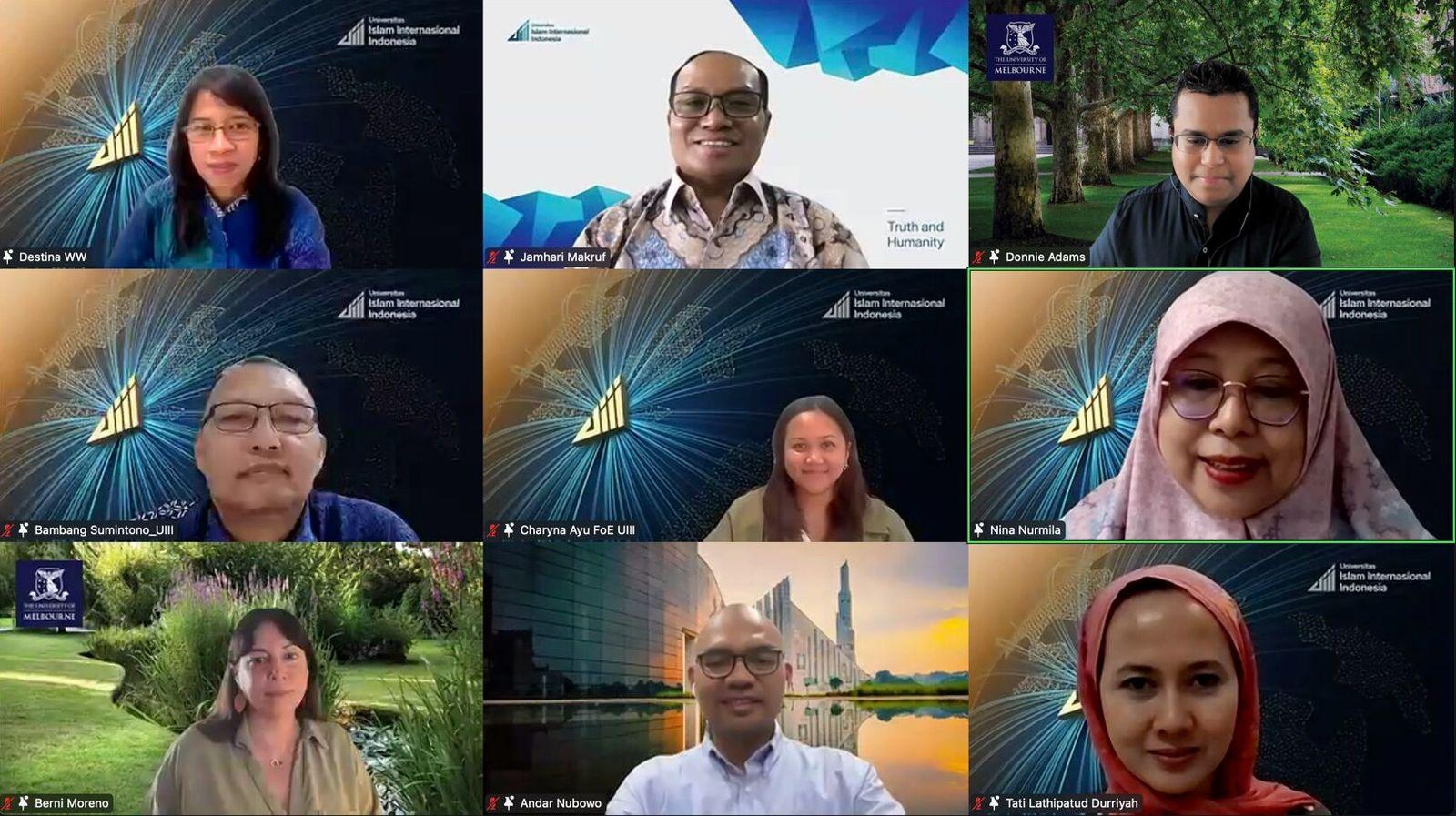
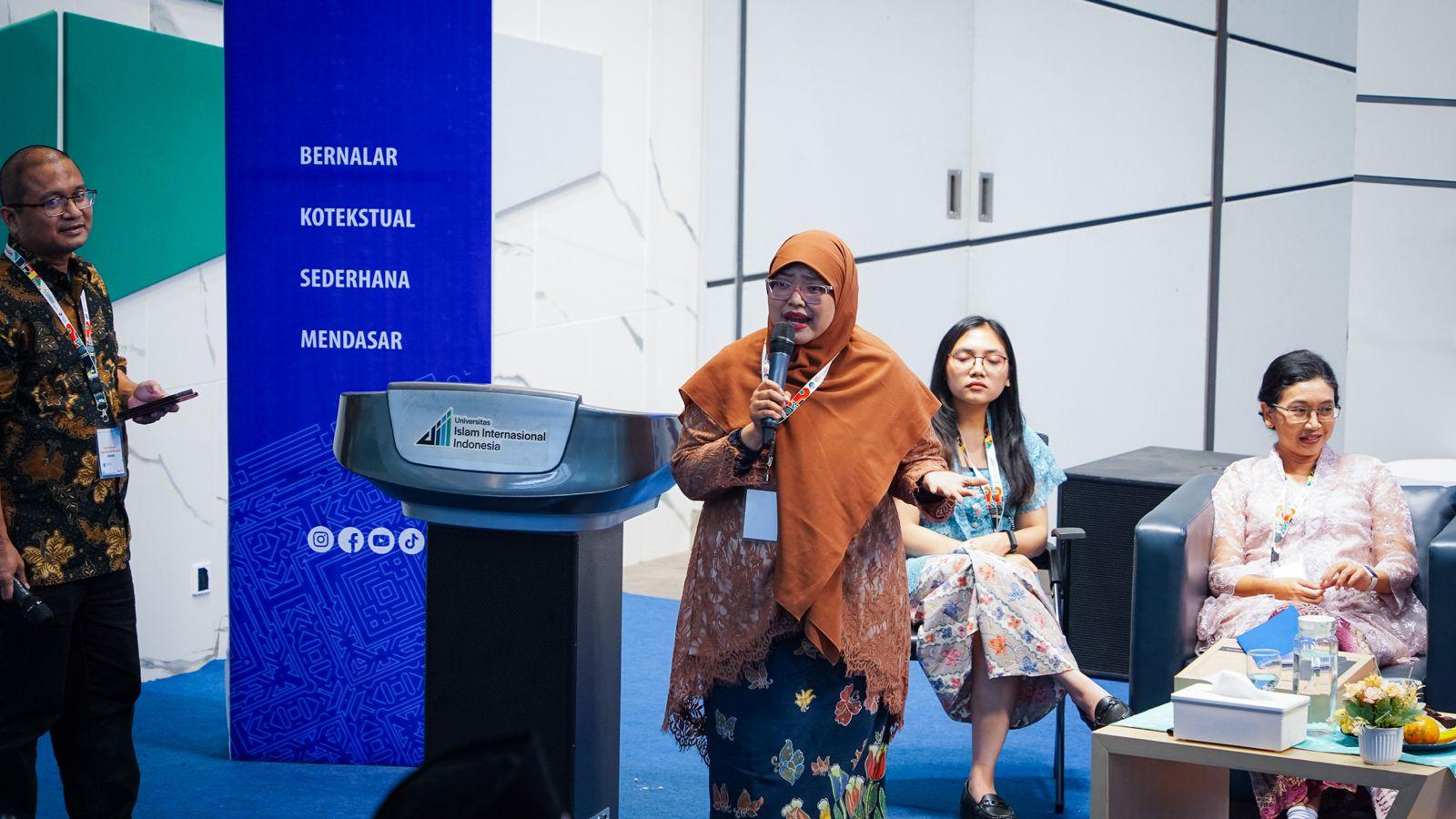
Faculty of Education Lunch Talk #39: Empowering EFL Teachers, 25 March 2025 | Faculty of Education. The session examined how English language teachers develop their professional and technological knowledge through informal learning, digital tools, self-directed learning, and peer collaboration. Online participation and e-certificates were offered.
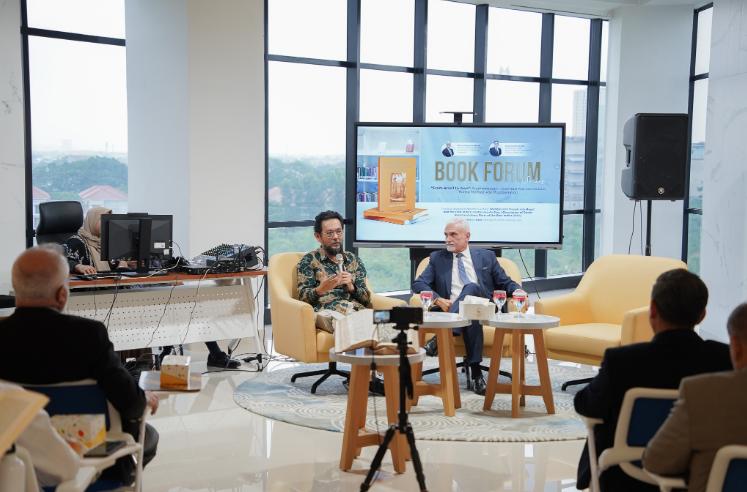
Book Forum: From Brazil to Java, 9 April 2025 | Jusuf Kalla Library. Organised in collaboration with the Brazilian Embassy in Jakarta, the forum explored historical connections between South America and Southeast Asia, bringing together scholars, diplomats, and academic experts.
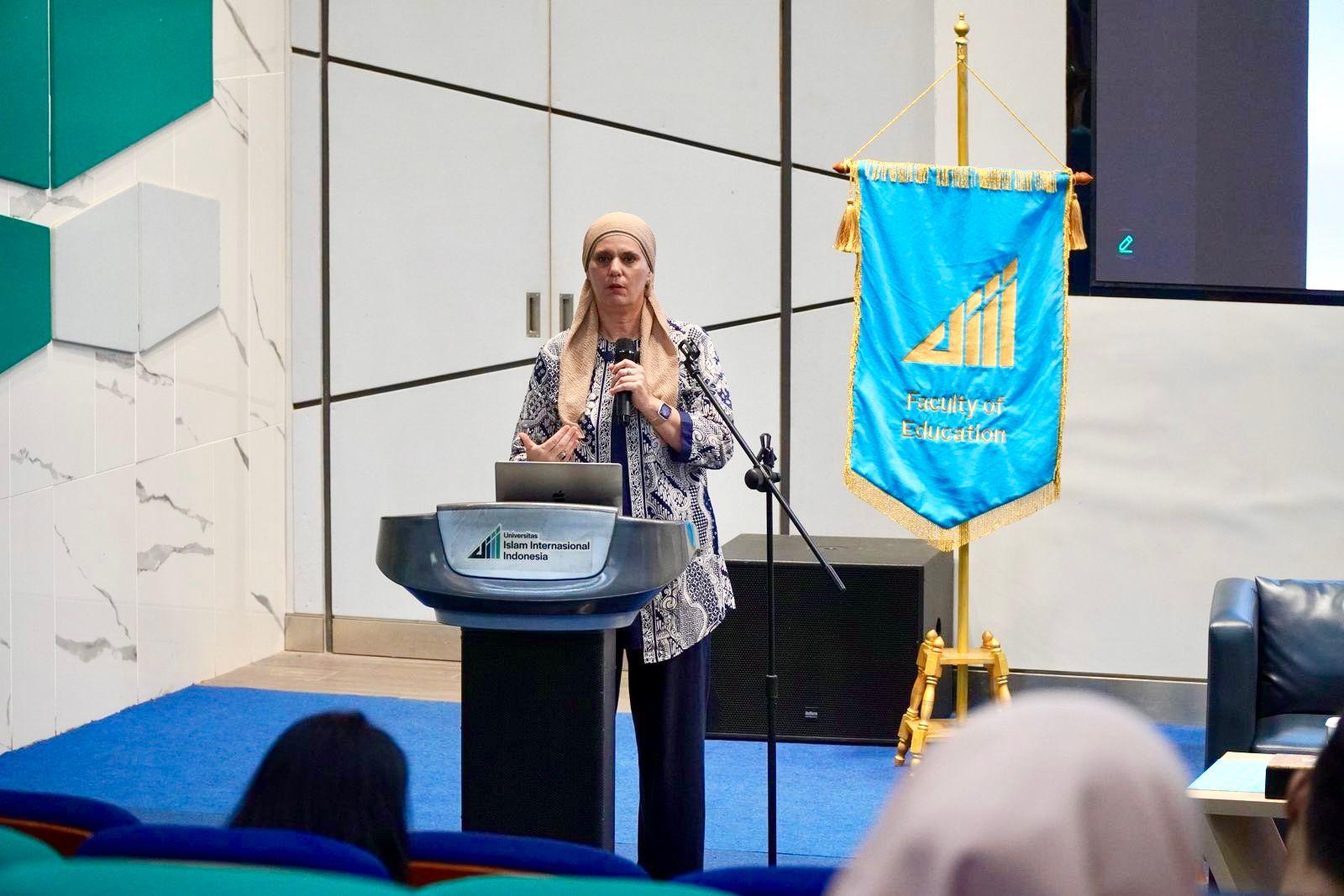
Faculty of Education Lunch Talk #41: Environment and Sustainability in Higher Education. 20 May 2025 | Faculty of Education. The session addressed environmental and sustainability education in higher education, including interdisciplinary approaches and opportunities for educational leadership.
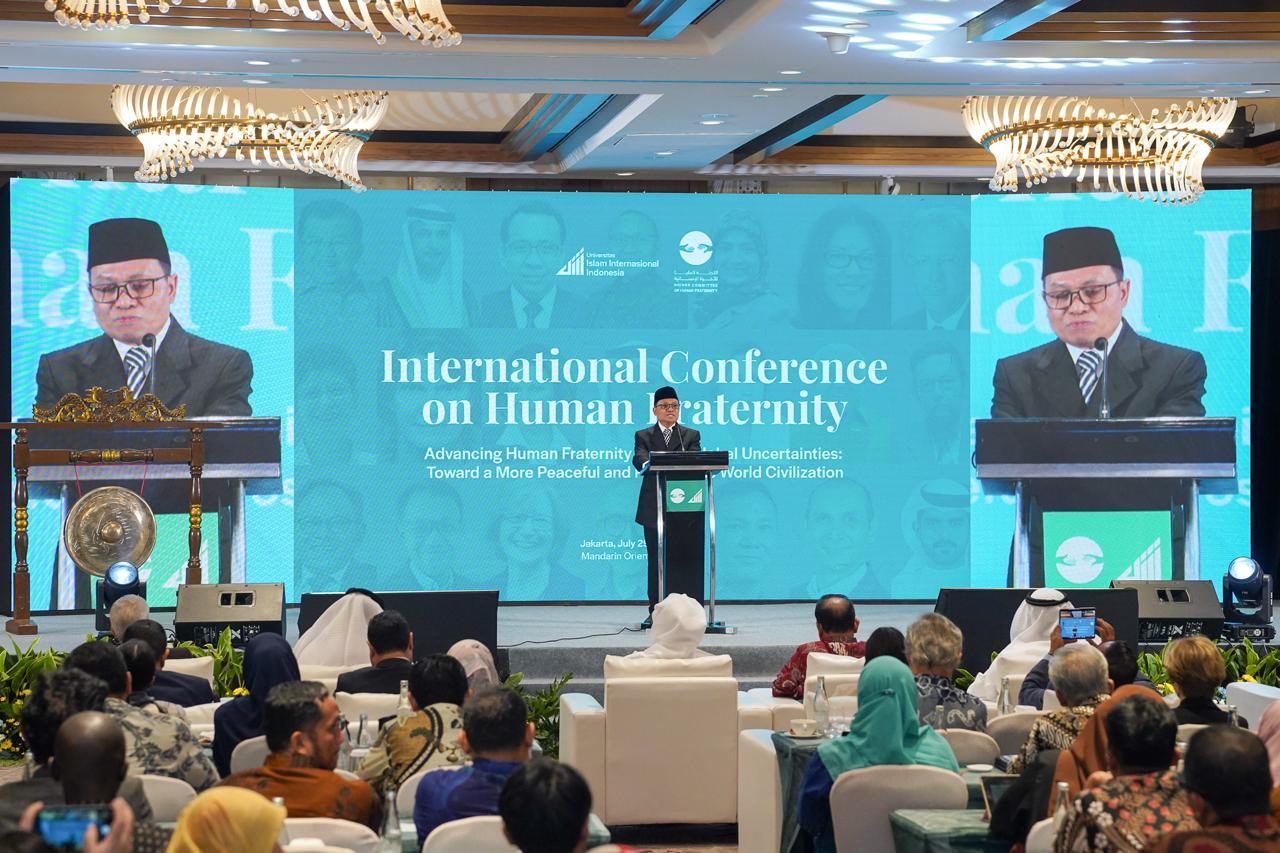
International Conference on Human Fraternity. 29–30 July 2025 | UIII and the Higher Committee of Human Fraternity. The international conference brought together more than 200 participants, including scholars, policymakers, religious leaders, and civil society representatives. Discussions addressed human fraternity, social justice, cross-border cooperation, media, and environmental justice. The conference launched the Indonesian Institute for Human Fraternity and concluded with the Jakarta Declaration on Human Fraternity.
Annual Seminar on Research and Community Engagement Findings 2025. 9 December 2025 | Directorate of Research, Cooperation, and Community Engagement. The seminar presented 20 research studies and 15 community engagement programmes, with contributions from six external reviewers. It provided a forum for academic evaluation, knowledge exchange, and discussion of research and community empowerment findings.
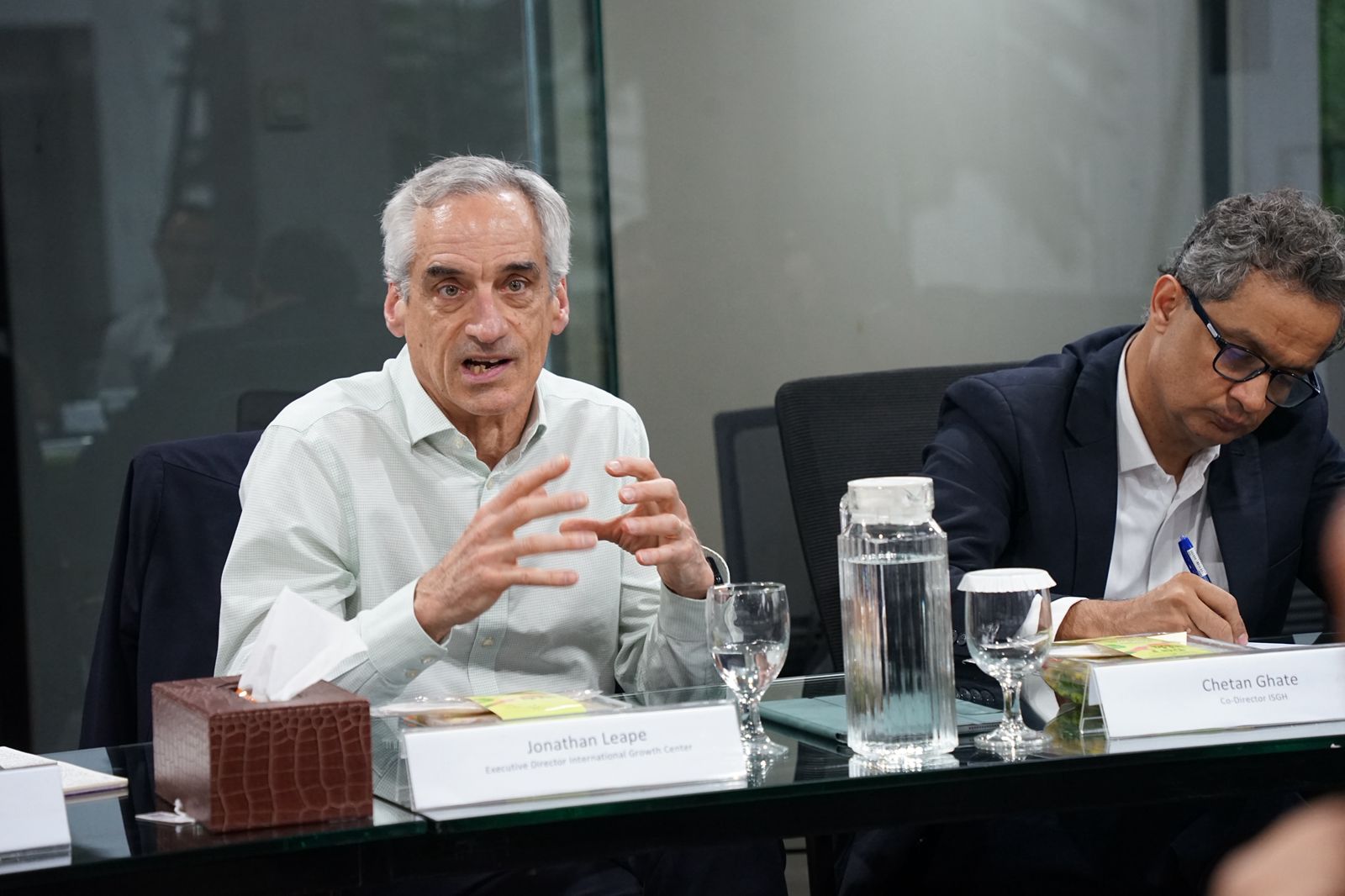
KOMITMEN–IGC Dialogue on a Climate-Responsive Economy. 11 December 2025. The dialogue brought together academic leaders and international policy experts to discuss climate-responsive economic development, green transition, carbon markets, and sustainable economic policy. The programme also included a public lecture by Prof. Chetan Ghate on monetary policy and informal labour markets.
Religious Learning and Spiritual Development (Pengajian)
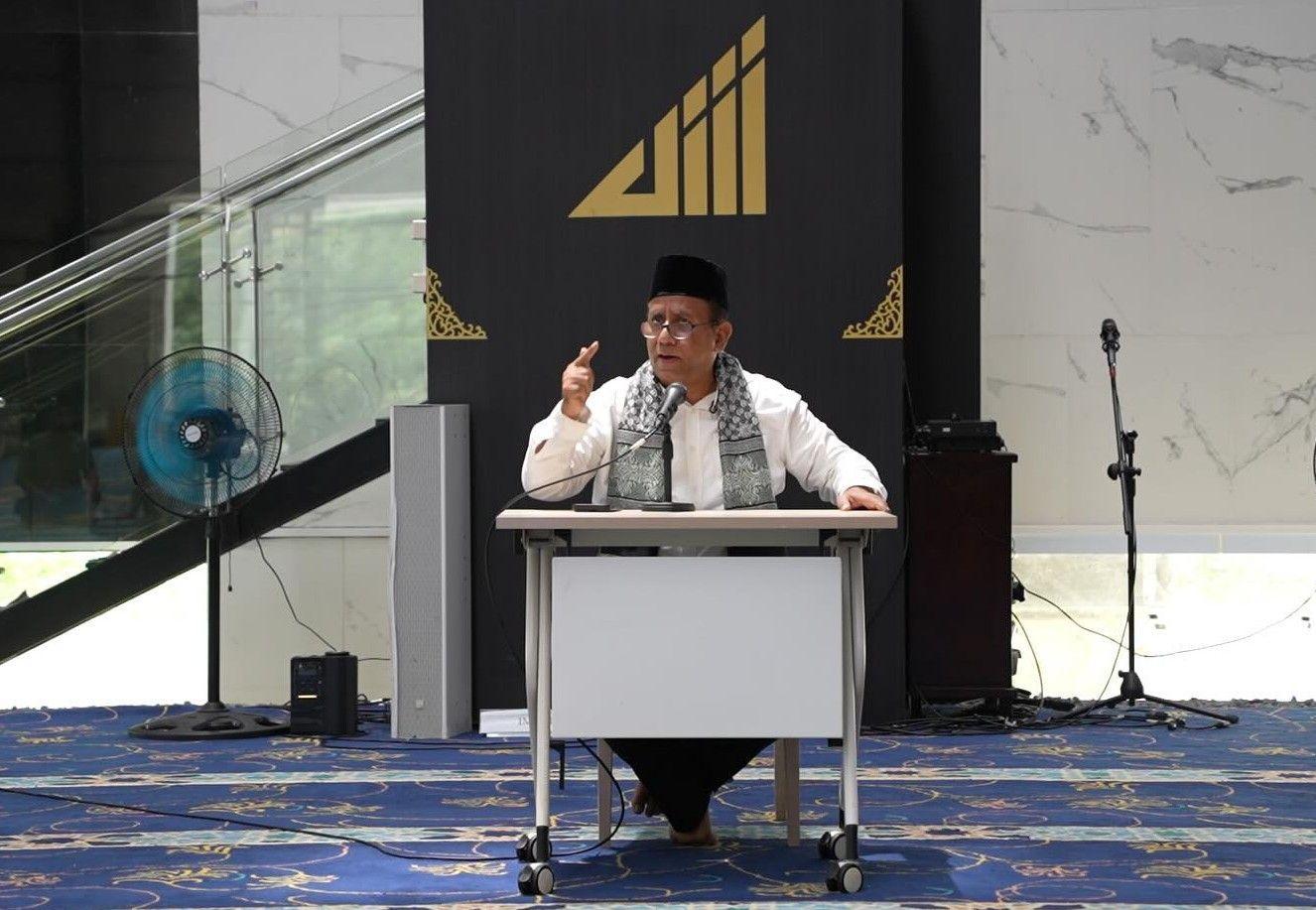
As an Islamic international university, UIII recognizes religious education and spiritual development as important components of lifelong learning. Beyond its formal academic programmes, the University facilitates a variety of religious learning activities that provide opportunities for continuous intellectual, ethical, and spiritual growth among students, staff, surrounding communities, and international participants.
These activities include pengajian (Islamic study sessions), religious lectures, Qur'anic studies, thematic discussions, and knowledge-sharing forums that enable participants to deepen their understanding of Islamic teachings, ethics, spirituality, and contemporary social issues. Through interaction with religious scholars, academics, mosque facilitators, and invited speakers, participants are encouraged to reflect on the application of Islamic values in everyday life, professional responsibilities, and community engagement.
One of the key platforms supporting lifelong religious learning is the Rahmatan lil-'Alamin Mosque at UIII, which regularly hosts Islamic educational programmes open to the university community and the wider public. The mosque serves not only as a place of worship but also as a centre for community learning, dialogue, and intercultural exchange.
International Islamic Learning Activities at Rahmatan lil-'Alamin Mosque
As a university with an international academic community, UIII organizes various religious learning activities involving participants from different countries and cultural backgrounds. These programmes create opportunities for intercultural dialogue and knowledge exchange while strengthening participants' understanding of Islamic teachings. Among the activities conducted are:
• Weekly Arabic-language Islamic discussion forums.
• Qur'anic study circles and tafsir sessions.
• Thematic lectures on Islamic ethics, character development, and contemporary issues.
• Religious talks delivered by scholars from Indonesia and abroad.
• Intercultural discussions involving international students and members of the wider community.
An example of these activities is the Weekly Arabic Discussion Forum (Forum Diskusi Mingguan dalam Bahasa Arab) held at Rahmatan lil-'Alamin Mosque. The forum provides a non-formal learning space where participants can discuss Islamic teachings directly in Arabic while strengthening their religious knowledge and language competence.
Theme: Character Development and the Cultivation of Noble Morality (Pengembangan Karakter dan Pembudayaan Akhlaq Mulia) Topic: Faith in the Hereafter (Beriman kepada Hari Akhir) Speaker: Al-Ustadz Usamah Abdel Aziz Ashari Date: 29 October 2025
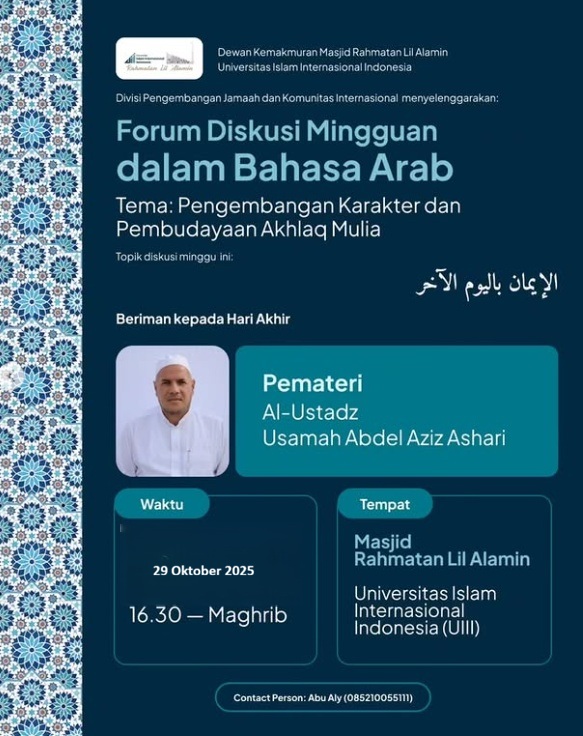
As part of its commitment to lifelong learning and community engagement, UIII regularly organizes international religious learning activities through the Rahmatan lil-'Alamin Mosque. One example is the Weekly Arabic Discussion Forum, which brings together students, members of the international community, academics, and worshippers from diverse national backgrounds to explore Islamic teachings, character development, and contemporary religious issues.
Conducted in Arabic, the programme not only strengthens participants' understanding of Islamic knowledge but also promotes intercultural dialogue and language learning within a non-formal educational setting. The activity demonstrates how UIII integrates spiritual development, community engagement, and intercultural exchange as part of lifelong learning opportunities available to the wider public.
Contribution to lifelong learning
• Provides continuous access to Islamic learning opportunities.
• Encourages intercultural and international participation.
• Promotes Arabic language literacy alongside religious education.
• Creates opportunities for dialogue between scholars, students, and community members.
• Strengthens understanding of Islamic values and ethics.
Community-Based Women's Pengajian Programme at Kompleks Deppen
UIII also contributes to lifelong learning beyond the campus through community engagement programmes conducted in surrounding residential areas. One example is the women's Islamic study sessions (Majelis Taklim Ibu-Ibu) organized in nearby communities, including Kompleks Deppen.
These activities provide opportunities for adult learners, particularly women, to continue their religious education regardless of age, educational background, or professional status. The sessions typically include Qur'anic recitation, Islamic lectures, discussion of family and social issues from Islamic perspectives, and mutual learning among participants.
The programme demonstrates how UIII extends educational access to wider society by supporting community-based learning initiatives that promote religious literacy, social cohesion, and personal development.
Main activities
• Qur'anic study and recitation.
• Religious lectures and discussions.
• Islamic family education.
• Community empowerment and knowledge sharing.
• Reflection on contemporary social issues from Islamic perspectives.
Impact on Lifelong Learning
These religious learning programmes contribute to UIII's commitment to lifelong learning by ensuring that educational opportunities remain accessible beyond formal degree programmes. Through mosque-based learning activities and community outreach initiatives, participants are able to engage in continuous learning throughout different stages of life.
The programmes support not only the acquisition of religious knowledge but also the development of values, attitudes, and social competencies that contribute to individual well-being and community development.
Educational Partnerships
Universitas Islam Internasional Indonesia (UIII) extends learning beyond its degree programmes through partnerships with pesantren networks, community finance institutions, and universities. In 2025, its faculties worked with these partners to deliver learning for religious educators, santri, and schoolteachers.
Partners contributed specialist knowledge, community networks, and practical learning settings, while UIII faculty teams contributed academic expertise and programme delivery. The collaborations connected environmental stewardship, entrepreneurship, and teacher development with the continuing educational needs of communities.
Environmental education with PK-Tren Indonesia
UIII’s Faculty of Islamic Studies collaborated with Persaudaraan dan Kemitraan Pesantren Indonesia (PK-Tren Indonesia) to hold an eco-pesantren seminar and workshop at Pondok Pesantren Qur’an dan Sains Nurani, South Jakarta, on 6 November 2025. Led by Dr. Ilyas Marwal, the programme connected environmental knowledge with Islamic ethics and the educational practices of pesantren communities.
The UIII team contributed academic perspectives on environmental protection, Green Islam, and the relationship between technology and religious values. PK-Tren and participating pesantren brought community networks and practical experience. Preparatory visits to Al-Ittifaq and Dinamika Umat generated learning examples and video material for discussion at the event.
Santri, ustaz, and kiai explored waste sorting, shared responsibility for clean learning environments, leadership examples, and the integration of environmental ethics into teaching. Dinamika Umat’s clean-school model illustrated how environmental care can be organised through daily routines, assigned responsibilities, and monitoring.
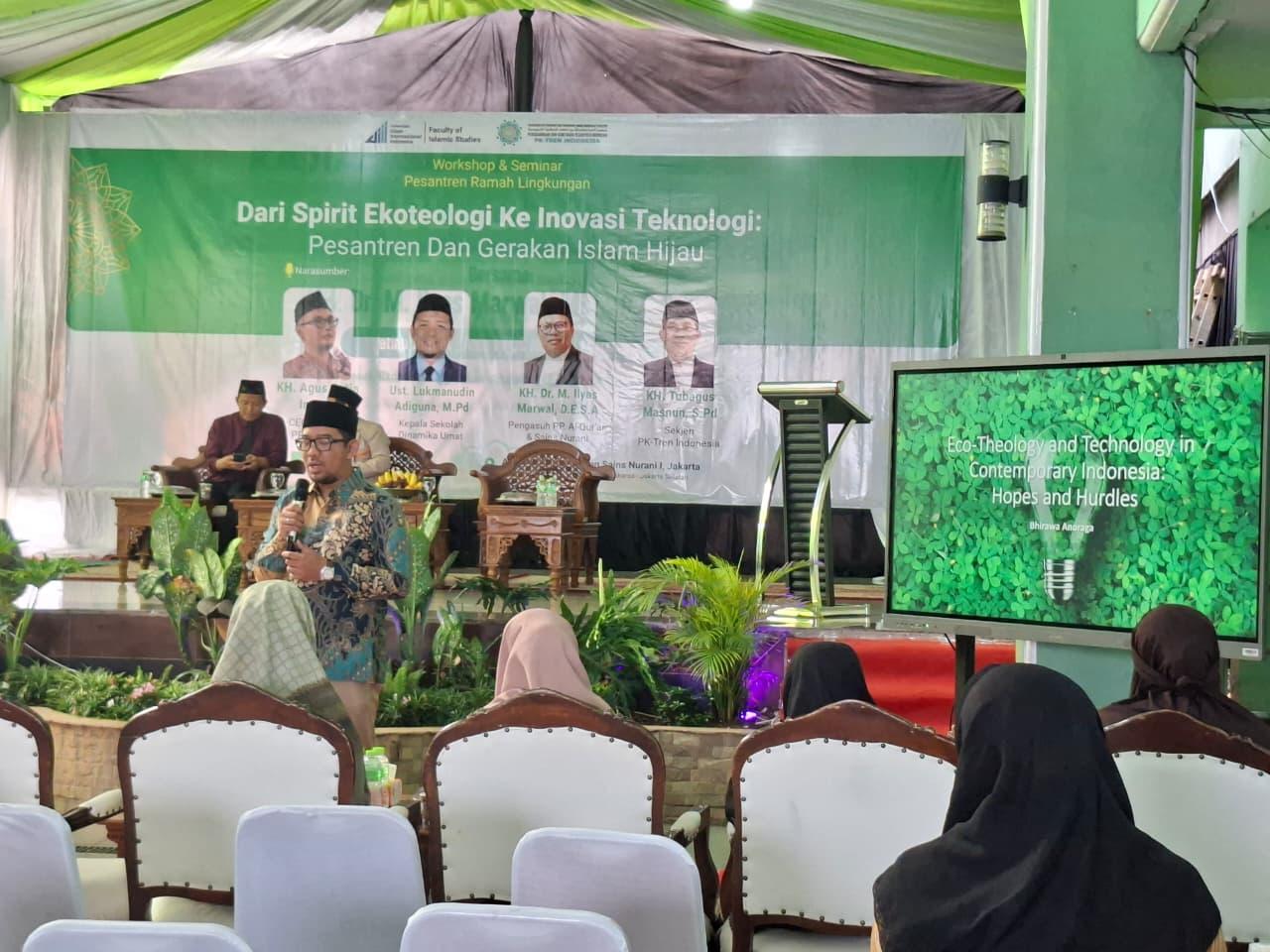
The seminar generated recommendations on leadership, environmental curricula, and collective action. This educational partnership provided a setting in which community educators could exchange experience and consider how environmental responsibility could be incorporated into their institutions. Its learning themes relate to SDG 4 Quality Education, SDG 12 Responsible Consumption and Production, SDG 13 Climate Action, and SDG 17 Partnerships for the Goals.
Entrepreneurship education with pesantren and finance partners
SantriPreneur Academy, introduced above under the Community Engagement Grant Scheme, was delivered by the Faculty of Economics and Business with BANKZISKA Ponorogo, LAZISMU Ponorogo, BAZNAS Ponorogo, and FEBI UIN Kiai Ageng Muhammad Besari Ponorogo on 26–27 September 2025.
UIII contributed programme leadership and entrepreneurship learning, while the partner network connected academic teaching with Islamic microfinance, philanthropy, and the local pesantren economy. Facilitators and participants examined halal business principles, financial literacy, micro-business management, and productive uses of zakat, infaq, and cash waqf.
Participants used the Business Model Canvas to develop social enterprise ideas relevant to their communities. Group work, mentoring, and presentations enabled them to connect ethical principles with customers, resources, financing, and implementation needs. Seven groups produced seven initial social enterprise concepts.
Pre- and post-programme self-assessments recorded higher scores on five of six indicators, while one remained unchanged. The collaboration supported applied learning in financial literacy and enterprise planning, with connections to SDG 4 Quality Education, SDG 8 Decent Work and Economic Growth, and SDG 17 Partnerships for the Goals.
Teacher development through the STEM Trails partnership
UIII’s Faculty of Education worked with Universitas Negeri Semarang, Universitas Syiah Kuala, and the Math Trails Lab community on STEM Trails with Socio-Scientific Issues through the Riset Kolaborasi Indonesia partnership. Dr. Destina Wahyu Winarti led the Depok workshop at UIII on 25 July 2025. The activity brought mathematics teachers into a professional learning setting that connected digital technology, outdoor inquiry, and local contexts.
The partnership combined university expertise in mathematics education with a community of practice using mathematical trails. Teachers used MathCityMap to explore outdoor tasks, discuss solutions, and consider how familiar surroundings could become resources for classroom learning. Participating schools included SMAIT Al Haraki and SMP Pesantren Cendekia Amanah.
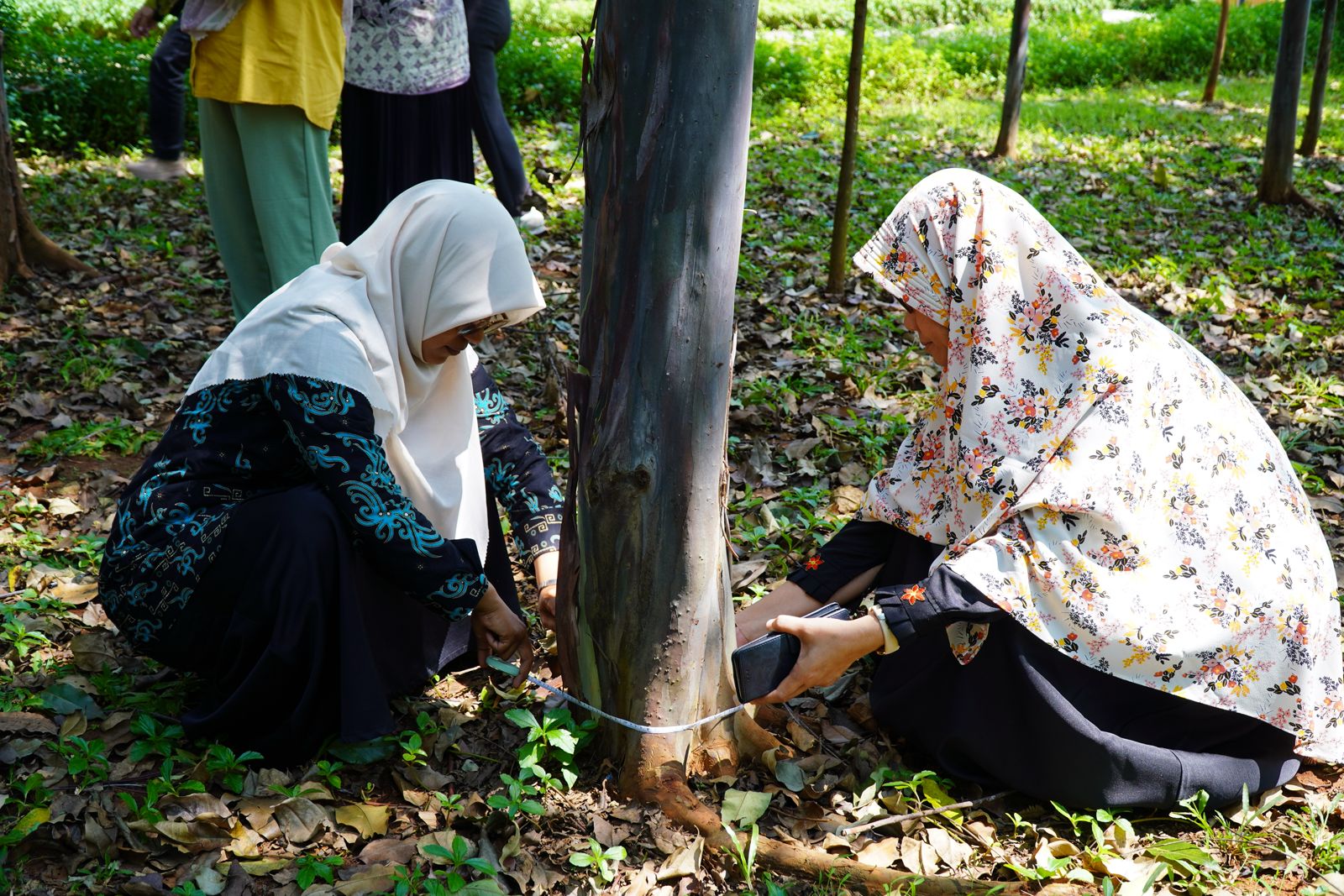
By experiencing the tasks as learners, teachers practised problem-solving and collaborative inquiry before considering their application in schools. The workshop supported continued professional learning and the design of mathematics activities connected to community questions, contributing to SDG 4 Quality Education. The inter-university and practitioner collaboration also reflects the partnership dimension of SDG 17.
Across these collaborations, UIII brought community educators, santri, and teachers into learning activities beyond its enrolled student population. Partnership delivery connected the University’s expertise with specialist practitioners and community settings, enabling participants to develop skills and learning materials relevant to their own families, institutions, and professional practice.
Anti-Discrimination and Sexual Violence Prevention Initiatives
UIII promotes a safe and inclusive educational environment through regular awareness-raising and educational activities on gender equality, discrimination, and the prevention of sexual violence. Rector's Regulation No. 12 of 2025 establishes an integrated system for preventing and handling sexual violence, and Rector's Decree No. 85/R/2025 formed the Task Force for the Prevention and Handling of Sexual Violence (Satgas PPKS) for 2025–2027. The task force carries out prevention through awareness-raising, learning, and campus culture, and handling through services for victims. By promoting gender equality, respect for individual dignity, and awareness of reporting mechanisms, these initiatives support a learning environment in which everyone can participate safely and with confidence.
Accessibility and Support for Persons with Disabilities
Rector's Decree No. 40A/R/2025 of 28 May 2025 established the Disability Services Unit, and Rector's Decree No. 40/R/2025 of the same date established the Counseling and Mental Health Services (CMHS), which serves students and staff, including people with psychosocial disabilities. Rector's Circular No. 1c/Rek/UIII/SE.01/1/2025 requires work units to integrate academic and public services. UIII also works with the Indonesian National Commission on Disabilities (Komisi Nasional Disabilitas/KND) to improve awareness, accessibility, and institutional responsiveness to the needs of persons with disabilities, so that educational opportunities and University activities can be accessed by people with diverse abilities and requirements.
Complaints, Redress, and Protection Against Retaliation
Any participant or prospective learner who believes they have been denied access, unfairly disadvantaged, harassed, or subjected to discrimination during a UIII lifelong learning activity may submit a complaint, in writing or online. Under Rector's Circular No. 1c/Rek/UIII/SE.01/1/2025, complaints may be submitted to the Organising Unit, the Disability Services Unit, the Counseling and Mental Health Services (CMHS), or the PPKS Task Force, which receive complaints, provide assistance, and follow up cases.
Complaints are handled confidentially and impartially. The University's codes of ethics prohibit retaliation against complainants, witnesses, or affected participants. Where a violation is established, follow-up and sanctions are applied in accordance with University’s regulations and codes of ethics.
Moving Forward
UIII recognizes lifelong learning as an ongoing institutional commitment that requires continuous development, collaboration, and evaluation. The University will continue to strengthen its existing initiatives, expand opportunities for public engagement, and encourage its academic and administrative units to integrate principles of inclusivity, accessibility, and non-discrimination into their educational and community-oriented activities.
UIII also acknowledges the importance of developing more responsive learning opportunities for groups that may face barriers to education and participation, including persons with disabilities, women, individuals from underserved communities, and those with limited access to higher education.
In advancing this commitment, UIII seeks to contribute to Sustainable Development Goal 4 (Quality Education), particularly its emphasis on inclusive and equitable quality education and lifelong learning opportunities for all.
For UIII, lifelong learning is not merely about extending education beyond formal schooling. It is about building an inclusive learning community in which knowledge is shared, opportunities are widened, human dignity is respected, and education remains accessible throughout life.
Legal Basis and Sources
[1] Law No. 20 of 2003 on the National Education System.
[2] Law No. 12 of 2012 on Higher Education.
[3] Presidential Regulation No. 57 of 2016 on the Establishment of Universitas Islam Internasional Indonesia.
[4] Government Regulation No. 23 of 2019 on the Statute of Universitas Islam Internasional Indonesia.
[5] Minister of Education, Culture, Research, and Technology Regulation No. 53 of 2023 on Higher Education Quality Assurance (revoked on 2 September 2025).
[6] Minister of Higher Education, Science, and Technology Regulation No. 39 of 2025 on Higher Education Quality Assurance.
[7] Rector's Regulation No. 17 of 2021 on New Student Admissions. https://jdih.uiii.ac.id/detail/235
[8] Rector's Circular No. 1c/Rek/UIII/SE.01/1/2025 on Strengthening an Inclusive and Anti-Discriminatory Campus, 2 January 2025. https://jdih.uiii.ac.id/detail/474
[9] Rector's Regulation No. 12 of 2025 on the Prevention and Handling of Sexual Violence; Rector's Decree No. 85/R/2025 on the Task Force for the Prevention and Handling of Sexual Violence, 2025–2027.
[10] Rector's Decree No. 40/R/2025 on the Counseling and Mental Health Services, 28 May 2025. https://cmhs.uiii.ac.id/
[11] Rector's Decree No. 40A/R/2025 on the Disability Services Unit, 28 May 2025. https://jdih.uiii.ac.id/detail/457
[12] Rector's Decision No. 62/R/2025 on the recipients of the 2025 collaborative community engagement grants, 6 August 2025. https://research.uiii.ac.id/informations/2025-community-engagement-program
[13] UIII news on the grade A accreditation of the Jusuf Kalla Library. https://uiii.ac.id/uiiis-jusuf-kalla-library-officially-recognized-as-nationally-excellent
[14] UIII news on the 15 collaborative community engagement projects of 2025. https://uiii.ac.id/uiii-initiated-15-community-engagement-collaborative-projects-this-year/
[15] UIII news on the Narratives for Change workshop for parents. https://uiii.ac.id/stories-that-shape-values-uiii-workshop-train-parents-to-become-storytellers/
[16] Faculty of Economics and Business news on SantriPreneur Academy. https://feb.uiii.ac.id/feb-uiii-launches-santripreneur-academy-to-nurture-islamic-social-entrepreneurs/
[17] UIII news on the International Conference on Human Fraternity and the Jakarta Declaration. https://uiii.ac.id/uiii-hchf-international-conference-concludes-with-jakarta-declaration-on-human-fraternity/
[18] Legal documentation network of UIII (JDIH UIII). https://jdih.uiii.ac.id/