

Gender Equality
ACHIEVE GENDER EQUALITY AND EMPOWER ALL WOMEN AND GIRLS
Executive Summary
This report presents the evidence of Universitas Islam Internasional Indonesia (UIII) on Sustainable Development Goal 5, Gender Equality, for the reporting year 2025 (January to December). It follows the two-part structure of the UIII SDG reports: Section 1 documents the academic contribution of the UIII community to research on gender equality, and Section 2 documents the University's policies, services and programmes for women's access, participation and protection from discrimination, with each activity mapped to the SDG 5 targets and to the THE Sustainability Impact Ratings indicators it supports.
Research on gender justice. In 2025 UIII researchers published on gender justice in the reinterpretation of religious texts, Islamic feminist methodologies, gender equality in classroom literacy, Muslim women entrepreneurs and women and criminal justice, and a master's thesis examined women's political representation. Scopus records nine UIII publications from 2024 to 2025 mapped to SDG 5, with 50 citations.
Women's access and participation. Women made up 66 of the 164 graduates at the August 2025 graduation (40.2 per cent) and 57 of the 155 active students of the 2025/2026 cohort (37 per cent); across all programmes, 158 of the 444 active students (35.6 per cent) are women. Admissions guidance explicitly encourages women to apply, and the Norway–UIII and Netherlands–UIII scholarships, with the PEMRI scheme, give Afghan women a route to postgraduate study.
Policy and family support. Rector's Circular No. 1c/Rek/UIII/SE.01/1/2025 of 2 January 2025 commits the University to an inclusive, anti-discriminatory campus without distinction of gender. Rector's Regulation No. 23 of 2023 provides lactation rooms, daycare and time for breastfeeding, and UIII Daycare cared for eight children in 2025 with a waiting list of 35 and an expansion to 20 places under way.
Women scholars and gender education. UIII hosted a British Academy-funded writing workshop for 24 women early-career scholars from Brazil and Indonesia, signed a partnership with the women's organisation Kalyanamitra, and taught gender equality in its compulsory university course, its Gender and Politics course, schools, pesantren and public forums.
The table below summarises the main figures.
| Dimension | UIII in 2025 |
|---|---|
| Research | Five 2025 publications and one master's thesis on gender justice, Islamic feminism, inclusive literacy, women's entrepreneurship, women and criminal justice, and political representation; 9 Scopus-indexed publications on SDG 5 (2024–2025, 50 citations) |
| Graduates | 164 graduates on 27 August 2025, of whom 66 women (40.2%) |
| 2025/2026 cohort | 155 active students, of whom 57 women (37%) |
| Access schemes for women | Norway–UIII and Netherlands–UIII scholarships for Afghan women; PEMRI; admissions guidance encouraging women to apply |
| Policies | Rector's Circular on an inclusive, anti-discriminatory campus (2025); Rector's Regulation No. 23/2023 on gender-responsive and child-friendly workplaces |
| Family support | UIII Daycare: 8 children, 10 places, waiting list of 35, new premises for 20; lactation rooms |
| Women scholars and outreach | 24 women early-career scholars in the decolonial writing workshop; Kalyanamitra partnership; gender education in courses, schools and public forums |
Section 1: Evidence of Academic Contribution to SDG 5 (Research Impact)
Universitas Islam Internasional Indonesia (UIII) is a globally oriented university for advanced studies on Islam and the Muslim world, established by the Government of Indonesia as a National Strategic Project, offering master's and doctoral programmes to 444 students from 30 countries (2025). Its research contribution to SDG 5 lies in gender justice within Islamic thought, women's agency and economic participation, inclusive education and women's representation in public life. Table 1 lists the publications associated with the 2025 reporting year.
| Publication | UIII author | Outlet | Timing |
|---|---|---|---|
| KUPI Approach to Qur'an and Hadith Re- interpretation | Nina Nurmila | African Journal of Gender and Religion 31(1) | 13 August 2025 |
| Islamic Feminists' Approaches | Nina Nurmila | The Cambridge Companion to Women and Islam, Cambridge University Press | 12 April 2025 (online) |
| Navigating Teacher Agency: Implementing an Innovative Literacy Teaching Model in Indonesian Classrooms | Tati Lathipatud Durriyah | Resilient and Sustainable Education Futures, Springer SDG Series (Scopus) | 25 July 2025 |
| Muslim women entrepreneurs: the Nigerian "Mumpreneurs" perspective | Muhammad M. Nasir; Saemah Shamim | International Journal of Organizational Analysis 33(2) (Scopus) | 2025 issue |
| Intersectionality and Gendered Criminal Justice in South Asia: The Case of Pakistan | Qamar Abbas Jafri | Women & Criminal Justice 35(1) (Scopus) | 2025 issue |
| Grassroots Pathway of Women's Representation in Indonesia (master's thesis) | Nurul Fatin Afifah | UIII repository | 14 August 2025 |
Table 1: Publications and graduate research on gender equality associated with 2025
Gender justice in Islamic interpretation and Islamic feminism
Prof. Nina Nurmila of the Faculty of Education published "KUPI Approach to Qur'an and Hadith Re-interpretation" in the African Journal of Gender and Religion on 13 August 2025. The article examines approaches associated with the Indonesian Congress of Women Ulama (KUPI) and the scholars Badriyah Fayumi, Nur Rofiah and Faqihuddin Abdul Kodir, namely ma'ruf, women's haqiqi justice and reciprocal (mubadalah) reading, and explains how they centre women's experiences in interpreting religious sources and respond to readings that subordinate women. Her chapter "Islamic Feminists' Approaches", published online by Cambridge University Press on 12 April 2025 in The Cambridge Companion to Women and Islam (pp. 214–233), reviews influential Islamic feminist scholars and their methods, including the circulation of their ideas through vernacular scholarship in Indonesia.
Contribution to SDG 5: Target 5.1 (ending discrimination against women) and 5.c (sound policies and norms for gender equality); THE measure 5.1.
Gender equality in classroom literacy and inclusive education
Assoc. Prof. Tati Lathipatud Durriyah of UIII, Sofie Dewayani of Yayasan Litara and Firman Parlindungan published "Navigating Teacher Agency: Implementing an Innovative Literacy Teaching Model in Indonesian Classrooms" on 25 July 2025 in Springer's Sustainable Development Goals Series (pp. 237–251, Scopus-indexed). Through three teacher cases, the chapter shows how teachers use children's literature to teach gender equality, respect for difference and cultural diversity. A university-funded project of the Faculty of Education studies the leadership of female rectors in Indonesian and Australian universities.
Contribution to SDG 5: Targets 5.1 and 5.5 (non-discrimination; women's leadership); THE measure 5.1.
Women's economic participation and access to justice
Muhammad M. Nasir and Saemah Shamim's "Muslim women entrepreneurs: an exploratory study of the Nigerian 'Mumpreneurs' perspective" (International Journal of Organizational Analysis 33(2), 2025) draws on interviews with 12 Muslim mother-entrepreneurs in Northern Nigeria and identifies constraints of capital, skills and sociocultural expectations in combining entrepreneurship with family responsibilities. Qamar Abbas Jafri, Javed Iqbal Khokhar and Mubasher Mubeen's "Intersectionality and Gendered Criminal Justice in South Asia: The Case of Pakistan" (Women & Criminal Justice 35(1), 2025) examines how gender, socioeconomic status and religious identity shape women's experiences of criminal justice and recommends skills-based education, free legal assistance and reintegration services. Faculty of Economics and Business researchers Aimatul Yumna and Teguh Yudo Wicaksono also documented in 2025 how a community solar programme in Gunungkidul provides more reliable and affordable electricity for women-led microenterprises.
Contribution to SDG 5: Targets 5.a and 5.4 (women's economic rights; recognition of care work) and 5.2 (access to justice); THE measure 5.1.
Women's political representation
In 2025 Nurul Fatin Afifah completed the UIII master's thesis "Grassroots Pathway of Women's Representation in Indonesia: A Comparative Study of PKB and PAN in the 2024 General Election". Using a comparative qualitative approach, it shows how organisational networks, recruitment and social capital enable women candidates to enter and compete in political institutions. At the University's flagship conference AICIS+ 2025 (29–31 October), one of seven sub-themes was Islamic law, social equality and eco-feminism, and the Minister of Religious Affairs called for a theology of harmony in response to environmental degradation and gender imbalance.
Contribution to SDG 5: Target 5.5 (women's full participation and equal opportunities for leadership in political life); THE measure 5.1.
Scopus-indexed research on gender equality, 2024–2025
Scopus records nine UIII-affiliated publications from 2024 to 2025 that are mapped to SDG 5, seven journal articles and two book chapters, which have received 50 citations. Three appeared in 2025: the studies of Nigerian Muslim “mumpreneurs” and of gendered criminal justice in Pakistan described above, and a chapter on the lived experiences and adaptive strategies of Afghan refugees in the global diaspora. The six 2024 publications include the most cited, “Divorce Narratives and Class Inequalities in Indonesia” by Prof. Nina Nurmila with colleagues from the University of Colorado Boulder and the Australian National University (Journal of Family Issues, 26 citations), and studies of forced marriage and sex trafficking under the guise of unregistered (siri) marriage, gendered power and child issues in endogamous ‘Alawiyyin marriages, women’s access to education in a patriarchal society and women entrepreneurs in the Islamic medicine industry of Northern Nigeria (Table 2).
| Publication | UIII author(s) | Source | Year |
|---|---|---|---|
| Muslim women entrepreneurs: an exploratory study of the Nigerian “Mumpreneurs” perspective | Muhammad Muhammad Nasir; Saemah Shamim | International Journal of Organizational Analysis (6 citations) | 2025 |
| Intersectionality and Gendered Criminal Justice in South Asia: The Case of Pakistan | Qamar Abbas Jafri | Women & Criminal Justice (4 citations) | 2025 |
| Displaced Lives, Resilient Spirits: Lived Experiences and Adaptive Strategies of Afghan Refugees in the Global Diaspora | Amanullah Zarawar | Global Societal Resilience Through Political, Environmental, and Cultural Upheaval (book chapter; 1 citation) | 2025 |
| Divorce Narratives and Class Inequalities in Indonesia | Nina Nurmila | Journal of Family Issues (26 citations) | 2024 |
| Forced Marriage and Sex Trafficking under the Guise of Nikah Siri in Indonesia | Zezen Zaenal Mutaqin | Studia Islamika (4 citations) | 2024 |
| Our Husband and Children Are Not Acknowledged: Endogamy, Gendered Power, and Child Issues in the ‘Alawiyyin Marriage in Indonesia | Egi Tanadi Taufik | Journal of Indonesian Islam (3 citations) | 2024 |
| Jaringan Intelektual Muda Muhammadiyah (JIMM) and the Ideology of Progressive Islam: Construction, Genealogy, and Current Development | Yusuf Rohmat Yanuri; Yahya Fathur Rozy | Journal of Indonesian Islam (3 citations) | 2024 |
| Women’s Access to Education in a Patriarchal Society | Zulaikha Delju | ASEAN Journal of Educational Research and Technology (2 citations) | 2024 |
| The Rise of Mumpreneurs in the Islamic Medicine Industry: Reflections from Northern Nigeria | Nasir Yahaya; Ali Samaila; Mamadou Salieu Jallow | New Practices for Entrepreneurship Innovation (book chapter; 1 citation) | 2024 |
Table 2: UIII Scopus-indexed publications on SDG 5, 2024–2025. Source: Scopus export
Contribution to SDG 5: Targets 5.1, 5.2 and 5.a (ending discrimination; eliminating violence against women; women’s economic rights); THE measure 5.1.
Section 2: Evidence of Progress on SDG 5 in 2025
This section presents UIII's 2025 policies, services and programmes for gender equality, drawn from UIII's official websites, the University's Annual Report 2025 and the annual reports of its faculties. The evidence is arranged under six themes that follow the THE Sustainability Impact Ratings measures for SDG 5.
| Theme | SDG 5 targets | THE 2027 indicators | Main evidence in 2025 | Entries |
|---|---|---|---|---|
| 1. Women's Access, Participation and Graduation | 5.1, 5.5 | 5.3.1, 5.3.2, 5.5, 5.6.7 | 66 of 164 graduates and 57 of 155 new students are women; admissions guidance encourages women | 2 |
| 2. Educational Access for Afghan Women | 5.1, 5.c | 5.3.3, 5.3.5 | Norway–UIII, Netherlands–UIII and PEMRI scholarships; donor monitoring; EU dialogue; ADEL project | 3 |
| 3. Women Scholars' Development | 5.5 | 5.6.6 | Decolonial writing workshop for 24 women early-career scholars | 1 |
| 4. Childcare and Family Support | 5.4 | 5.6.3, 5.6.4, 5.6.5 | Rector's Regulation No. 23/2023; UIII Daycare; lactation rooms | 2 |
| 5. Policy against Discrimination | 5.1, 5.c | 5.3.2, 5.6.1, 5.6.8 | Rector's Circular on an inclusive, anti- discriminatory campus; counselling services | 1 |
| 6. Gender Education, Outreach and Partnerships | 5.1, 5.2, 5.5 | 5.3.5 | Kalyanamitra MoU; gender in the curriculum; public activities; UNFPA capstone | 3 |
Table 3: Overview of the SDG 5 evidence for 2025 by theme
1. Women's Access, Participation and Graduation
SDG 5 alignment: Targets 5.1 and 5.5
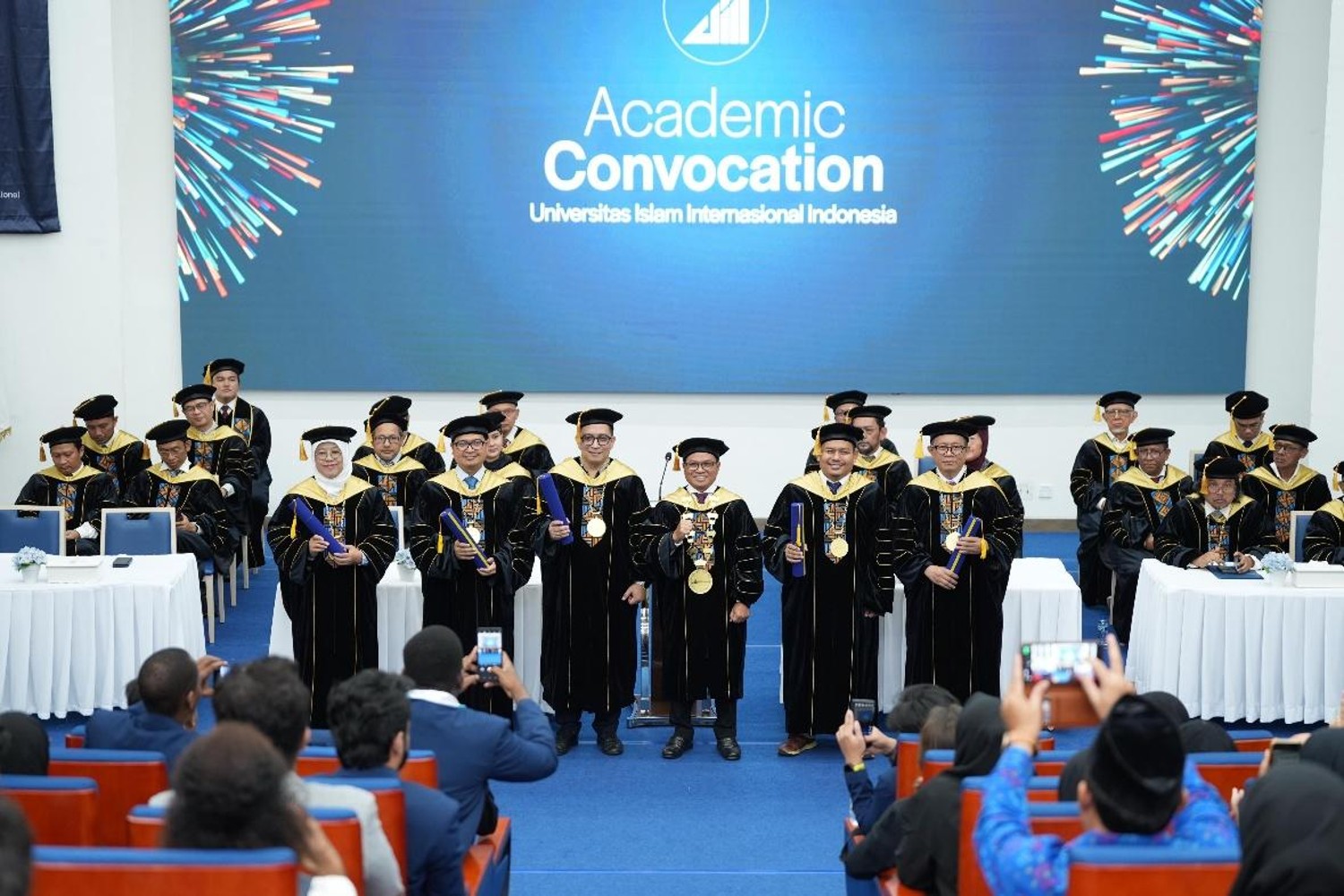
A. Women among graduates and new students
Date: Graduation, 27 August 2025; convocation, 15 September 2025. Unit: Academic Office.
At UIII's graduation on 27 August 2025, 66 of the 164 graduates were women, or 40.2 per cent of the graduating group. The Academic Office's graduate register shows that women were the majority of graduates of the MA in Education (14 of 26) and close to half of those of the Master of Finance Specializing in Sustainable Finance (10 of 21). Of the 66 women graduates, 47 are Indonesian and 19 are international students, among them four women from Afghanistan. The student register of the Academic Office records the gender of every student: of the 155 currently active students of the 2025/2026 cohort, 57 (37 per cent) are women, and 153 of the cohort hold a scholarship. Across all programmes, 158 of the 444 active students (35.6 per cent) are women: 110 of 303 master's students (36.3 per cent) and 48 of 141 doctoral students (34.0 per cent). Recording enrolment and graduation by gender allows the University to follow women's participation from entry to completion.
| Measure | 2025 |
|---|---|
| Graduates (27 August 2025) | 164, of whom 66 women (40.2%) |
| Active students of the 2025/2026 cohort | 155, of whom 57 women (37%) |
| All active students | 444, of whom 158 women (35.6%) |
| Scholarship holders in the 2025/2026 cohort | 153 of 155 |
Table 4: Women among UIII graduates and students, 2025
Contribution to SDG 5: Targets 5.1 and 5.5; THE indicators 5.3.1, 5.5 and 5.6.7.
B. Admissions that encourage women to apply
Date: Admissions cycle 2025/2026, three registration periods from 17 December 2024 to 20 August 2025. Unit: Admissions Office.
UIII's admissions guidance for the 2025/2026 academic year affirms equal treatment of applicants without discrimination and explicitly encourages women, minorities and applicants with disabilities to apply. The University ran three registration periods between 17 December 2024 and 20 August 2025, and all scholarship schemes are open to women and men on the same terms.
Contribution to SDG 5: Target 5.1; THE indicator 5.3.2.
Official page: https://admissions.uiii.ac.id/
2. Educational Access for Afghan Women
SDG 5 alignment: Targets 5.1 and 5.c
A. Norway–UIII, Netherlands–UIII and PEMRI scholarships
Date: Throughout 2025; donor monitoring visit, 11 March 2025. Unit: Academic Office, with the Ministry of Foreign Affairs and partner governments.
UIII continued the Norway–UIII Scholarships for Afghan Women during 2025 with the support of Norway's Ministry of Foreign Affairs. The programme enables master's study through academic support, capacity development and help with social and cultural integration, and UIII manages academic delivery and administrative and financial reporting to the donor. On 11 March 2025 UIII hosted representatives of the Norwegian Embassy for programme monitoring and direct dialogue with the Afghan recipients on their academic progress, student support and adaptation to campus life. In 2025 three Afghan women held the Norway–UIII scholarship for master's study and two the Netherlands–UIII scholarship for doctoral study, all admitted in 2024, and the PEMRI scholarship of the Ministry of Foreign Affairs, Indonesian AID and UIII supports outstanding Afghan students. UIII Daycare also cares for children from Afghan families on campus.
Contribution to SDG 5: Targets 5.1 and 5.c (removing barriers to women's education); THE indicator 5.3.3.
B. International engagement and public advocacy for Afghan women's education
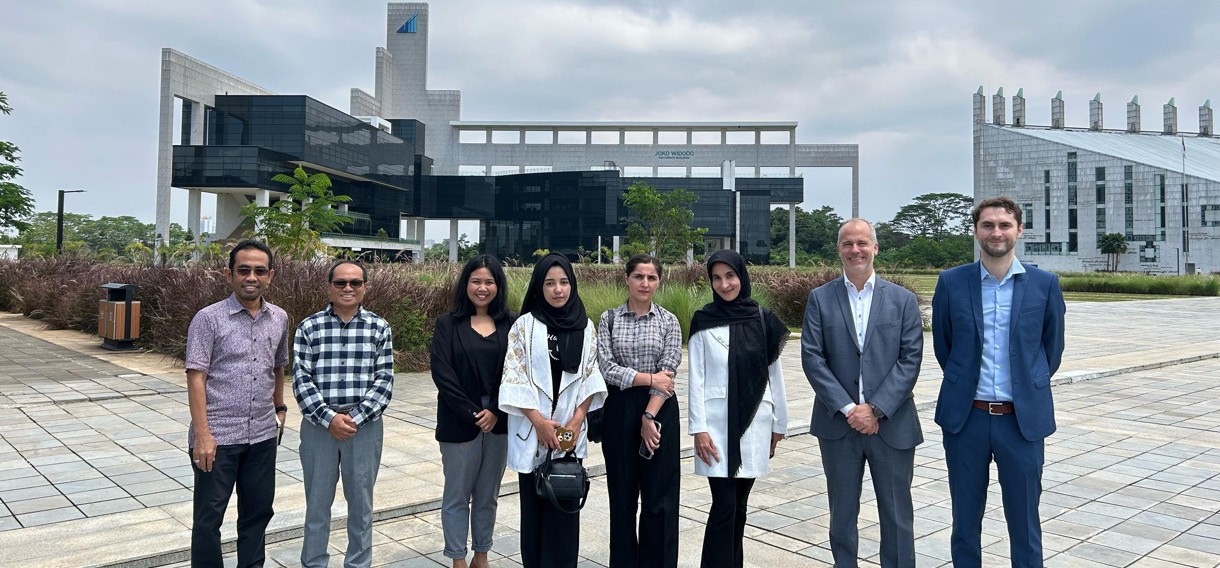
Date: 16 June 2025; 17 June 2025; October 2025; 1 and 30 December 2025. Unit: Rectorate and International Office.
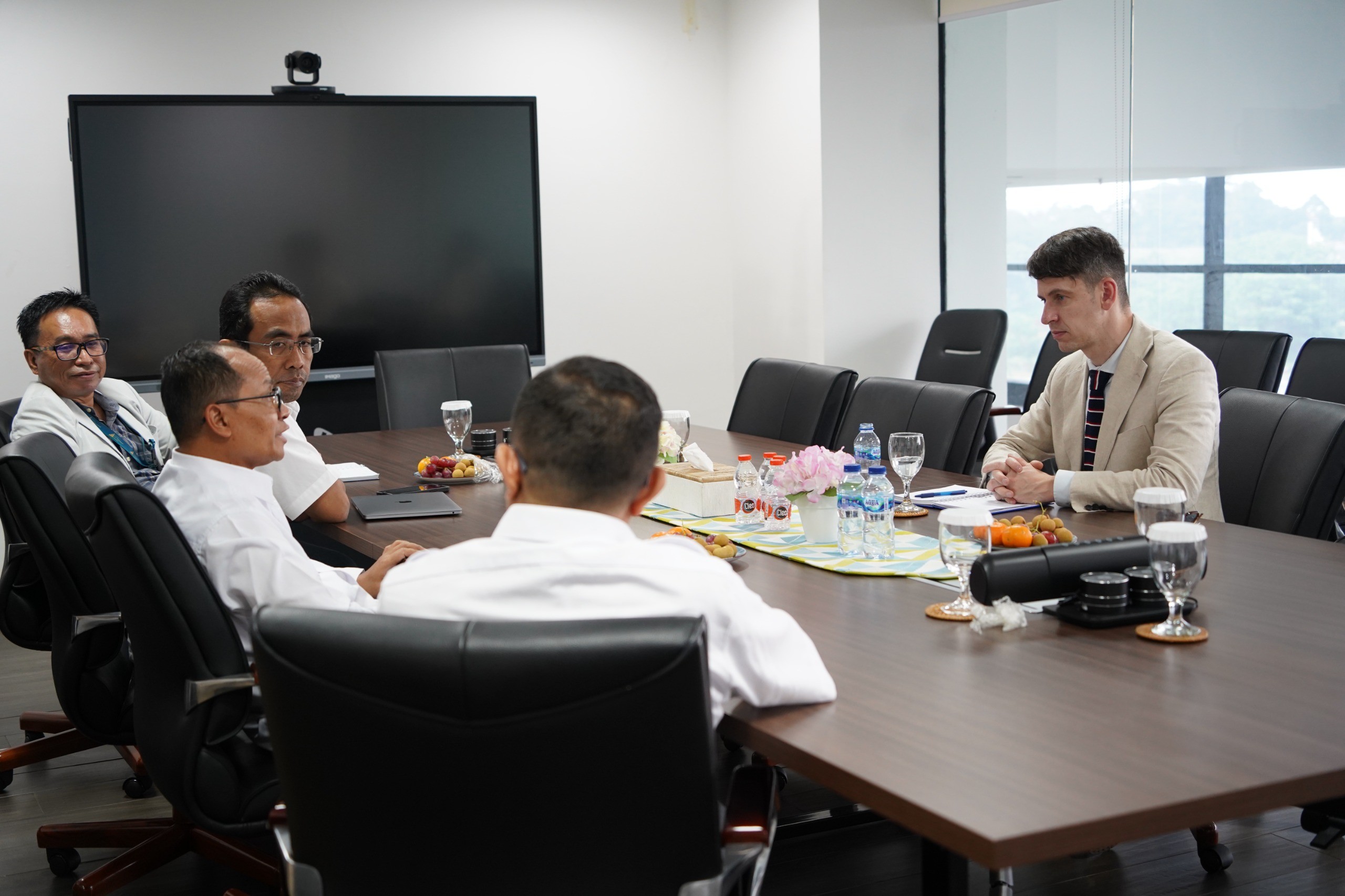
On 16 June 2025 UIII welcomed the European Union representative Michal Weglarz for discussions with the University's leadership in which educational access for women from conflict-affected settings such as Afghanistan was a central topic. On 17 June UIII met Farooq Ahmadi of the TakSaz Social and Educational Development Services Organization on the Afghan Distance English Learning (ADEL) project, a joint initiative funded by the Netherlands in 2024 that provides online English courses for Afghan women aged 17–24 in Kabul Province, to review implementation and grant accountability. In October 2025 the Rector described the scholarship partnerships with the Netherlands, Norway and Germany at the University's certificate course on international humanitarian law, and his articles "Diplomacy of Giving" (1 December 2025) and "Brave Women of Afghanistan" (30 December 2025) brought Afghan women's exclusion from education into public debate and argued for women's right to seek knowledge.
Contribution to SDG 5: Targets 5.1 and 5.c; THE indicators 5.3.3 and 5.3.5.
Official page: https://uiii.ac.id/ (news: "Brave Women of Afghanistan", 30 December 2025; "EU Representative Michal Weglarz Visits UIII", 24 June 2025)
3. Women Scholars' Development
SDG 5 alignment: Target 5.5
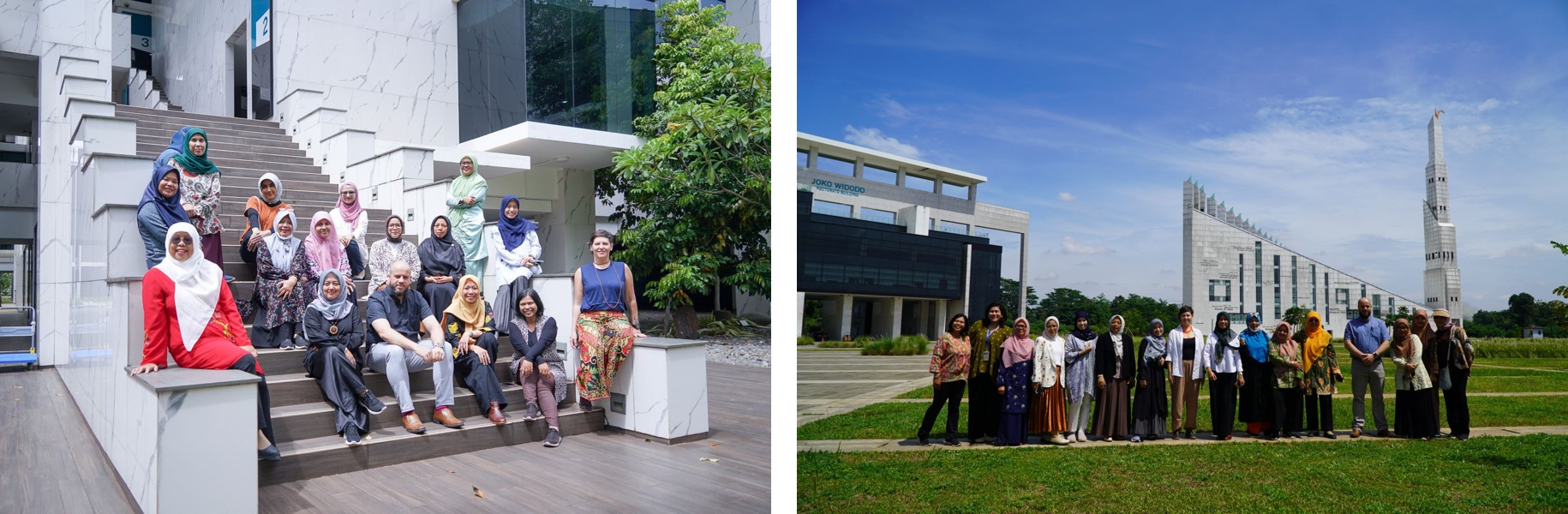
Date: 14–15 January 2025, Faculty A Building. Unit: Faculty of Education, within a global initiative funded by the British Academy.
UIII hosted a decolonial academic writing workshop for 24 women early-career scholars, 12 from Brazil and 12 from Indonesia, selected from a far larger pool of applicants. It was facilitated by Dr. Leon Moosavi of the University of Liverpool, Prof. Camila Prando of the University of Brasilia and Prof. Nina Nurmila, Dean of UIII's Faculty of Education, and followed a similar workshop in Brazil in December 2024. Participants examined inequalities in knowledge production, learned approaches to writing and publishing, and discussed how women scholars from the Global South navigate career systems, language barriers and limited access to journals; they were encouraged to pass on what they learned through their own workshops.
Contribution to SDG 5: Target 5.5 (women's participation and leadership in academic life); THE indicator 5.6.6.
Official page: https://uiii.ac.id/ (news: "Who Shapes What We Know? UIII Workshop Challenges Global North's Domination in Knowledge Production", 14 January 2025)
4. Childcare and Family Support
SDG 5 alignment: Target 5.4
A. Gender-responsive and child-friendly workplace regulation
Date: Rector's Regulation No. 23 of 2023, in force in 2025. Unit: Rectorate.
Rector's Regulation No. 23 of 2023 on the provision of gender-responsive and child-friendly work facilities requires equal work opportunities for women and men and provides lactation rooms, daycare and health facilities on campus. It allows staff time to breastfeed or express milk during working hours, so that parents, and mothers in particular, can continue their academic and professional work.
Contribution to SDG 5: Target 5.4 (recognising and sharing unpaid care work); THE indicator 5.6.3.
B. UIII Daycare for the children of students and staff
Date: Throughout 2025, third year of operation. Unit: Faculty of Education.
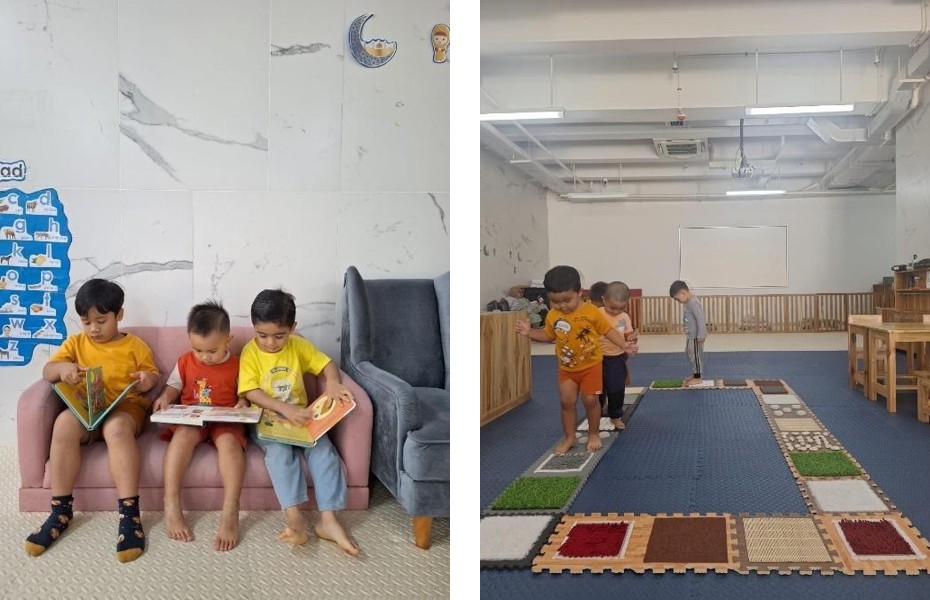
UIII Daycare, run by the Faculty of Education, serves the children of students and staff. In 2025 it cared for eight children, from Indonesia, Afghanistan and Egypt, within a capacity of ten places, while the waiting list reached 35. The University added an intern teacher in the third quarter and allocated larger premises in the former RRI building, now under renovation for 20 children. The daycare added 60 children's books and set individual three-month learning targets, combining Indonesian and English communication with Montessori-informed learning, early literacy and motor development. A Faculty of Islamic Studies feature in June 2025 told how staff member Fakhriyan Ardyanto and his family used the service as part of their shared parenting.
| Measure | Reported status, 2025 |
|---|---|
| Children attending | 8 |
| Existing capacity | 10 places |
| Peak waiting list | 35 children |
| Staffing addition | 1 intern teacher in the third quarter |
| Learning resources | 60 additional children's books |
| Expansion | Larger premises under renovation, projected capacity of 20 children |
Table 5: UIII Daycare operation and development, 2025
Contribution to SDG 5: Target 5.4 (shared responsibility within the household and the family); THE indicators 5.6.4 and 5.6.5.
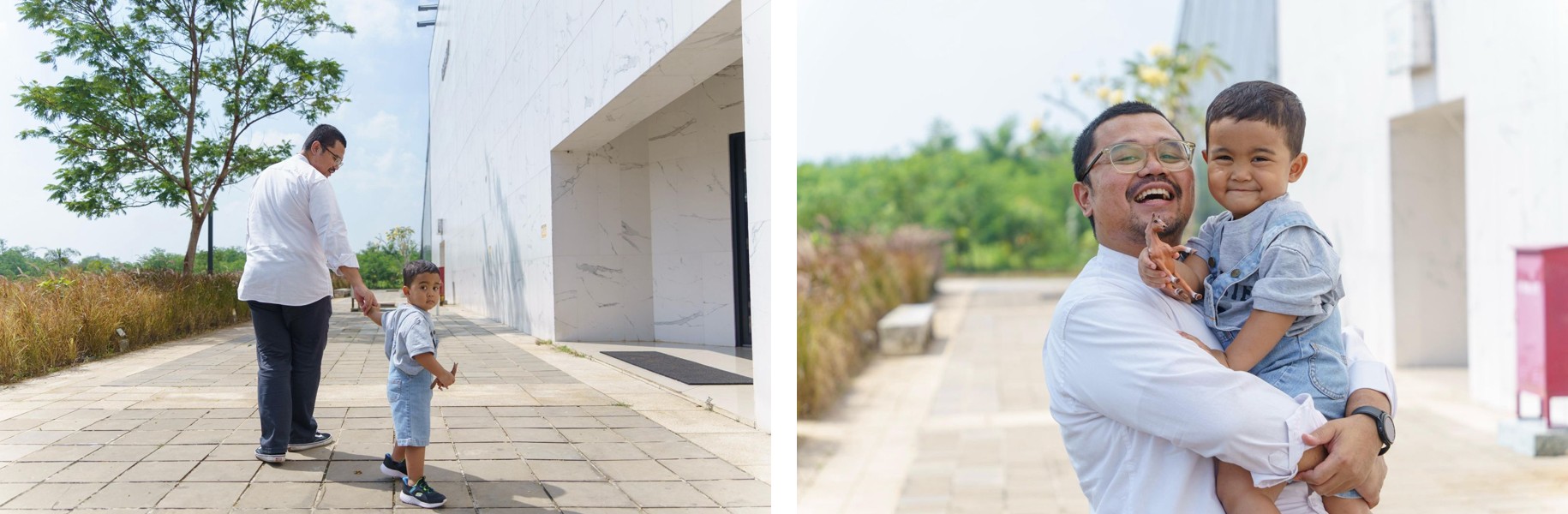
Source: Dalmi, K. D., "A Story of a Father, a Family, and a Campus That Cares", Faculty of Islamic Studies, 20 June 2025; UIII Annual Report 2025.
5. Policy against Discrimination
SDG 5 alignment: Targets 5.1 and 5.c
Date: Rector's Circular of 2 January 2025. Unit: Rectorate; Counseling and Mental Health Services.
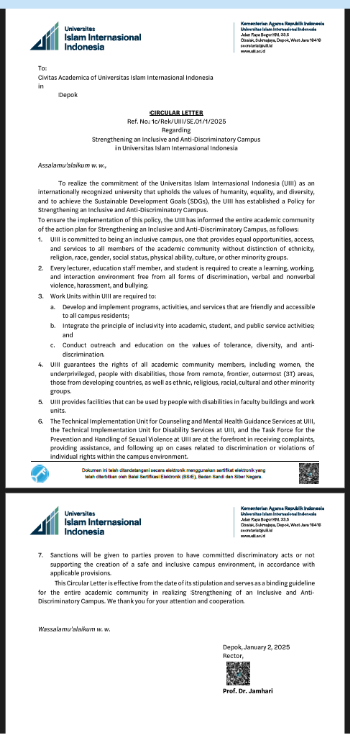
On 2 January 2025 the Rector issued Circular Letter No. 1c/Rek/UIII/SE.01/1/2025 on Strengthening an Inclusive and Anti-Discriminatory Campus. It establishes equal opportunities, access and services without distinction of gender or other personal and social characteristics and explicitly guarantees the rights of women within the academic community. It requires lecturers, staff and students to keep learning and working environments free from discrimination, violence, harassment and bullying; requires work units to integrate inclusion into academic and public services and to conduct outreach on tolerance and anti-discrimination; It assigns the Technical Implementation Unit for Counseling and Mental Health Guidance Services, the Technical Implementation Unit for Disability Services and the Task Force for the Prevention and Handling of Sexual Violence to receive complaints, provide assistance and follow up cases of discrimination or violations of individual rights, and provides for sanctions against those proven to have committed discriminatory acts. The Counseling and Mental Health Services, led by Dr. Lukman Nul Hakim with Assoc. Prof. Charyna Ayu Rizkyanti, offer students and staff a safe space that respects diversity of culture, gender and background, with counselling and referral to external services.
Contribution to SDG 5: Targets 5.1 and 5.c (ending discrimination; enforceable policies for gender equality); THE indicators 5.3.2, 5.6.1 and 5.6.8.
6. Gender Education, Outreach and Partnerships
SDG 5 alignment: Targets 5.1, 5.2 and 5.5
A. Partnership with Kalyanamitra
Date: 15 July 2025. Unit: Rectorate.
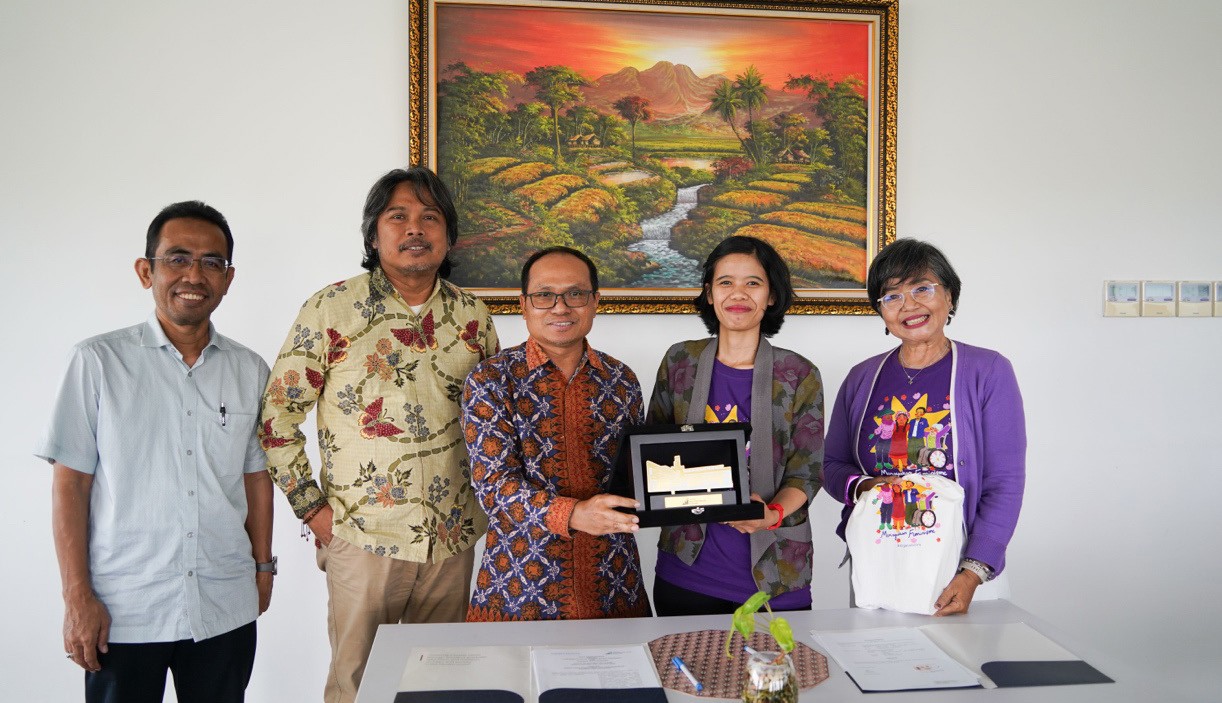
UIII and Kalyanamitra, an Indonesian women's rights organisation, signed a memorandum of understanding covering education, research, community engagement and scholarly activities. The meeting explored collaboration on women's empowerment, community capacity building, research-informed policy advocacy and gender literacy on campus, and the agreement provides a framework for joint research, seminars, workshops and publications.
Contribution to SDG 5: Targets 5.1 and 5.5; THE indicator 5.3.5.
B. Gender equality in the curriculum
Date: Throughout 2025. Unit: all faculties.
Gender equality is taught to every student through the compulsory university course Wasatiyyatul Islam in a Globalizing World (UNI201/UNI301), which includes a session on wasatiyya and gender; on 5 December 2025 Prof. Nina Nurmila taught this session to the Faculty of Social Sciences class. The MA and PhD in Political Science offer Gender and Politics (POL218/POL318), and the Faculty of Islamic Studies teaches Islamic Legal Heritage and Contemporary Issues, which covers gender. In the Master of Public Policy in Climate Change, a capstone project with UNFPA Indonesia on climate change, reproductive health and gender-based violence, "The New Skills Midwives Need as Part of the Climate Solution", received the Best MPP Capstone award on 22 August 2025.
Contribution to SDG 5: Targets 5.1, 5.2 and 5.6 (gender equality, violence against women, reproductive health); THE indicator 5.1.
C. Public activities and outreach on gender equality
Date: February to December 2025. Unit: Faculty of Education.
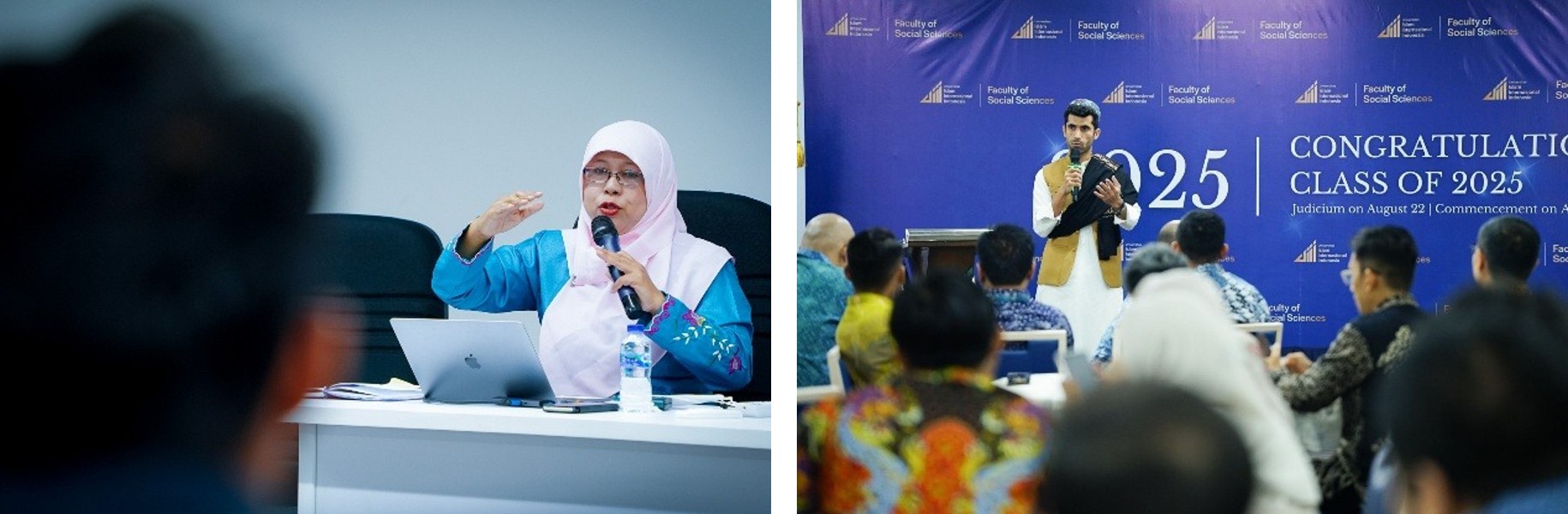
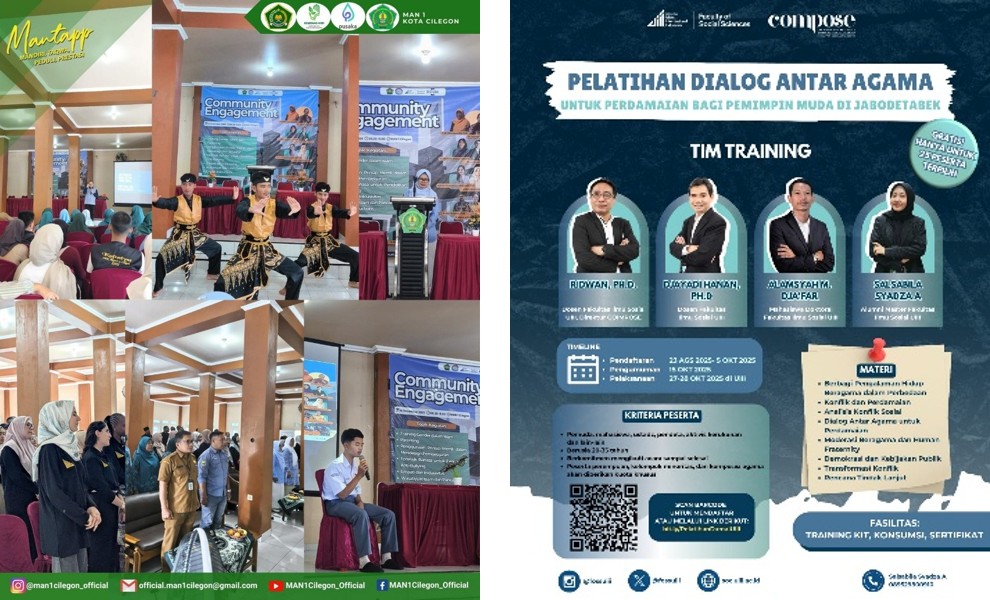
Prof. Nina Nurmila led a series of public activities on gender equality in 2025: a workshop on freedom of religion and belief from a gender perspective for policy makers with Fatayat NU (22 February); a talk on the history and future of the Islamic women's movement at STAI Sadra (4 March); a webinar on Kartini and women today (1 May); the women youth interfaith camp "Building Peace through Dialogue" with two doctoral students (6 October); a book launch discussion at AICIS+ (29 October); and a gender-in-Islam session for students of MAN 1 Cilegon, Banten (16 December), part of a Faculty of Education community service day for the madrasah.
Contribution to SDG 5: Targets 5.1 and 5.5; THE indicator 5.3.5.
Sources: Faculty of Education Annual Report 2025; UIII Annual Report 2025.
Section 3: Conclusion
The evidence in this report shows how a postgraduate university contributes to gender equality. UIII's contribution takes three forms: research on gender justice in religious thought, women's agency and economic participation, inclusive education and women's representation; policies and services that protect women from discrimination and support parents; and educational access and professional development for women, including women from Afghanistan who are excluded from education at home.
Target 5.1 (ending discrimination) is served by the 2025 Rector's Circular on an inclusive, anti-discriminatory campus, admissions guidance that encourages women to apply, and scholarships for Afghan women. Target 5.4 (care work) is served by Rector's Regulation No. 23 of 2023 and UIII Daycare, Target 5.5 (participation and leadership) by the women scholars' writing workshop and research on women's representation, and Target 5.c by the University's policies and its partnership with Kalyanamitra. Women made up 40.2 per cent of the 2025 graduates and 37 per cent of the new cohort.
In 2026 UIII will extend the data it reports on gender, including the share of women among senior academic staff, applications and acceptances by gender, first-generation women students and maternity and paternity provisions, and will open the expanded daycare for 20 children. This report complements the SDG 5 chapter of the UIII Sustainable Development Goals Report 2025/2026.
References
[1] Nurmila, N. KUPI Approach to Qur'an and Hadith Re-interpretation. African Journal of Gender and Religion, 31(1), 2025, pp. 41–64.
[2] Nurmila, N. Islamic Feminists' Approaches. In M. Bano (ed.), The Cambridge Companion to Women and Islam. Cambridge University Press, 2025, pp. 214–233.
[3] Durriyah, T. L., Dewayani, S. and Parlindungan, F. Navigating Teacher Agency. In Resilient and Sustainable Education Futures, Sustainable Development Goals Series. Springer, 2025, pp. 237–251.
[4] Nasir, M. M. and Shamim, S. Muslim women entrepreneurs: an exploratory study of the Nigerian "Mumpreneurs" perspective. International Journal of Organizational Analysis, 33(2), 2025, pp. 416–433.
[5] Jafri, Q. A., Khokhar, J. I. and Mubeen, M. Intersectionality and Gendered Criminal Justice in South Asia: The Case of Pakistan. Women & Criminal Justice, 35(1), 2025, pp. 1–14.
[6] Afifah, N. F. Grassroots Pathway of Women's Representation in Indonesia. Master's thesis, UIII, 2025.
[7] Universitas Islam Internasional Indonesia. Rector's Circular Letter No. 1c/Rek/UIII/SE.01/1/2025 on Strengthening an Inclusive and Anti-Discriminatory Campus. 2 January 2025.
[8] Universitas Islam Internasional Indonesia. Rector's Regulation No. 23 of 2023 on Gender-Responsive and Child-Friendly Work Facilities. 1 September 2023.
[9] Universitas Islam Internasional Indonesia. Laporan Tahunan 2025 (Annual Report 2025).
[10] Faculty of Education, UIII. Annual Report 2025.
[11] Supriyono. Who Shapes What We Know? UIII Workshop Challenges Global North's Domination in Knowledge Production. UIII news, 14 January 2025.
[12] Dalmi, K. D. A Story of a Father, a Family, and a Campus That Cares. Faculty of Islamic Studies, UIII, 20 June 2025.
[13] Supriyono. EU Representative Michal Weglarz Visits UIII, Paving a Way for Potential Collaboration. UIII news, 24 June 2025.
[14] Makruf, J. Diplomacy of Giving: Strengthening Indonesia's Global Role. UIII, 1 December 2025.
[15] Makruf, J. Brave Women of Afghanistan. UIII, 30 December 2025.