

SDG 17.4.1 Education for SDGs: Commitment to meaningful education
Universitas Islam Internasional Indonesia
Universitas Islam Internasional Indonesia (UIII) commits, as a body, to giving every student in every faculty and programme an education that engages with the Sustainable Development Goals. The commitment is written into the University’s Academic Guidelines, issued by Decree of the Rector, and therefore binds all twelve master’s and doctoral programmes in its five faculties and every new cohort.
The commitment rests on three elements that together reach all students (Table 1): a university-wide compulsory course that every master’s and doctoral student must pass; two degree programmes whose entire curricula are built around sustainability; and courses in every other programme that address the economic, social and environmental dimensions of the SDGs. It is kept meaningful through outcome-based curricula, semester learning plans and periodic curriculum review, and connected to practice through guest lectures, capstone projects and field engagement with the public institutions that work on the goals.
Table 1. Elements of UIII’s commitment to education for the SDGs, 2025.
| Element | What it is | Students reached | Main SDGs | Part |
|---|---|---|---|---|
| Policy commitment | Academic Guidelines (Rector’s Decree No. 54b/R/2021) make the university course compulsory for all students and require outcome-based curricula | All programmes and cohorts | 4 | 1 |
| University-wide compulsory course | Wasatiyyatul Islam in a Globalizing World (UNI201/UNI301), 3 credits, a graduation requirement | All master’s and doctoral students | 4.7, 5, 10, 16, 17 | 2 |
| Degrees built around sustainability | Master of Public Policy in Climate Change; Master of Finance in Sustainable Finance | 73 students in 2025 | 7, 8, 12, 13 | 3 |
| SDG courses in every programme | Courses on development, gender, equity, well-being, humanitarian affairs, and religion and development | Students of all other programmes | 1, 3, 4, 5, 10, 16, 17 | 4 |
1. Policy Commitment and Curriculum Governance
1.1. Academic Guidelines of UIII
Instrument: Pedoman Akademik di Lingkungan Universitas Islam Internasional Indonesia (Academic Guidelines of UIII)
Legal basis: Rector’s Decree No. 54b/R/2021, in force in 2025; renewed by Rector’s Decree No. 51/R/2026
Scope: All master’s and doctoral programmes of the University
The Academic Guidelines define the curriculum of every master’s and doctoral programme as foundation courses, core courses and electives, and require, in addition, that every UIII student take Wasatiyyatul Islam (the Middle Path of Islam) as a university-wide compulsory course. The course aims to equip students with an understanding of the moderate values of Islam and to disseminate the values of moderation in society, the nation, the state and the global community. Because the requirement sits in the University’s governing academic regulation rather than in the decision of any one faculty, it binds every programme, applies automatically to every new cohort, and can only be changed by the Rector.
1.2. Keeping the commitment meaningful
The same guidelines govern how the commitment is kept meaningful in practice. Every programme applies outcome-based education: its curriculum is derived from programme learning outcomes aligned with the vision and mission of the faculty and the University, and every course is taught from a semester learning plan (RPS) that states its learning outcomes, content and assessment. Curricula are reviewed periodically against developments in the discipline, the needs of society and national and international standards, with the involvement of external experts. This cycle of outcome setting, course design, assessment and review is the mechanism through which the compulsory course and the sustainability-related courses in each programme are examined and updated, and through which the University is integrating the SDGs explicitly into the learning outcomes of all its programmes.
SDGs Relevance: Quality Education, Partnerships for the Goals
2. A Compulsory Course for All Students
2.1. Wasatiyyatul Islam in a Globalizing World (UNI201/UNI301)
Credits and status: 3 credits; compulsory foundation course and graduation requirement
Coverage: UNI201 in all master’s programmes, UNI301 in all doctoral programmes (Table 2)
Delivery: Taught in each faculty by teams of faculty members; in the Faculty of Islamic Studies convened by Farid Fachruddin, Ph.D., with Dr. phil. Zacky Khairul Umam and Dr. A. Mughzi Abdillah, jointly for the MA and PhD classes
Assessment: Papers, presentations and examinations
The course is offered in all twelve programmes: the MA and PhD in Islamic Studies and the MA in Turath Islam (Faculty of Islamic Studies); the MA and PhD in Political Science and the Master of Public Policy in Climate Change (Faculty of Social Sciences); the MA and PhD in Economics and the Master of Finance in Sustainable Finance (Faculty of Economics and Business); the MA and PhD in Education (Faculty of Education); and the Master of Science in Data Science (Faculty of Science and Technology).
Table 2. The university-wide compulsory course in the curriculum of each UIII programme, 2025.
| Programme | Faculty | Code | Status in curriculum | Courses (2025 inventory) |
|---|---|---|---|---|
| MA in Islamic Studies | Islamic Studies | UNI201 | Foundation, compulsory | 48 |
| MA in Turath Islam | Islamic Studies | UNI201 | Compulsory, year 1 semester 1 | 19 |
| PhD in Islamic Studies | Islamic Studies | UNI301 | Foundation, compulsory | 15 |
| MA in Political Science | Social Sciences | UNI201 | Foundation, compulsory | 38 |
| Master of Public Policy in Climate Change | Social Sciences | UNI201 | Foundation, compulsory | 22 |
| PhD in Political Science | Social Sciences | UNI301 | Foundation, compulsory | 39 |
| MA in Economics | Economics and Business | UNI201 | Foundation, compulsory | 15 |
| Master of Finance in Sustainable Finance | Economics and Business | UNI201 | Compulsory | 23 |
| PhD in Economics | Economics and Business | UNI301 | Foundation, compulsory | 19 |
| MA in Education | Education | UNI201 | Foundation, compulsory | 26 |
| PhD in Education | Education | UNI301 | Foundation, compulsory | 25 |
| MSc in Data Science | Science and Technology | UNI201 | Foundation, compulsory | 7 |
2.2. Why the course is meaningful education for the SDGs
The course delivers what SDG Target 4.7 asks of education: that all learners acquire the knowledge and skills needed to promote a culture of peace and non-violence, global citizenship and appreciation of cultural diversity. Its learning outcomes, stated in the course design, and its fourteen weekly themes, which move from the theology and genealogy of wasatiyya to its practice, map onto the goals as shown in Table 3.
Table 3. Learning outcomes and themes of the compulsory course mapped to the SDGs.
| Learning outcome or theme | What students learn | SDGs |
|---|---|---|
| Diversity of cultures, views, religions and beliefs | Appreciation of diversity and peaceful coexistence | 4.7, 16 |
| Cooperation and social sensitivity; concern for society and the environment | Social and environmental responsibility | 4.7, 11, 13 |
| Islamic moderation and democracy, state–society relations and citizenship | Inclusive institutions and global citizenship | 16 |
| Moderation and civil society (Nahdlatul Ulama, Muhammadiyah); moderation as state policy | Role of civil society and the state in social cohesion | 16, 17 |
| Wasatiyya in the Islamic economy and halal industry | Ethical economy and responsible production | 8, 12 |
| Wasatiyya and gender | Gender justice in religious thought and practice | 5 |
| Education and youth; Sufism | Education for character, ethics and youth participation | 4, 10 |
| Wasatiyya as foreign policy | Diplomacy, conflict resolution and global peace | 16, 17 |
2.3. Delivery in 2025: public figures and field learning
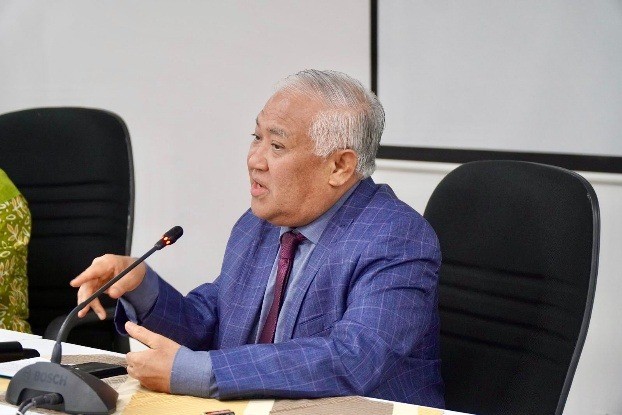
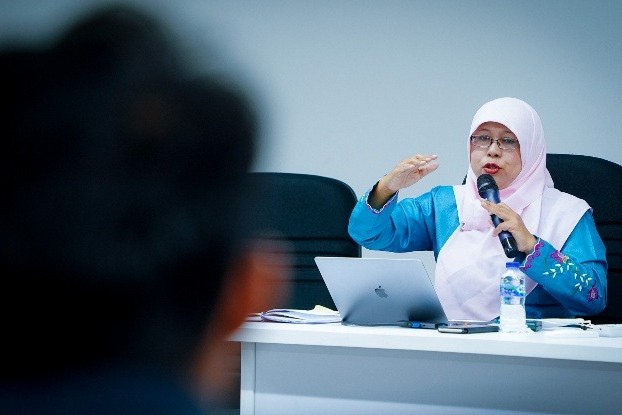
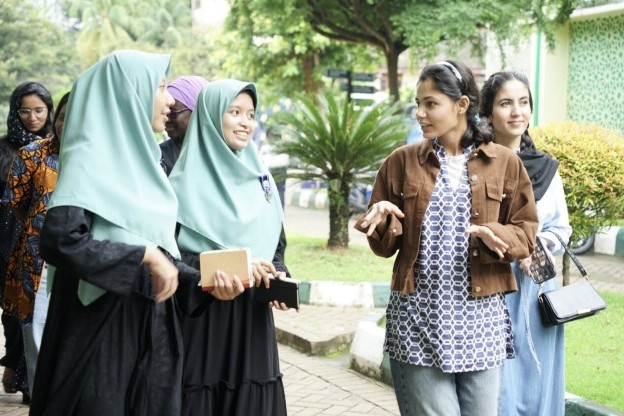
In 2025 the course brought public figures into the classroom and took students into communities. On 10 January Dr. Haidar Bagir, founder of Mizan Group, lectured to the Faculty of Social Sciences class on faith, science and Sufi ethics in Indonesia’s tradition of moderation. On 5 December Prof. Nina Nurmila, Dean of the Faculty of Education, taught the Faculty of Social Sciences class on wasatiyya and gender. On 17 December Prof. Din Syamsuddin, Chairman of the Center for Dialogue and Cooperation among Civilizations, lectured to the Faculty of Education class on wasatiyyat Islam as foreign policy, conflict resolution and global peace. On 24 December the Faculty of Social Sciences class, taught by Prof. M. Syafi’i Anwar and Prof. Komaruddin Hidayat, visited Darunnajah Islamic Boarding School for an exchange on religious moderation in practice.
Table 4. Guest lectures and field learning in the compulsory course, 2025.
| Date | Class | Speaker or activity | Topic | SDGs |
|---|---|---|---|---|
| 10 Jan 2025 | Faculty of Social Sciences | Dr. Haidar Bagir, founder of Mizan Group | Faith, science and Sufi ethics in Indonesia’s tradition of moderation | 4.7, 16 |
| 5 Dec 2025 | Faculty of Social Sciences | Prof. Nina Nurmila, Dean of the Faculty of Education | Wasatiyya and gender | 5, 10 |
| 17 Dec 2025 | Faculty of Education | Prof. Din Syamsuddin, Chairman of the Center for Dialogue and Cooperation among Civilizations | Wasatiyyat Islam as foreign policy, conflict resolution and global peace | 16, 17 |
| 24 Dec 2025 | Faculty of Social Sciences | Field visit to Darunnajah Islamic Boarding School with Prof. M. Syafi’i Anwar and Prof. Komaruddin Hidayat | Religious moderation in practice | 4, 16 |
SDGs Relevance: Quality Education (Target 4.7), Gender Equality, Reduced Inequalities, Peace, Justice and Strong Institutions, Partnerships for the Goals
3. Degree Programmes Built around Sustainability
Two programmes are designed entirely around the SDGs, so that every course a student takes in them is education for sustainable development; together they enrolled 73 students in 2025. Their full course lists are documented in the University’s submission for indicator 17.4.2.
3.1. Master of Public Policy in Climate Change
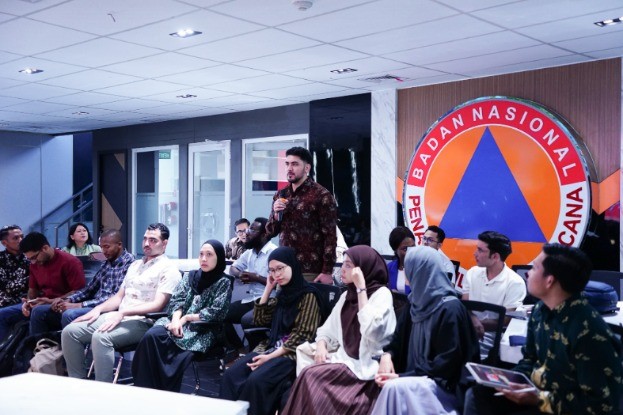
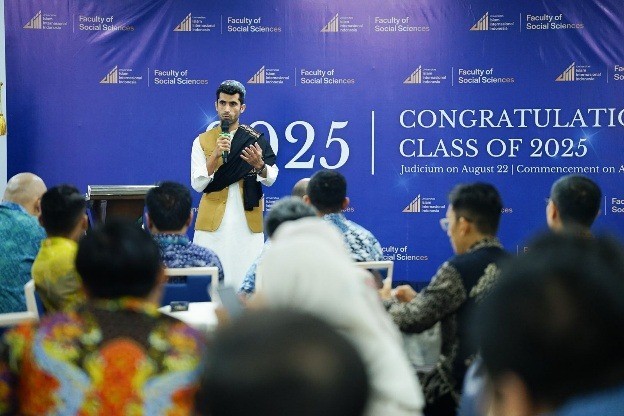
The Faculty of Social Sciences trains climate policy analysts for the Global South through 22 courses, including The Science of Climate Change, Variability and Risk Management; Climate Policy Debates in the Global South; Climate Policy Instruments for the Global South; Carbon Pricing and Energy Economics; Climate Change and Environmental Ethics; Policy Communication and Climate Diplomacy; and a Capstone Project with a public or international agency. In 2025 the capstone collaboration with UNFPA Indonesia produced “The New Skills Midwives Need as Part of the Climate Solution”, awarded Best MPP Capstone at the Faculty’s judicium on 22 August 2025, and the course Policy Communication and Climate Diplomacy took 21 students to the emergency operations centre of the National Disaster Management Authority (BNPB).
3.2. Master of Finance in Sustainable Finance
The Faculty of Economics and Business requires Principles of Sustainable Finance; ESG and Impact Investment; Ethical and Responsible Business; Governance, Risk and Compliance for Sustainable Finance; Sustainability in Islamic Banking and Finance; and Research Methods for Sustainable Finance, with specialisation courses in Clean Energy and Carbon Trading, Green Accounting and Reporting Standards, Microfinance and Social Finance, Financial Technology and Sustainability, and Geopolitics and Business Sustainability. Two compulsory Lifelong Learning courses require students to take part in community or international conferences and to manage a sustainable finance project. With the UIII Sustainability Center, the Faculty delivered executive training on IFRS S1 and S2 sustainability reporting on 22–24 July 2025.
SDGs Relevance: Climate Action, Affordable and Clean Energy, Decent Work and Economic Growth, Responsible Consumption and Production
4. SDG-related Courses in Every Other Programme
Every other programme teaches courses that address the SDGs, so that students who are not enrolled in a sustainability degree still study the goals relevant to their discipline (Table 5). The MA and PhD in Political Science cover development, gender, citizenship and global governance; the MA and PhD in Economics cover development, environmental and energy economics and Islamic finance; the MA and PhD in Education cover well-being, human development, literacy and education policy, with guest lecturers from Bappenas and the national curriculum and assessment agency (BSKAP) in 2025; and the Islamic Studies programmes cover comparative religion, humanitarian affairs and religion and development. The Master of Science in Data Science, launched in 2025, directs its technical training at sustainability and governance through Domain Exploration and Research Design for Data Science.
Table 5. SDG-related courses by programme, 2025.
| Programme | Courses that address the SDGs | Main SDGs |
|---|---|---|
| Master of Public Policy in Climate Change | Entire curriculum: climate science, climate policy for the Global South, carbon pricing and energy economics, environmental ethics, climate diplomacy, capstone project with a public or international agency | 13, 7, 11, 17 |
| Master of Finance in Sustainable Finance | Principles of Sustainable Finance; ESG and Impact Investment; Ethical and Responsible Business; GRC for Sustainable Finance; Sustainability in Islamic Banking and Finance; Clean Energy and Carbon Trading; Green Accounting; Microfinance and Social Finance; Lifelong Learning courses | 7, 8, 12, 13, 1 |
| MSc in Data Science | Domain Exploration and Research Design for Data Science; Research Methodology and Data Literacy | 9, 13, 16 |
| MA and PhD in Political Science | Religion, Democracy and Development; Gender and Politics; Identity and Democratic Citizenship; International Organizations and Global Governance; Comparative Political Economy of Development; Cooperation and Conflicts in the Muslim World; Contentious Politics and Social Movements in the Muslim World | 5, 10, 16, 17 |
| MA and PhD in Economics | Development Economics; Environmental and Energy Economics; Islamic Banking and Finance; Geopolitics and Business Sustainability; Behavioral Economics | 1, 7, 8, 13 |
| MA and PhD in Education | Well-Being in Education; Human Development; Education and Human Capital; Literacy Development and Resources; Comparative Philosophy of Education; Curriculum Development; Education Financing; Educational Policy Analysis | 3, 4, 10 |
| MA and PhD in Islamic Studies; MA in Turath Islam | Comparative Religion; Islam and Humanitarian Affairs; Religions and Development; Anthropology of Islam and Muslim Societies; Muslim Societies between Heritage and Modernity; Islamic Legal Heritage and Contemporary Issues | 10, 16, 17 |
| All programmes | Wasatiyyatul Islam in a Globalizing World (UNI201/UNI301): peace, tolerance, citizenship, gender, Islamic economy, education | 4.7, 5, 10, 16 |
5. Conclusion
UIII’s commitment to meaningful education around the SDGs is set at the level of the University, written into its Academic Guidelines and delivered to every student. Through the compulsory course Wasatiyyatul Islam in a Globalizing World, every master’s and doctoral student in all twelve programmes of the five faculties studies the values that SDG Target 4.7 asks universities to teach: appreciation of cultural and religious diversity, a culture of peace and non-violence, gender equality, social and environmental responsibility, and global citizenship. The course is a graduation requirement rather than an optional enrichment, and every cohort, including the 2025/2026 intake, takes it.
This common foundation is deepened where sustainability is the subject of the degree itself, in the two sustainability degrees with 73 students in 2025, and in the courses on development, gender, equity, well-being, humanitarian affairs, and religion and development that every other programme offers. Guest lectures by national figures, a capstone project with UNFPA Indonesia and field engagement with BNPB connect this education to the institutions that work on the goals. Building on this foundation, the University is integrating sustainability explicitly into the programme learning outcomes of all its programmes and mapping every course to the goals it serves.
6. Public Evidence
Master of Public Policy (Climate Change), programme page: https://foss.uiii.ac.id/programs/master-public-policy
M.Fin in Sustainable Finance, programme page: https://academic.uiii.ac.id/programs/m-fin-in-sustainable-finance/
Faculty of Social Sciences third judicium, 22 August 2025: https://uiii.ac.id/uiii-faculty-of-social-sciences-holds-third-judicium-highlighting-student-achievements/
Faculty of Economics and Business first judicium for the M.Fin in Sustainable Finance: https://uiii.ac.id/faculty-of-economics-and-business-holds-first-judicium-ceremony-for-mfin-in-sustainable-finance/
Programme curricula: foss.uiii.ac.id; feb.uiii.ac.id; foe.uiii.ac.id; admissions.uiii.ac.id (Islamic Studies and Turath Islam); fst.uiii.ac.id/data-science
References
[1] Universitas Islam Internasional Indonesia. Rector’s Decree No. 54b/R/2021 on the Academic Guidelines of UIII (Pedoman Akademik di Lingkungan UIII).
[2] Universitas Islam Internasional Indonesia. Rector’s Decree No. 51/R/2026 on the Academic Guidelines of UIII.
[3] Faculty of Islamic Studies, UIII. Course design (RPS) of Wasatiyyatul Islam in a Globalizing World, 2025.
[4] Academic Office, UIII. Course inventory 2025. Internal document.
[5] Academic Office, UIII. Student register 2025/2026. Internal document.
[6] Faculty of Social Sciences, UIII. Master of Public Policy, programme page. https://foss.uiii.ac.id/programs/master-public-policy
[7] Academic Office, UIII. M.Fin in Sustainable Finance, programme page. https://academic.uiii.ac.id/programs/m-fin-in-sustainable-finance/
[8] Supriyono. UIII Faculty of Social Sciences Holds Third Judicium Highlighting Student Achievements. UIII news, 22 August 2025.
[9] Supriyono. Faculty of Economics and Business Holds First Judicium Ceremony for MFin in Sustainable Finance. UIII news, August 2025.
[10] United Nations. Transforming Our World: The 2030 Agenda for Sustainable Development, Target 4.7. 2015.