

Public Resources for Lifelong Learning
SDG 4 Quality Education, 4.3.1: Public Resources for Lifelong Learning
Universitas Islam Internasional Indonesia (UIII) is a graduate research university established by the Government of Indonesia and located in Depok, West Java. Its four faculties, Islamic Studies, Social Sciences, Education, and Economics and Business, enrol a selective postgraduate community drawn from more than 40 countries. The University nevertheless regards the knowledge it produces and the facilities it maintains as a public good. Throughout the reporting year 2025, UIII provided free educational resources to people who are not enrolled at the University through three channels that correspond to the three parts of this indicator: certificated training courses delivered to external participants without charge, campus facilities and public programmes open to the surrounding community, and digital resources that any reader in the world may open, read and download without a login.
Under Pillar A, three certificated courses were delivered free of charge to a combined total of 92 external participants. The Center for Muslim Politics and World Society (COMPOSE) at the Faculty of Social Sciences ran the Interfaith Dialogue Training for Young Leaders in Greater Jakarta on 27 and 28 October 2025 for 25 selected young leaders from religious communities and universities. The Faculty of Economics and Business delivered the Training on Research Methods in Islamic Economics and Finance on 4 October 2025 for 27 external students, researchers, civil society staff, government personnel and community leaders. The Faculty of Islamic Studies, with the International Committee of the Red Cross and INSANIA, hosted the 8th Certificate Course on International Humanitarian Law and Islamic Law Related to Armed Conflict from 6 to 10 October 2025 for 40 participants from seven countries. A fourth programme, the SantriPreneur Academy in Ponorogo, extended entrepreneurship training and awards to students of seven Islamic boarding schools.
Under Pillar B, the Jusuf Kalla Library welcomed the general public throughout 2025, with daily visits that rose from about 200 to more than 1,000 after its public opening and a national Accreditation A (Excellent) awarded on 12 September 2025. The Rahmatan Lil 'Alamin Mosque, which remains open to all, ran a Green Ramadan programme in March 2025 that offered daily lectures and 250 free iftar meals each evening to the community of Depok. UIII lecture halls hosted more than 30 public lectures, talks and policy dialogues that were open to external audiences, beginning with the lecture of the Rector of Al-Azhar University on 19 February 2025 and including three dialogues with serving Vice Ministers of the Republic of Indonesia. The campus also served as the venue for national and international academic gatherings that drew thousands of participants from other institutions.
Under Pillar C, UIII published four peer reviewed journals under a Creative Commons Attribution ShareAlike 4.0 licence, each with two issues in 2025 that are freely downloadable; maintained an institutional repository of 783 items that is browsable worldwide; curated an open access electronic resources gateway and a public catalogue through its library; produced the Global South Forum, launched on 17 January 2025 with the Global South Unit of the London School of Economics; published public commentary through UIII Perspectives; and ran free online webinars with the University of Edinburgh, the University of Melbourne and the International Dialogue Centre. The sections that follow describe each provision in full, with its dates, scale, beneficiaries, outcomes, a captioned image placeholder and the public page on which the provision is documented.
Pillar A: Free Courses Leading to a Certificate or Award
In 2025 UIII provides free courses that lead to a certificate or award for people who are not its students through three structured courses, each announced through an open public call on a UIII website and social media outreach, each selecting its participants from external applicants, each delivered without charge on the UIII campus, and each concluding with a certificate issued by the University and its partners. A fourth programme extended award based training to students of Islamic boarding schools in East Java. Together these courses reached 92 certificated external participants, in addition to the santri trained through the SantriPreneur Academy.
A. Interfaith Dialogue Training for Young Leaders in Greater Jakarta (COMPOSE, Faculty of Social Sciences)
The Center for Muslim Politics and World Society (COMPOSE) is the research centre of the Faculty of Social Sciences that works on religion, politics and peacebuilding in Southeast Asia. Under its Director, Ridwan, Ph.D., COMPOSE has become the Southeast Asian convening hub for the International Dialogue Centre (KAICIID) Fellows network. In 2025 it organised the regional conference “Interreligious Dialogue in Southeast Asia: Achievements, Challenges, and Opportunities” on 17 June, hosted the KAICIID Fellows curriculum review on 18 and 19 June, and co-edited a 464 page volume arising from that conference. The Interfaith Dialogue Training for Young Leaders in Greater Jakarta carried this expertise from the scholarly community to young people in the University's own neighbourhood.
The training was announced through an open public call published on the University website on 23 August 2025. Registration remained open until 5 October 2025, selection results were announced on 15 October 2025, and the programme was held on 27 and 28 October 2025 on the UIII campus in Depok. The call invited young leaders from religious communities and universities across Jakarta and Depok, none of whom were required to be UIII students, and provided for 25 selected participants. The call stated that the training was free of charge and that every participant would receive a certificate at the end of the programme. The Faculty's activity record for the training lists 30 young leaders in attendance. The programme was organised by COMPOSE with the support of the UIII Directorate of Research and Cooperation.
Over two days the participants worked through presentations, facilitated discussions, games and role play designed to build the practical skills of facilitating interreligious dialogue for ethnic, religious and cultural harmony. The sessions were led by Ridwan, Ph.D., and Associate Professor Djayadi Hanan of the Faculty of Social Sciences, with Alamsyah M. Dja'far, a doctoral candidate of the Faculty, and Salsabila Syadza, an alumna of the master's programme, as co-facilitators. In the words of the Director of COMPOSE, “interreligious dialogue for peace has long served as a catalyst in preventing and resolving conflicts across the region,” and the training was designed to equip a new generation of community leaders to continue that work.
Each participant received a certificate on completion. The reflections written by participants during the training are being collected to inform a book and journal publications on interfaith dialogue, so that the learning of the course feeds back into the scholarly record. The programme advances UN Target 4.7, which calls for education that promotes a culture of peace and an appreciation of cultural diversity, and it supports the University's stated goal of becoming a Southeast Asian hub for interreligious dialogue.
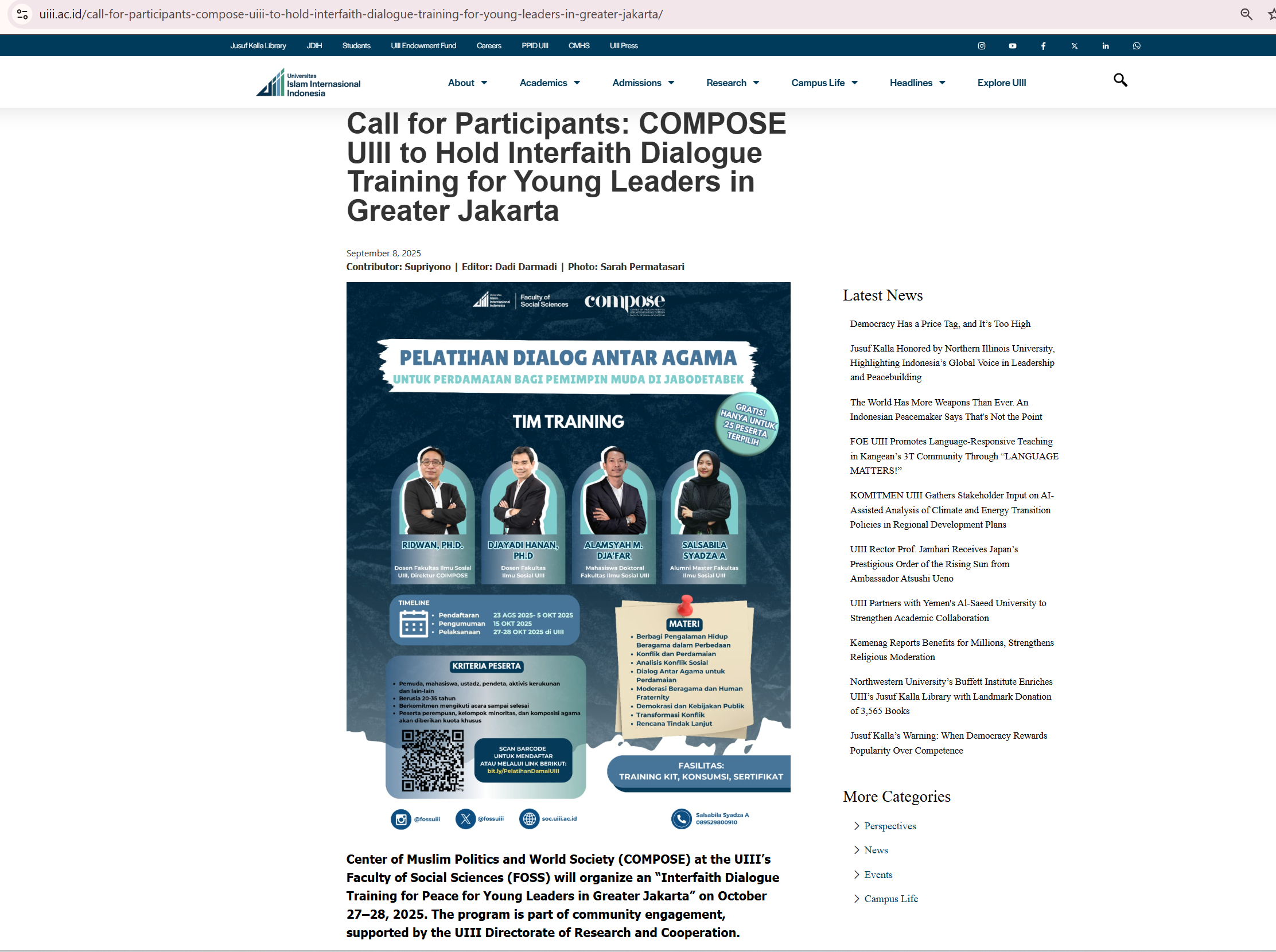
Public verification: https://uiii.ac.id/call-for-participants-compose-uiii-to-hold-interfaith-dialogue-training-for-young-leaders-in-greater-jakarta/
B. Training on Research Methods in Islamic Economics and Finance (Faculty of Economics and Business)
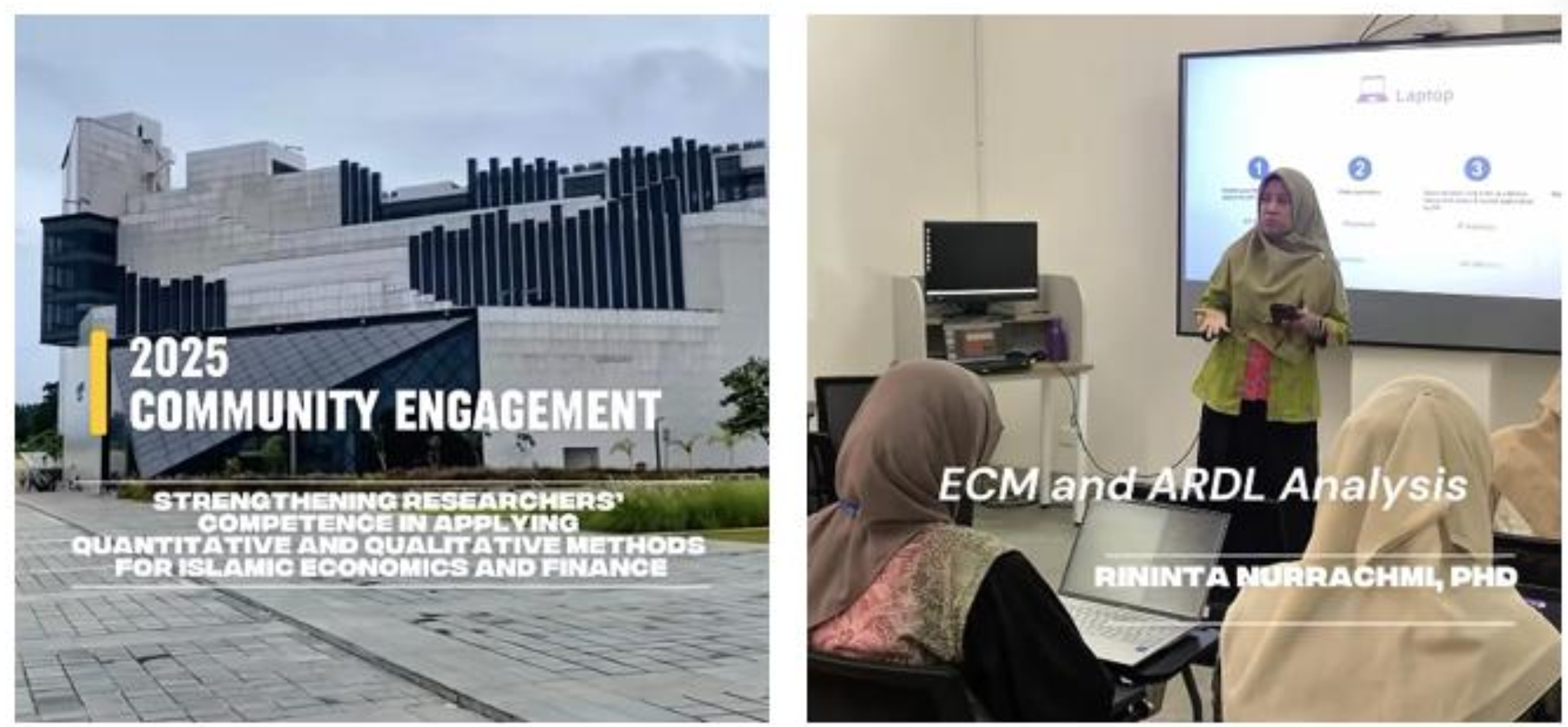
The Faculty of Economics and Business runs an annual Community Engagement Programme funded through the University's competitive community engagement grants. The 2025 programme took as its theme the strengthening of researchers' competence in applying quantitative and qualitative methods to the study of Islamic economics and finance. It grew out of a university level grant awarded to Rininta Nurrachmi, Ph.D., a lecturer of the Faculty, with the aim of raising the methodological capacity of researchers outside the University so that they can produce more rigorous, relevant and competitive research in a field that is expanding rapidly in Indonesia.
The training was announced through a call for participants published on the Faculty website. Registration ran from 11 to 20 September 2025 and the selected participants were announced on 23 September 2025. The call was addressed explicitly to people outside UIII: undergraduate and postgraduate students of other institutions, researchers, staff of civil society organisations, government personnel and community leaders. Twenty seven external participants were selected. The call stated that the training was free of charge and that participants would receive certificates at the end of the programme.
The training took place on 4 October 2025 on the UIII campus. The syllabus combined three methodological traditions used in empirical research on Islamic economics and finance. Rininta Nurrachmi, Ph.D., taught Error Correction Model and Autoregressive Distributed Lag analysis, with an emphasis on distinguishing short run and long run relationships in time series data. Muhammad Yusuf Fakhri led the session on systematic literature review and bibliometric analysis as tools for mapping a research field and building a conceptual framework. Nurshifa Vathia delivered the session on Structural Equation Modelling based on Partial Least Squares as an approach to causal analysis in survey research. Each session paired conceptual instruction with hands-on exercises in the relevant software and closed with consultation on the participants' own research designs.
All 27 participants received completion certificates. The programme responds to UN Target 4.4, which concerns the acquisition of relevant technical skills, and it complements the Faculty's other contributions to the research ecosystem of Islamic economics, including its open access journal, the Muslim Business and Economics Review, and its annual International Conference on Muslim World Economy and Business.
C. 8th Certificate Course on International Humanitarian Law and Islamic Law Related to Armed Conflict (Faculty of Islamic Studies with ICRC Jakarta and INSANIA)
Since 2015 the International Committee of the Red Cross (ICRC) has delivered an annual certificate course in Indonesia on the relationship between international humanitarian law and the Islamic legal tradition on armed conflict. In 2025 the eighth edition of the course was hosted by the Faculty of Islamic Studies of UIII in partnership with the ICRC Regional Delegation in Jakarta and INSANIA. The Faculty's annual report records the course as one of the four flagship academic activities of the year, alongside the International Conference on Decolonizing Social Sciences and Humanities, the opening of the master's programme in Islamic Heritage and the first graduation of its dual degree programmes.
The course ran from 6 to 10 October 2025 in the Faculty A Building on the UIII campus in Depok. It was open by application to academics, researchers and students from across Indonesia and abroad, and it brought together 40 participants from seven countries: Indonesia, Nigeria, Pakistan, Afghanistan, the Philippines, the Gambia and Malawi. Participation was not restricted to UIII students, and the international composition of the cohort reflects the course's standing as a regional programme rather than an internal one. Every participant received a certificate on completion of the five day programme.
The course was designed as an intensive programme that deepens participants' understanding of international humanitarian law and of Islamic law in the context of armed conflict under the guidance of legal advisers of the ICRC and scholars of the Faculty of Islamic Studies. The format combined lectures with structured discussion, the exchange of ideas among participants from different legal and national backgrounds, and the building of an academic network that continues beyond the course. Through the programme the Faculty affirms its commitment to interdisciplinary study that brings together humanitarian values, international law and the Islamic legal heritage in response to contemporary global challenges, a direct contribution to UN Target 4.7 on education for global citizenship and a culture of peace.
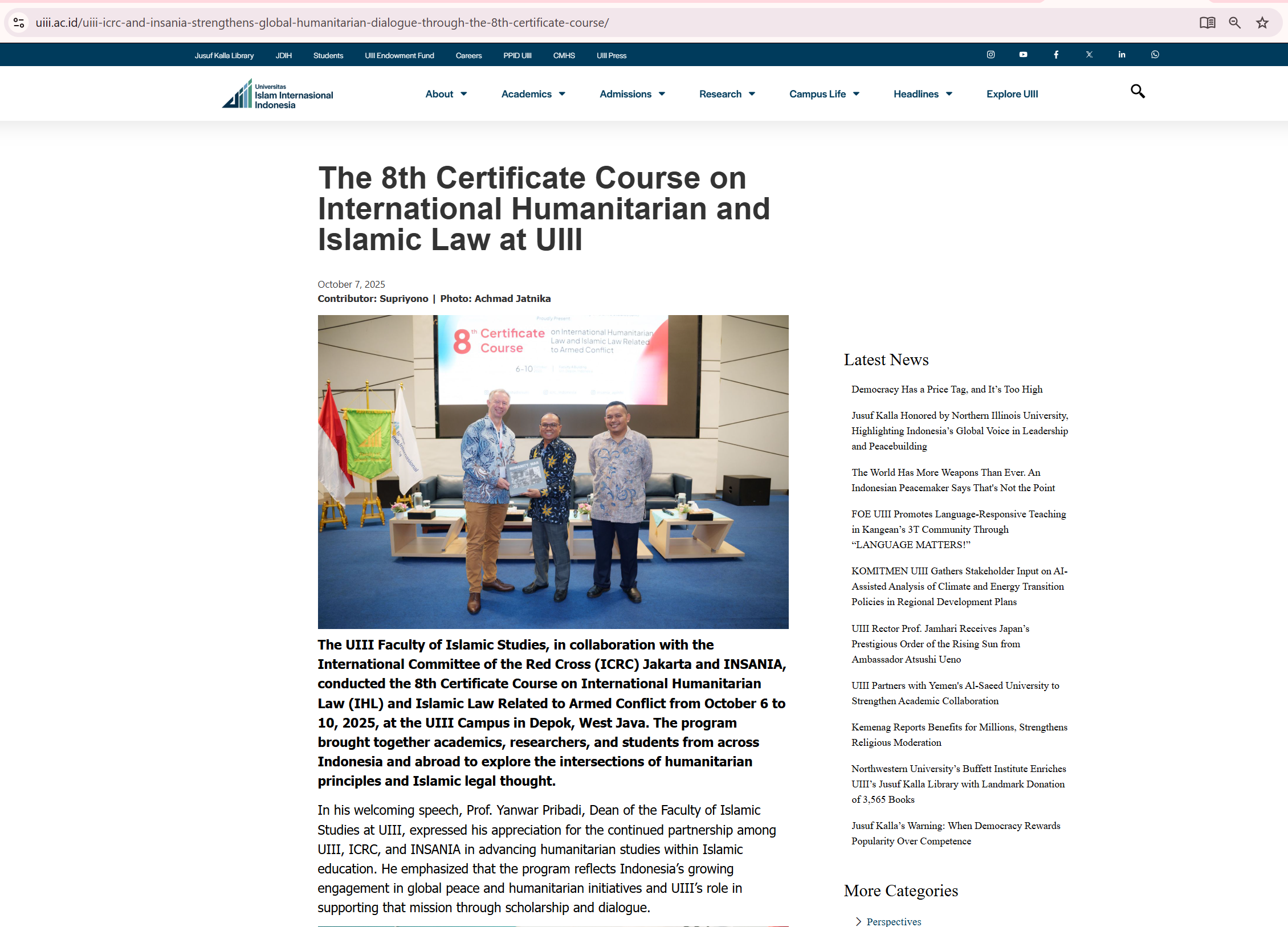
Public verification: https://uiii.ac.id/uiii-icrc-and-insania-strengthens-global-humanitarian-dialogue-through-the-8th-certificate-course/
3.4 SantriPreneur Academy: Incubation of Santri Sociopreneurs Based on Islamic Philanthropy (Faculty of Economics and Business)
The SantriPreneur Academy is a community engagement programme of the Faculty of Economics and Business led by M. Luthfi Hamidi, Ph.D., Head of the master's programme in Economics, under a university level community engagement grant titled “Santripreneur Academy: Incubation of Santri Sociopreneurs Based on Islamic Philanthropy.” Its purpose is to equip santri, the students of Islamic boarding schools, with the knowledge and skills to build social enterprises grounded in the instruments of Islamic philanthropy, so that the pesantren can become engines of local economic development as well as centres of religious learning.
The 2025 academy was held on 26 and 27 September 2025 at the Baitul Mukhlisin Mosque in Ponorogo, East Java, in partnership with Universitas Islam Negeri Kiai Ageng Muhammad Besari Ponorogo, BankZISKA and the National Zakat Agency (BAZNAS) of Ponorogo. Participants were santri from seven pesantren in Madiun and Ponorogo, organised into seven groups. Faculty members and postgraduate students of the Faculty served as facilitators; the student Haryani Santo Hartono, for example, facilitated the incubation sessions. The programme was funded through the University's community engagement scheme and formed part of the Faculty's wider work on Islamic philanthropy and entrepreneurship, which also includes Wakafest, its public forum on productive endowments held on 15 February 2025.
The academy concluded with the presentation of business plans and the award of prizes to the three strongest groups, with the group from Pesantren Subulul Huda in Madiun taking first place. The programme therefore satisfies the indicator's reference to an award as well as to a certificate, and it advances UN Target 4.4 on skills for entrepreneurship among a community that has limited access to university based training.
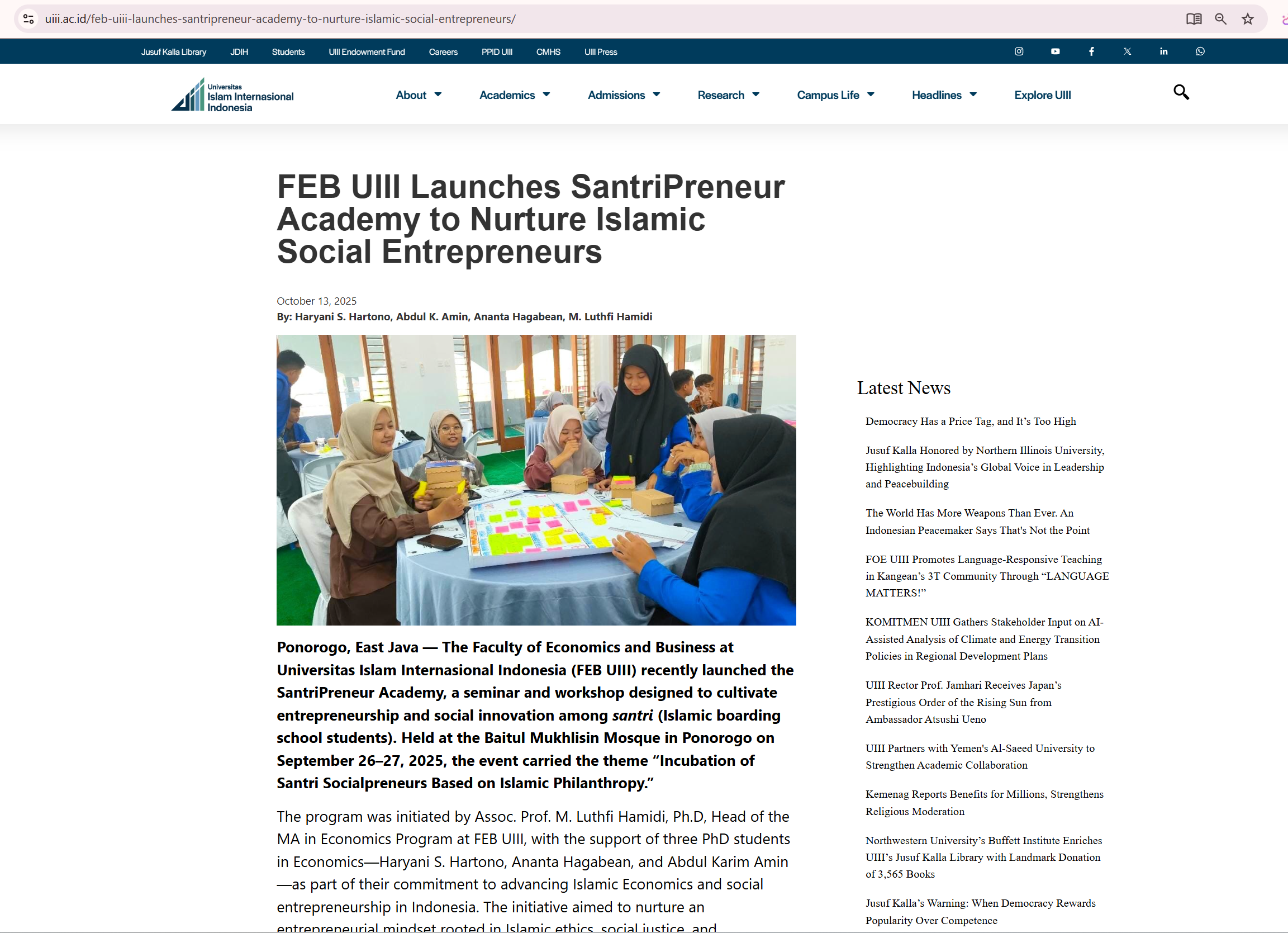
Public verification: https://uiii.ac.id/feb-uiii-launches-santripreneur-academy-to-nurture-islamic-social-entrepreneurs/
3.5 Additional Community Training Recorded in Faculty Annual Reports
Two further training activities for external learners are documented in the 2025 annual reports of the faculties and are listed here for completeness. On 23 January 2025 a team of students of the Faculty of Economics and Business delivered a Business Model Canvas Workshop for pupils of Sekolah Terbuka Madani, an open secondary school, to build entrepreneurial understanding through the structured design of a business model. On 16 December 2025 lecturers and students of the Faculty of Education, in cooperation with Posyantek Harapan Denok of Cilegon, delivered a community education programme at Madrasah Aliyah Negeri 1 Cilegon consisting of seven sessions for pupils, teachers and parents: gender in Islam, parenting, the design of effective instruction using Merrill's principles, forensic linguistics for anti bullying education, two sessions on empathy and inclusivity, and English instruction. Both activities were delivered without charge to the host schools as part of the faculties' community engagement mandate. Public web pages for these two activities are being prepared; until they are published, the Faculty of Economics and Business Annual Report 2025 and the Faculty of Education Annual Report 2025 serve as the documentary record.
4. Pillar B: Free Access to Campus Facilities and Equipment
The second part of the indicator asks whether people who are not students of the University may use its campus facilities and equipment without charge. UIII occupies an integrated campus whose principal public facing buildings, the Jusuf Kalla Library, the Rahmatan Lil 'Alamin Mosque and the lecture halls of the faculty buildings, are open to the surrounding community. In 2025 these facilities served the public in three ways: as a library open to all registered visitors, as a mosque whose Ramadan programme was addressed to the people of Depok, and as a venue for more than 30 public lectures and dialogues and for several national and international gatherings that were open to participants from other institutions.
4.1 Jusuf Kalla Library: Public Access to Reading Halls, Working Spaces and Collections
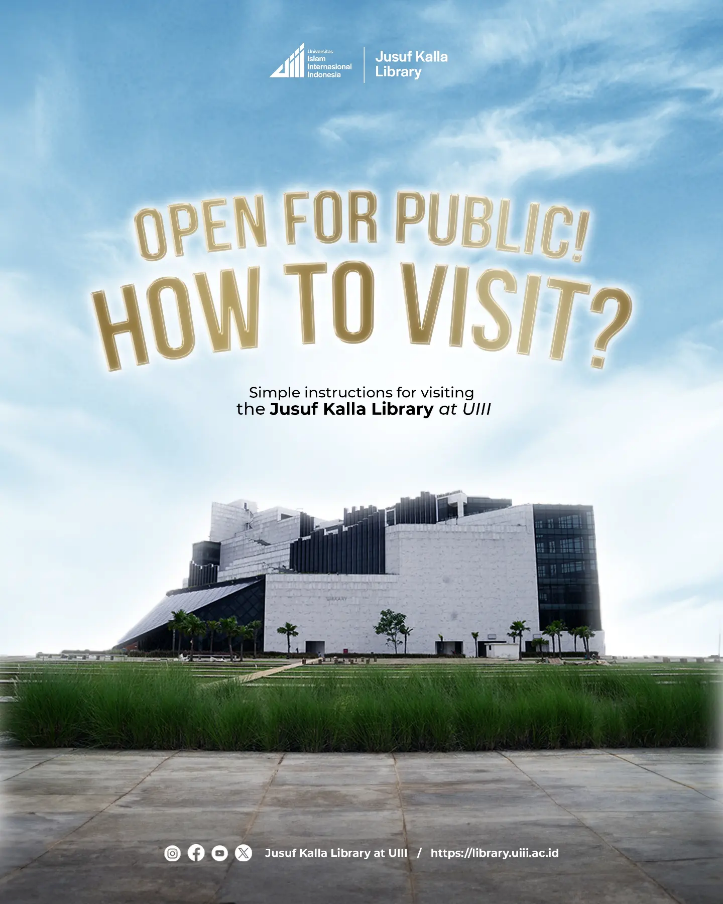
The Jusuf Kalla Library is the central library of UIII, named in honour of Jusuf Kalla, former Vice President of the Republic of Indonesia. The building houses the Great Reading Hall, a Working Space for individual and group study, Tribunes equipped with audio visual facilities for talks and screenings, a Lounge, a Children's Reading Area, classrooms, podcast studios and a Special Collections room, together with the University's print collections. The library's facilities page documents each of these spaces and the services attached to them.
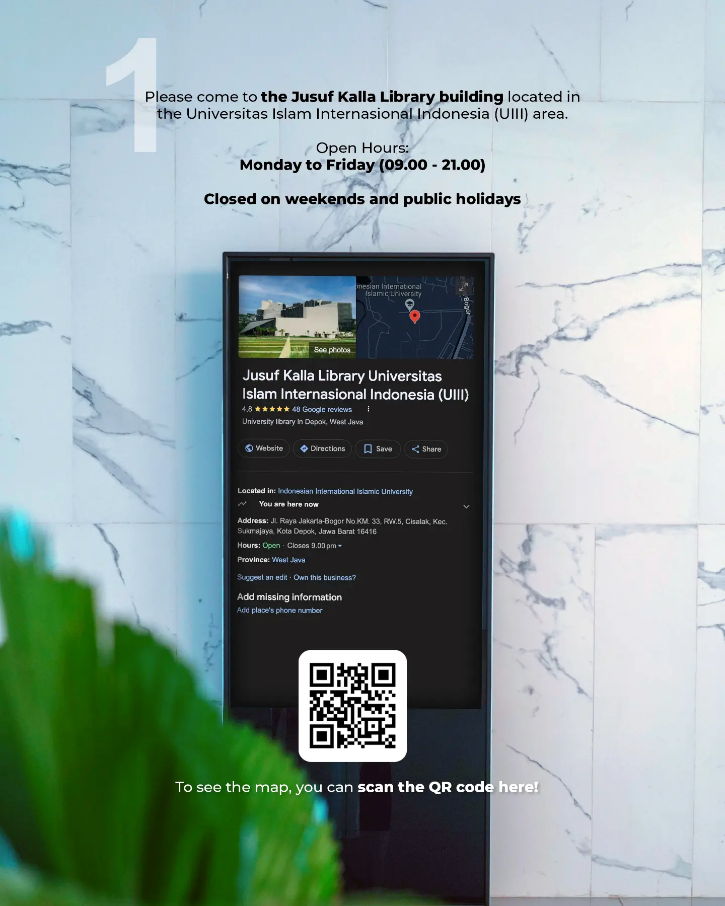
The library opened its doors to the general public in October 2024, and the response was immediate. According to the chair of the University's Central Library Committee, quoted in the national press in November 2024, daily visits rose from about 200 before the public opening to more than 1,200 afterwards, counted between 09:00 and 21:00, and the library committed to weekend opening from 2025. In 2025 the library operated until 21:00 on weekdays and extended its service to weekends. Members of the public register at the reception desk on arrival and may use the reading halls, the Working Space, the Children's Reading Area and the on site collections. The visitor profile recorded by the library is dominated by school pupils and university students from across Greater Jakarta who come to study, alongside professionals and families who use the children's area. The University's own reporting describes the library as open to both students and the general public and notes that visitors from outside UIII come regularly.
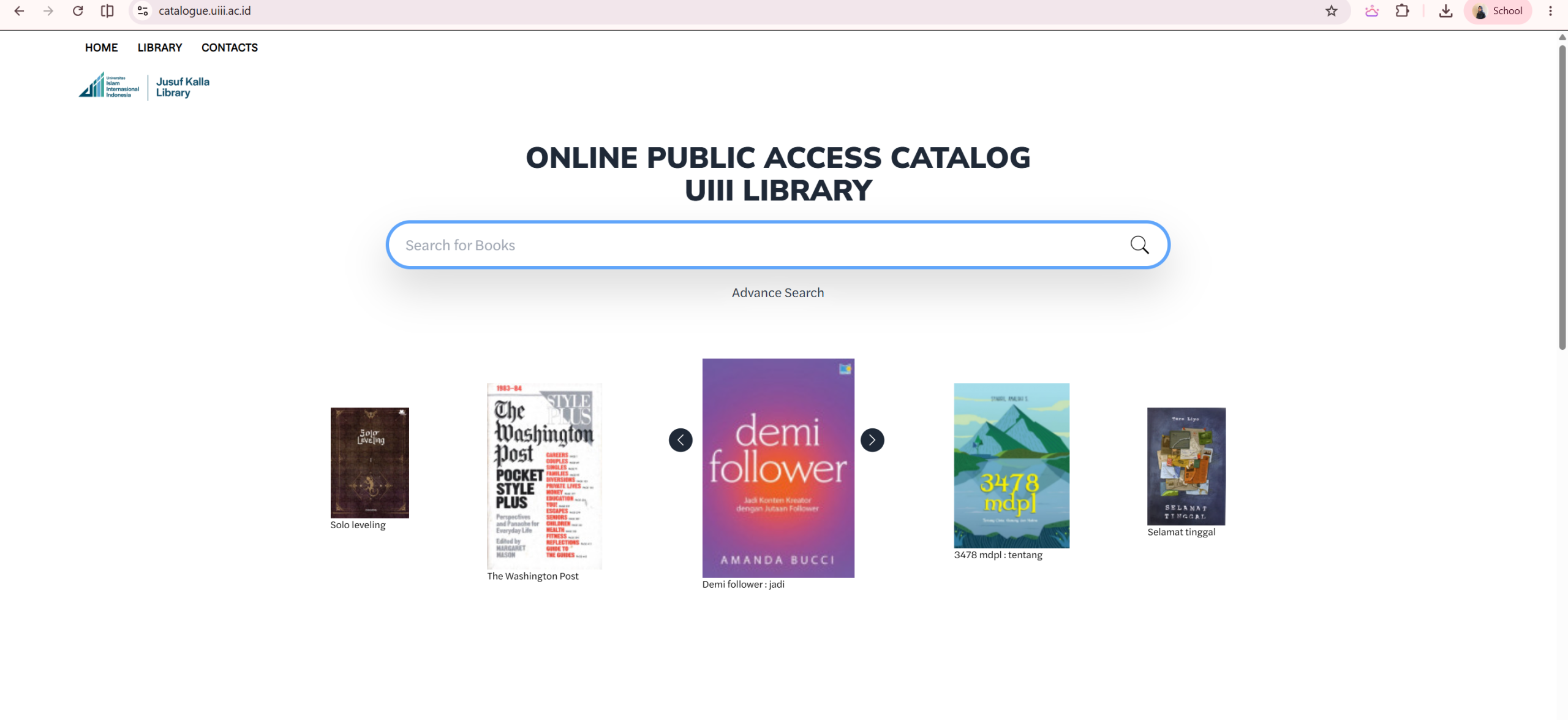
The year 2025 brought formal recognition of the library's quality and public role. The National Library of the Republic of Indonesia conducted its field assessment for higher education library accreditation on 7 and 8 August 2025, and on 12 September 2025 the library was awarded Accreditation A (Excellent), the highest category, confirmed by letter on 16 September 2025. During the year the library also received study visits from other institutions, including a delegation of librarians from Cyber University on 1 October 2025 who came to learn from its model of a modern public facing academic library, and it accepted the deposit of the 464 page COMPOSE and KAICIID edited volume on interreligious dialogue for public consultation. The library's catalogue is searchable online by anyone, so that a member of the public can identify the holdings they wish to consult before visiting.
As a learning environment that is safe, inclusive and open to the community, the library contributes directly to UN Target 4.A, and as a free study space for pupils and students from other institutions it contributes to equal access under Target 4.5.
https://www.instagram.com/p/DA7pr4Pz5NN/?img_index=1
4.2 Rahmatan Lil 'Alamin Mosque and the Green Ramadan 2025 Public Programme
The Rahmatan Lil 'Alamin Mosque stands at the centre of the UIII campus and is managed by a mosque board drawn from the University community. Unlike the academic buildings, the mosque has no access restriction of any kind: it is open to all, and residents of the surrounding neighbourhoods of Depok use it for daily prayers, for Friday congregations and for the religious instruction that the board organises throughout the year. The mosque is therefore the facility through which the largest number of members of the public enter the campus in an ordinary week.
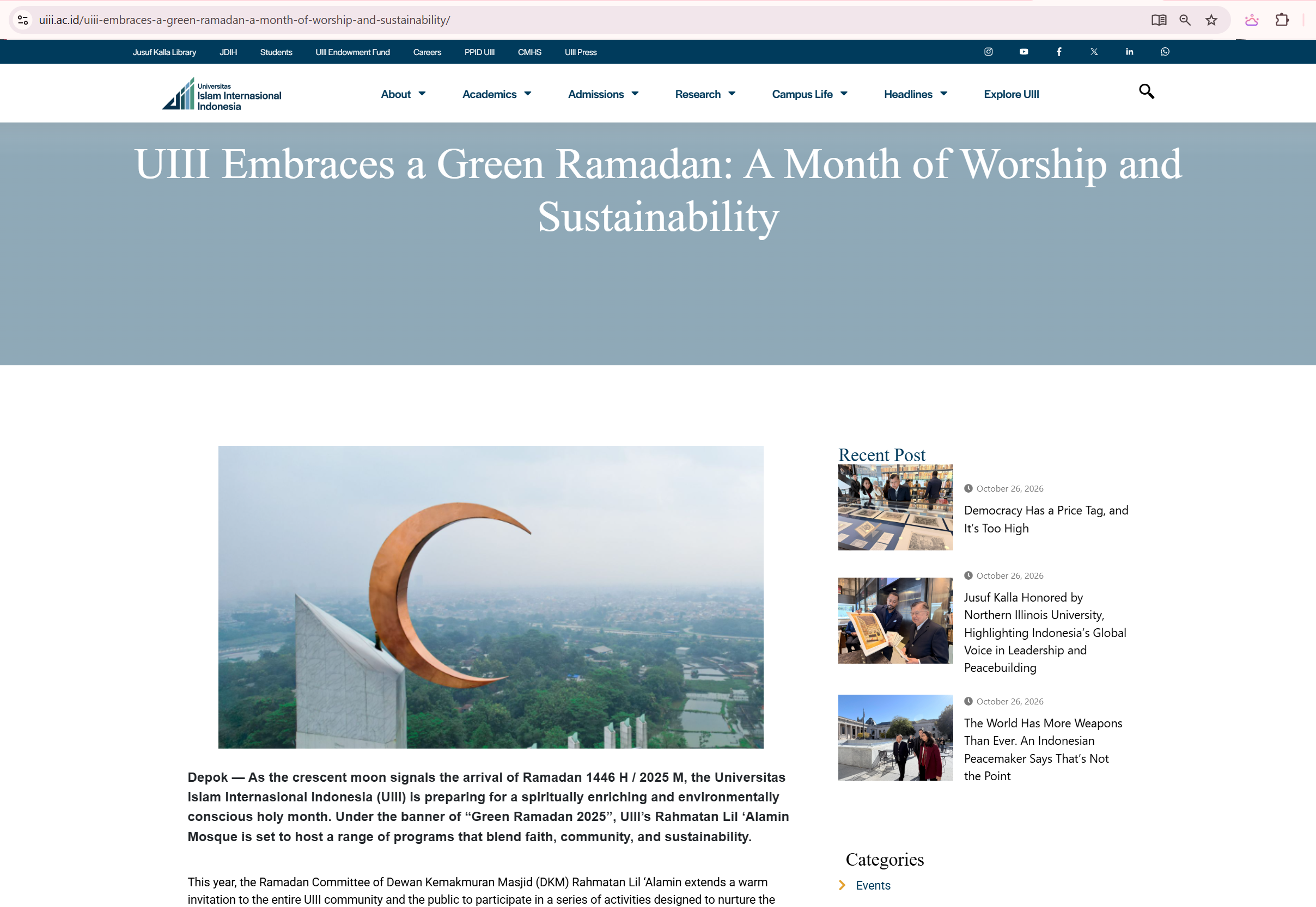
For the month of Ramadan 1446 H, which fell in March 2025, the mosque board ran a programme under the theme Green Ramadan and, in the University's announcement of 26 March 2025, extended an explicit invitation to the entire UIII community and to the public. The daily programme comprised a short lecture (kultum) after the midday prayer, nightly tarawih prayers led by imams from Indonesia and abroad, and the distribution of 250 free iftar meal packages each evening to all who attended, together with a Ramadan market, the collection and distribution of zakat and infaq, and measures to reduce single use waste that gave the programme its Green Ramadan character. A commentary published on UIII Perspectives on 1 March 2025 set out the environmental reasoning behind the programme for a public readership.
The Green Ramadan programme turned the mosque into a daily open learning space for the community for a full month, combining religious education, environmental education and the practical provision of meals in a single setting at no cost to participants. It advances UN Target 4.7, which calls for learners to acquire the knowledge needed to promote sustainable development and sustainable lifestyles, and it illustrates how a campus facility can serve a public educational purpose beyond the formal curriculum.
Link: https://uiii.ac.id/uiii-embraces-a-green-ramadan-a-month-of-worship-and-sustainability/
4.3 Public Lecture and Dialogue Programme in UIII Lecture Halls
The lecture halls of the Faculty A and Faculty B buildings, the Teleconference Room and the Bank Indonesia Corner are used throughout the year for public lectures, talks and policy dialogues that are open to external audiences without charge. In 2025 the four faculties and the University's research institutes hosted more than 30 such sessions, with audiences that regularly combined UIII students and staff with scholars and students from other universities, practitioners, diplomats, journalists, religious leaders and members of the public. The sessions listed below are documented in the faculties' annual reports and, where indicated, on public UIII web pages.
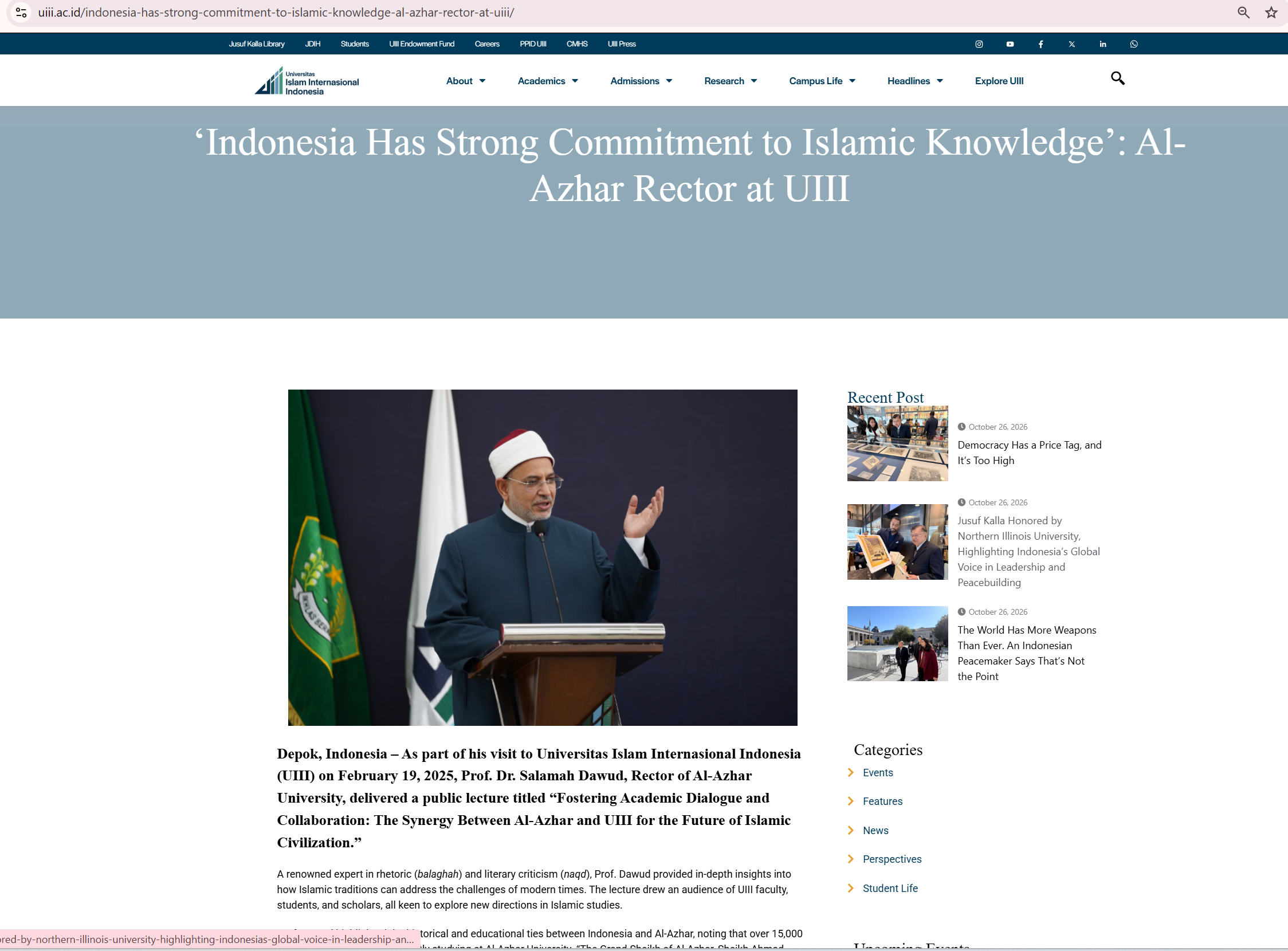
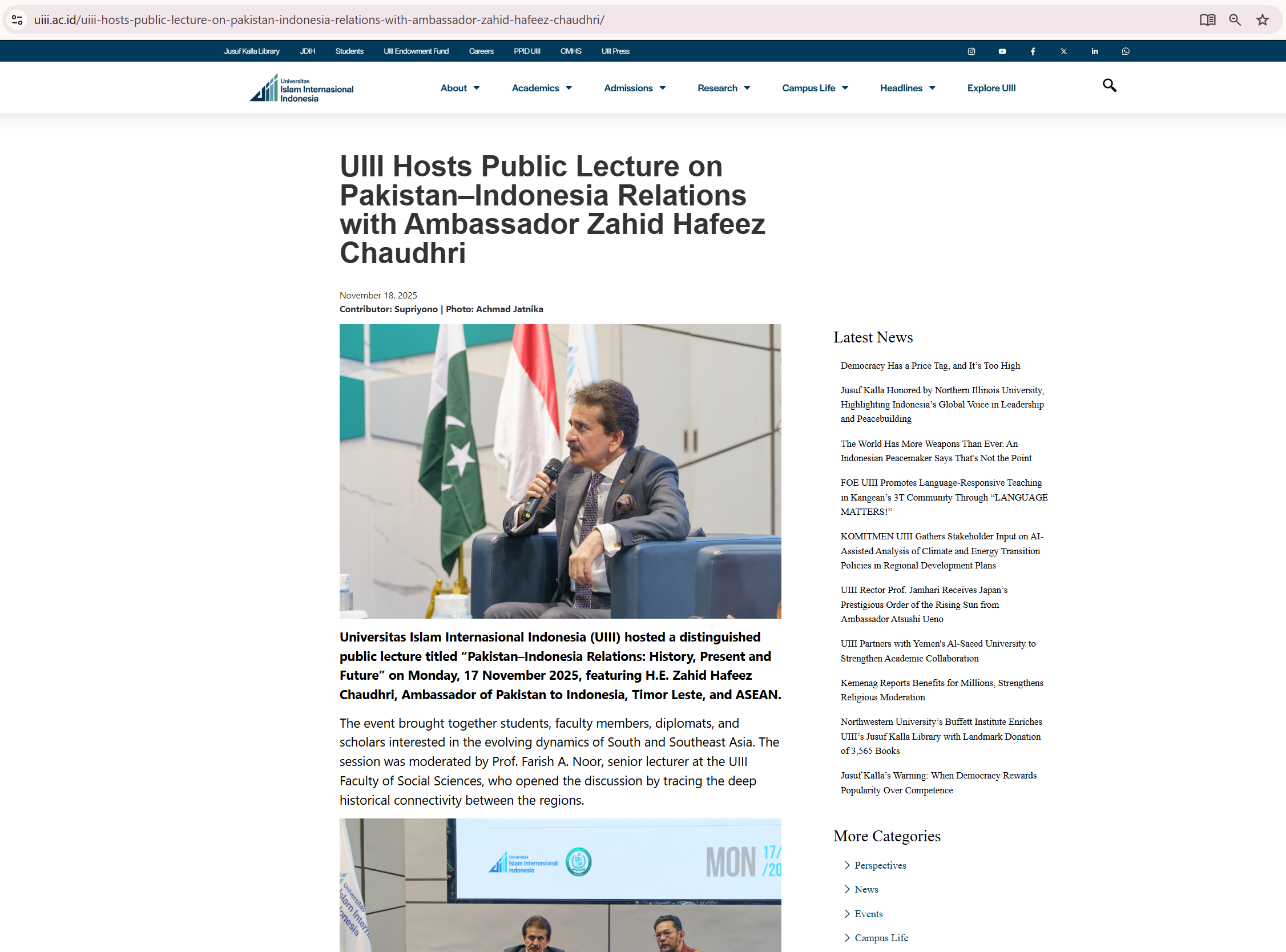
At the University level, the year opened with the public lecture of Sheikh Salamah Dawud, Rector of Al-Azhar University in Cairo, on 19 February 2025, which was announced in advance as open to scholars, students and religious leaders from across the region and addressed Indonesia's commitment to Islamic knowledge. On 17 November 2025 the Ambassador of Pakistan to Indonesia, Zahid Hafeez Chaudhri, delivered a public lecture on Pakistan and Indonesia relations to an audience of students, faculty, diplomats and scholars.
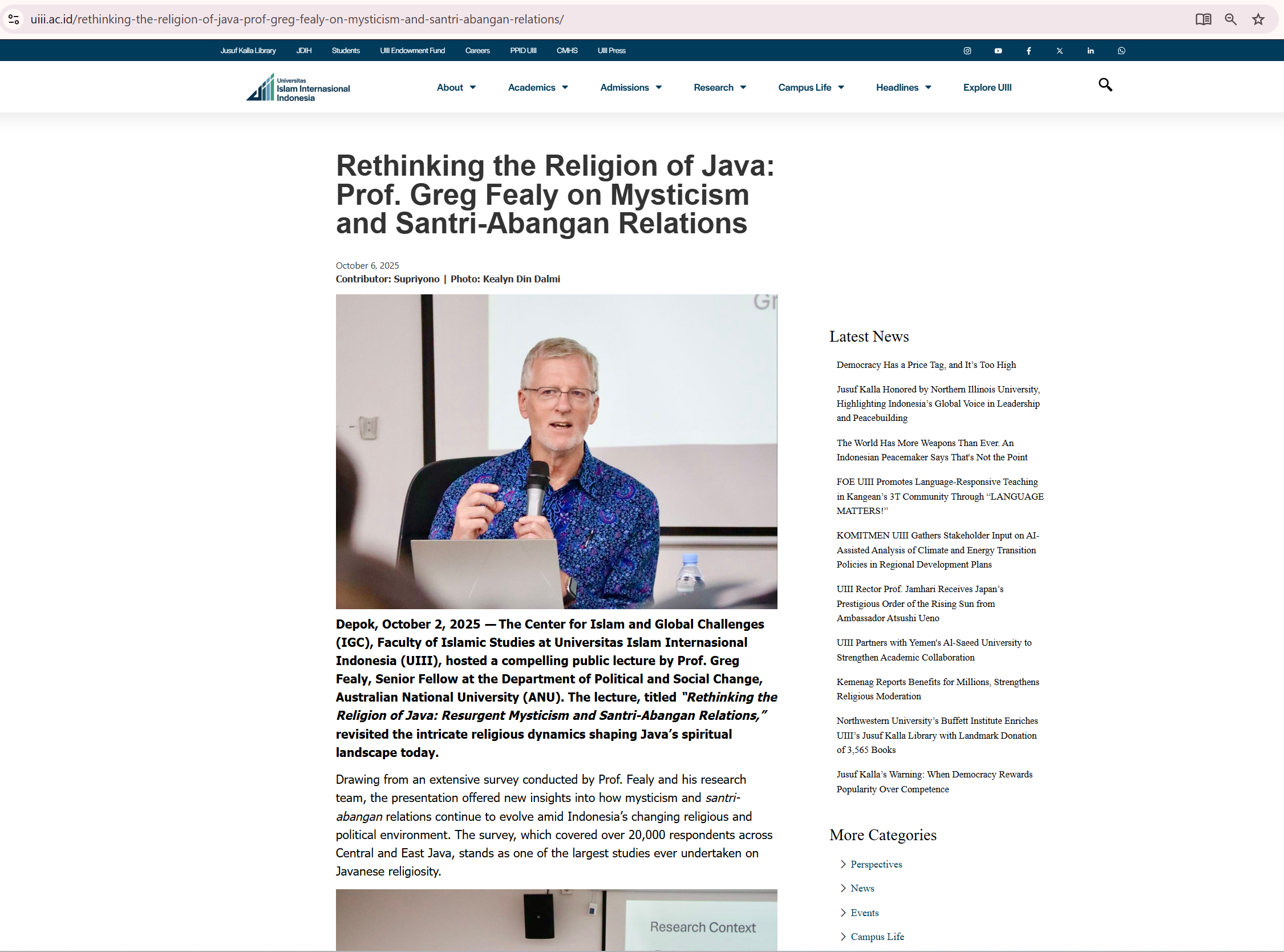
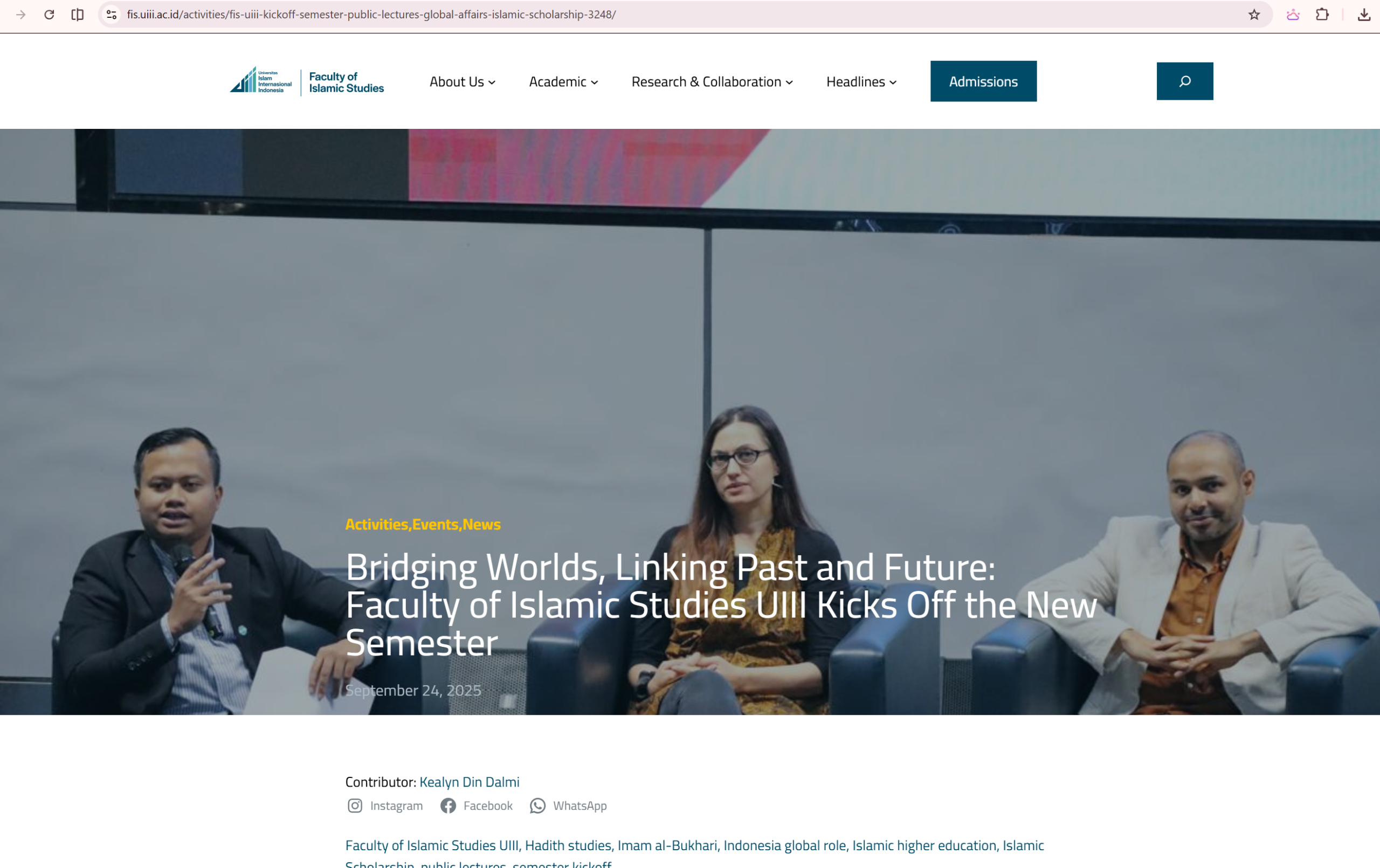
The Faculty of Islamic Studies ran a public lecture series throughout the year. Prof. Sahiron, Director of Islamic Higher Education at the Ministry of Religious Affairs, opened the even semester on 24 February 2025 with a lecture on reinterpreting the Qur'an in the modern world. Prof. Stephane Lacroix of Sciences Po lectured on contemporary social science debates in Islamic studies and, on 14 July 2025, discussed his book on Salafism and politics in Egypt at Book Forum 14. The odd semester opened on 22 September 2025 with public lectures by Dr. Amanda tho Seeth of Humboldt University and Dr. Belal Alabbas. Prof. Greg Fealy of the Australian National University lectured on 2 October 2025 on rethinking the religion of Java to a full venue, followed by Prof. Mohamed El-Gammal on 17 October, Dr. Christopher M. Joll of Victoria University of Wellington on 20 October, who introduced an open access bibliography of Muslims in Thailand, Prof. Ayman Shihadeh on 6 November, Prof. Karimah Bouamri, Dr. Helene Njoto on 4 December and Dr. Hew Wai Weng of the University of Edinburgh on 15 December 2025.
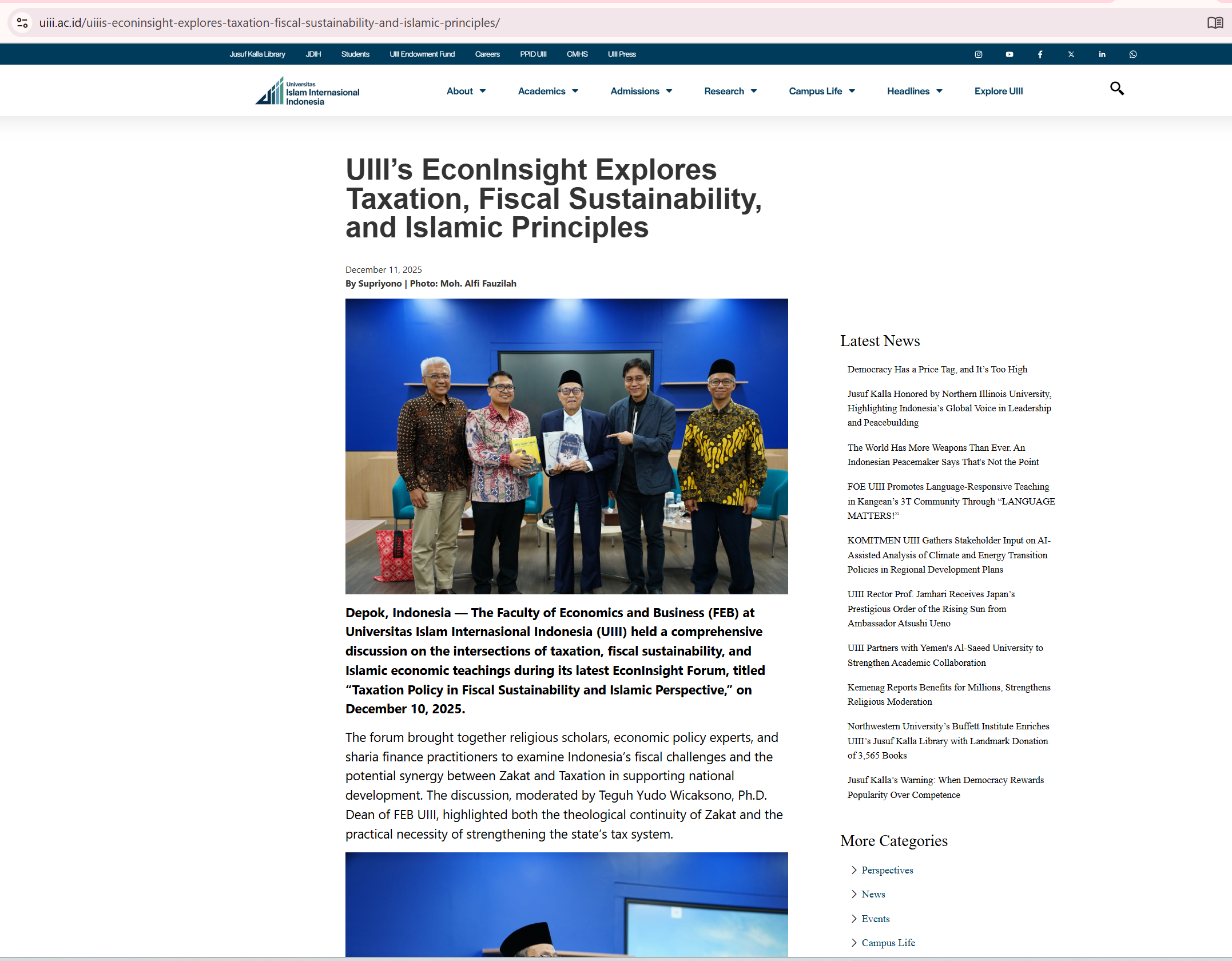
The Faculty of Economics and Business organised its public programme under four recurring titles. EconInsight held seven sessions: Dr. Andreas Stegmann of the University of Warwick on research practice in economics and political economy (14 February 2025); Prof. Niaz Asadullah on the Bangladesh revolution and its economic implications (26 May); Dr. Fandhy Haristha Siregar on the use of artificial intelligence by the Indonesian Financial Services Authority (26 June); Dr. Firman Witoelar of the Australian National University on mangroves and mental health (21 October); Dr. Simone Schaner of the University of Southern California on citizen oversight of the state (21 November); a panel on taxation, fiscal sustainability and Islamic perspectives with Prof. Muhammad Amin Suma of the Indonesian Ulema Council (10 December); and Dr. Anas Iqtait of the Australian National University on Middle East shifts and the Asia Pacific (11 December). Sustainable Finance Updates held four episodes with speakers from the Financial Services Authority, IPB University, a Malaysian financial literacy foundation and PT Bank KB Bukopin (8 January, 10 January, 17 June and 10 December). The Sustainable Finance Public Lecture series continued with Prof. Mohammad Reevany Bustami of Universiti Sains Malaysia on 27 October, BizTalk hosted the Chief Executive of SMESCO Indonesia on 18 November, Wakafest convened practitioners of productive endowments on 15 February, and the Visiting Professor Series hosted Prof. Mehmet Asutay of Durham University on 30 April 2025.
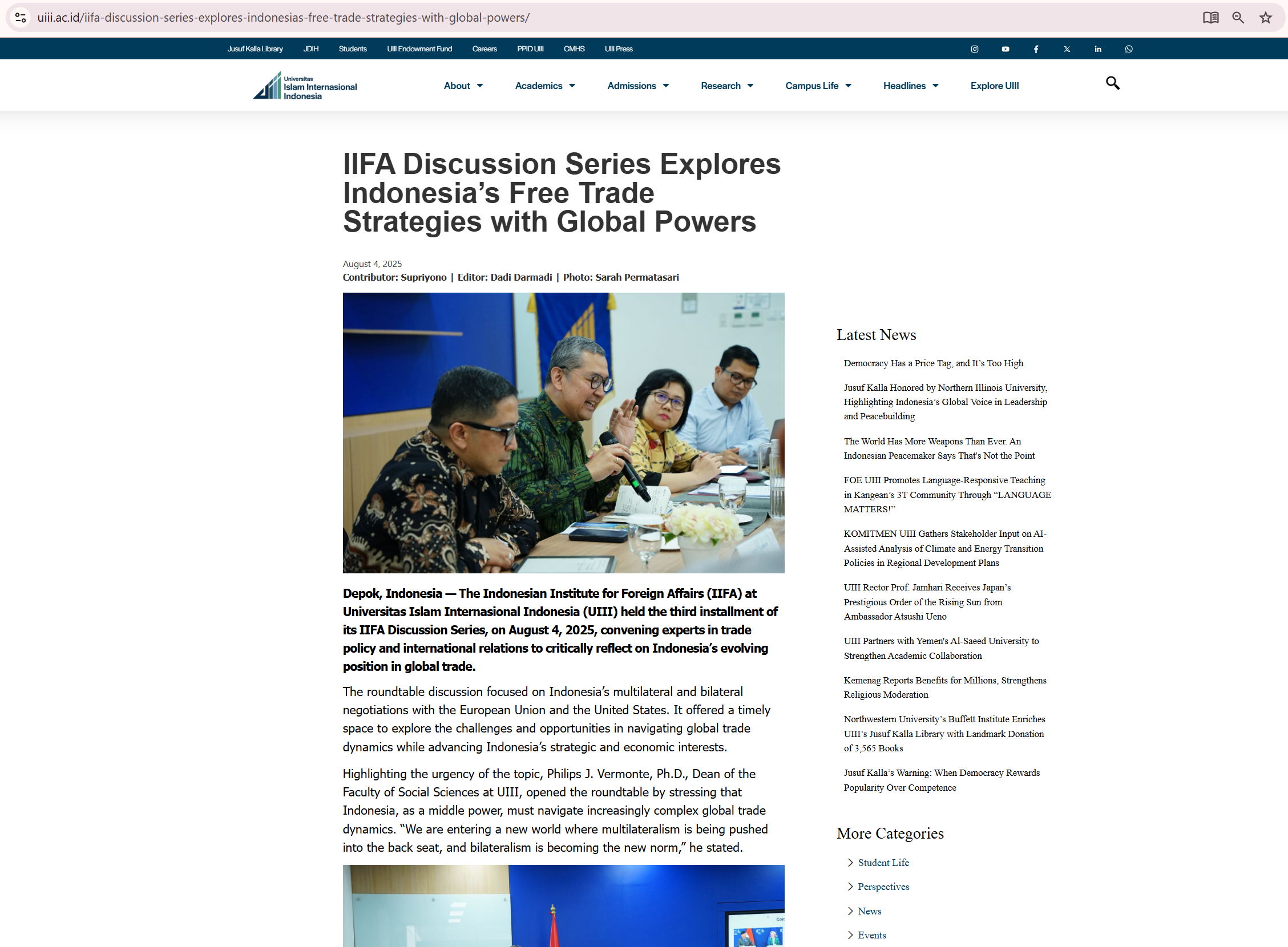
The Faculty of Social Sciences hosted the Climate Talk series of its master's programme in Climate Change, with Farhan Helmy, former negotiator at the United Nations climate conferences, on 30 April 2025 and Prof. Federica Genovese of the University of Oxford on 22 August 2025. Through the Indonesian Institute for Foreign Affairs, founded within the Faculty on 19 May 2025, it convened six policy dialogues open to government, academia, media and international organisations: on Hugo Grotius and Indonesia's contribution to international law (10 June), on the future of development cooperation with Prof. Andy Sumner of King's College London and the Director of International Development Cooperation of the Ministry of Foreign Affairs (3 July), on free trade strategies (4 August), on Indonesia in the era of artificial intelligence with Vice Minister Nezar Patria (16 September), an archival research workshop (24 November) and a national colloquium on the 1955 Bandung Conference and international law with Vice Minister Arif Havas Oegroseno (17 December). The Faculty also hosted the 7th World Indonesianists Congress with Vice Minister Arrmanatha Christiawan Nasir on 12 November 2025, the public lecture of Prof. Yuhki Tajima of Georgetown University on peacebuilding in Aceh and Mindanao on 7 July 2025, and the international conference “Religious Environmentalism in Action: Knowledge, Movements, and Policies” in July 2025.
The Faculty of Education continued its monthly LunchTalk forum, which reached its 48th session in 2025 (sessions 37 to 48), hosted the 4th Faculty of Education Annual Conference on educational assessment and equity on 7 and 8 May 2025 with keynote speakers from Deakin University and the Education University of Hong Kong, and on 20 August 2025 convened a public seminar on accreditation policy in Indonesian higher education with the leadership of the national accreditation agency for education, the Tertiary Education Quality and Standards Agency of Australia and the Embassy of India.
Taken together, this programme places the University's lecture halls and their equipment at the disposal of the public for more than 30 sessions in a single year and contributes to UN Targets 4.4 and 4.7 by bringing current research and policy debate to audiences well beyond the enrolled student body.
4.4 Campus Venues for National and International Academic Gatherings
Beyond the lecture programme, the campus served in 2025 as the venue for academic gatherings organised with or for external bodies and attended by participants from across Indonesia and abroad. From 29 to 31 October 2025 UIII hosted AICIS+ 2025, the 24th Annual International Conference on Islamic Studies of the Ministry of Religious Affairs, for which 2,434 abstracts were submitted and 234 selected for presentation. On 29 and 30 April 2025 the Faculty of Islamic Studies hosted the International Conference on Decolonizing Social Sciences and Humanities with Enstitu Sosyal of Turkey, which received 411 abstracts from 23 countries and presented 48 papers. From 17 to 19 June 2025 the Faculty of Social Sciences hosted the regional conference and curriculum review of the KAICIID Fellows Programme for fellows from Indonesia, Malaysia, the Philippines, Thailand, Brunei and Singapore. On 29 and 30 July 2025 the University and the Higher Committee of Human Fraternity convened an international conference in Jakarta attended by more than 200 participants, which concluded with the Jakarta Declaration on Human Fraternity, published online.
These gatherings made the University's auditoria, lecture halls, conferencing equipment and campus grounds available to thousands of participants who are not UIII students, and they anchored the campus as a shared academic space for the national and regional scholarly community.
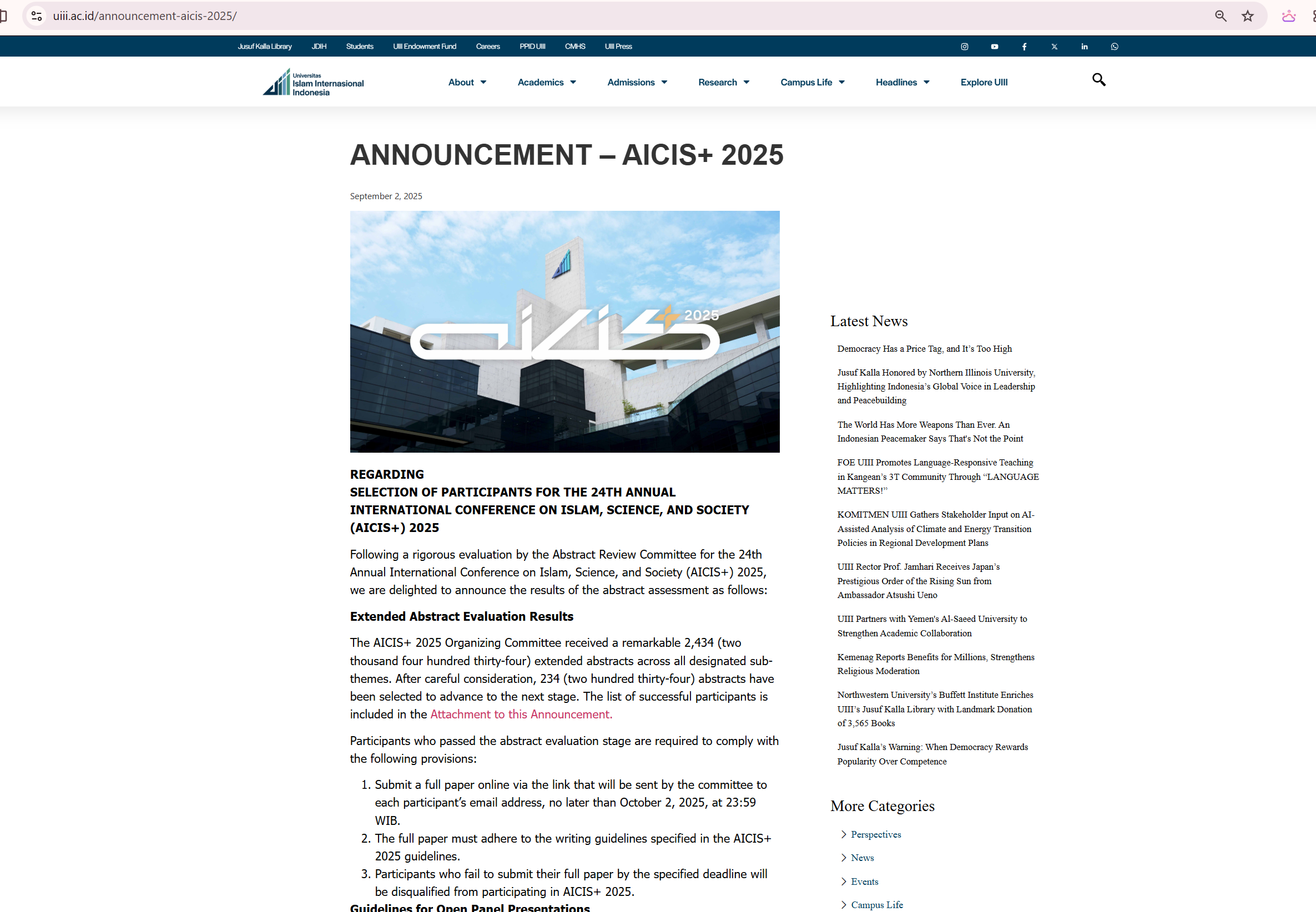
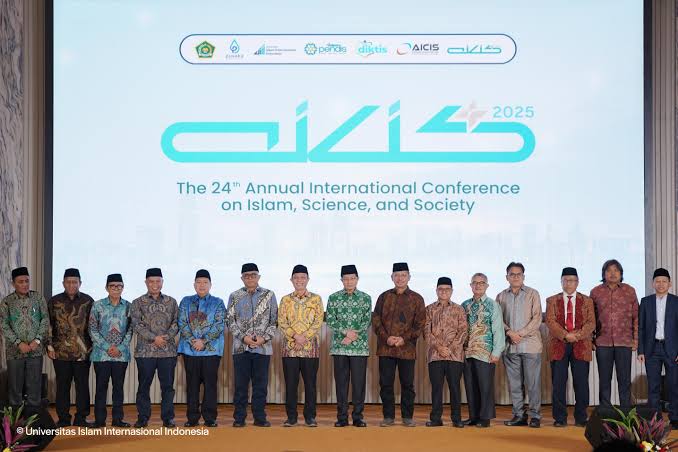
Figure 11. Plenary session of AICIS+ 2025 hosted on the UIII campus, 29 to 31 October 2025 https://uiii.ac.id/announcement-aicis-2025/ https://kemenag.go.id/internasional/buka-aicis-2025-sekjen-kemenag-ajak-akademisi-cari-solusi-krisis-global-ooQ7R https://uiii.ac.id/aicis-2025-marks-a-new-era-in-islamic-scientific-and-societal-dialogue/
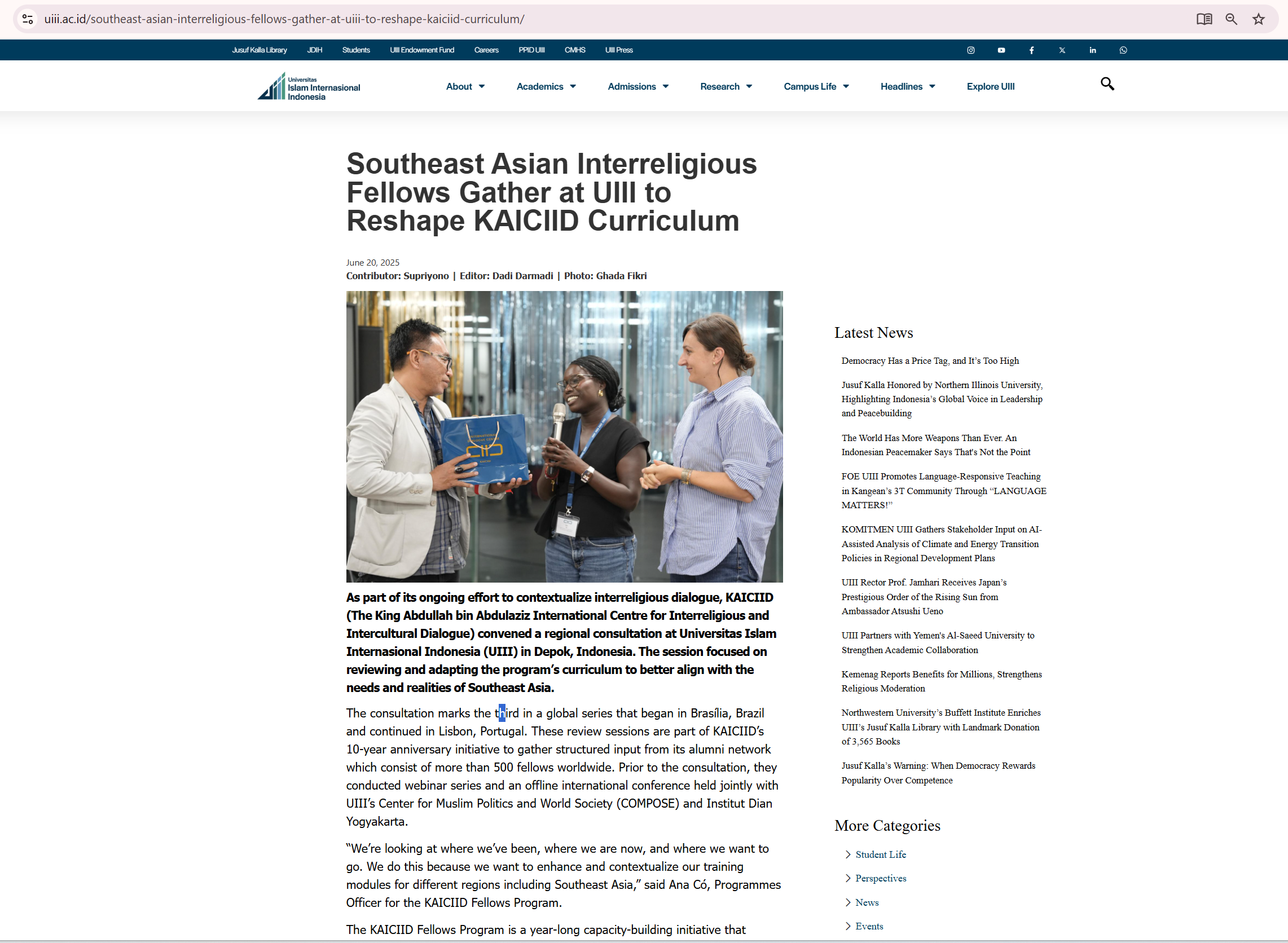
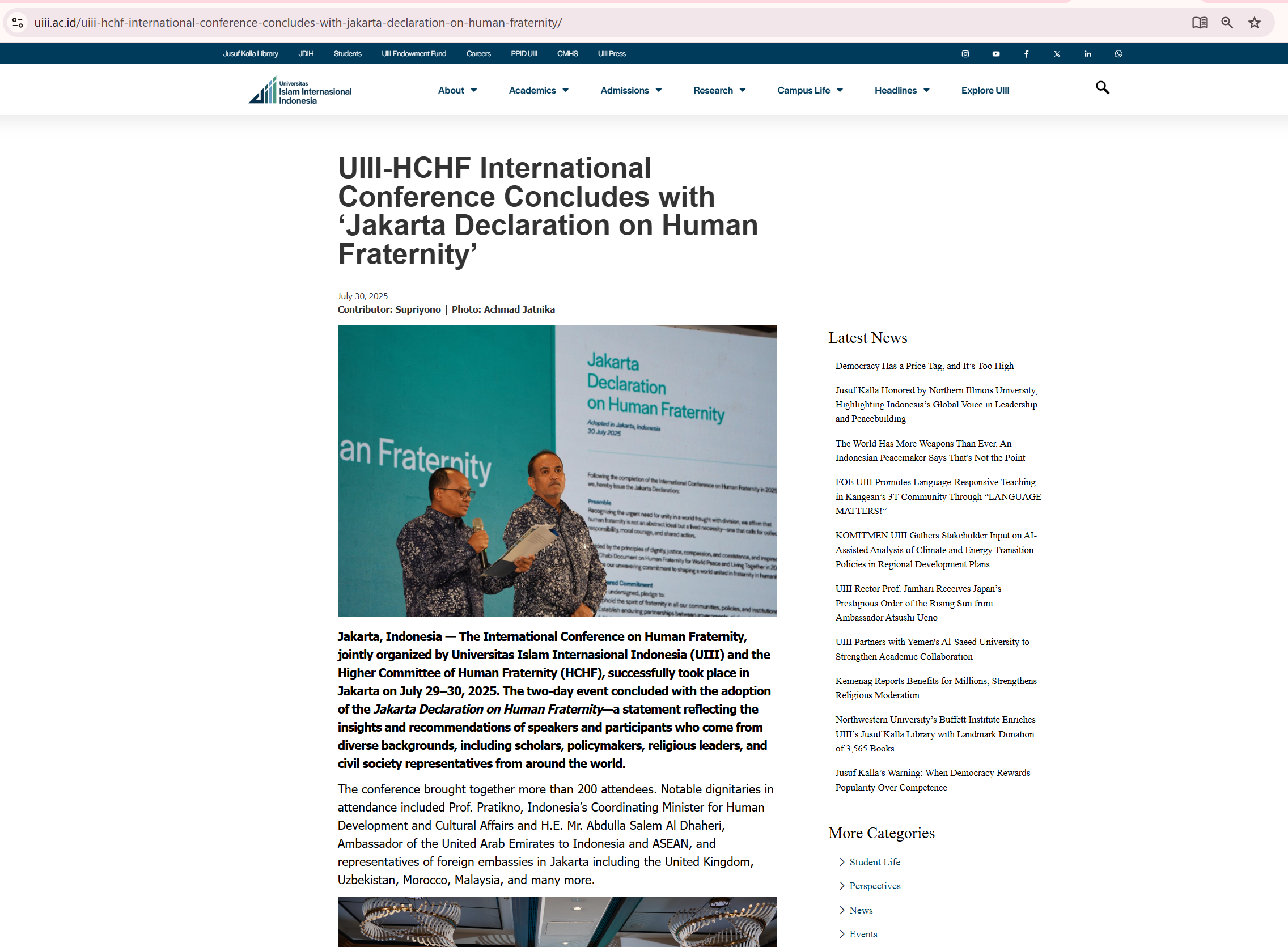
https://fis.uiii.ac.id/activities/events/global-thought-leaders-decolonize-knowledge-uiii-2025-3055/
Pillar C: Free Access to Online Educational Resources
The third part of the indicator asks whether the University provides free access to online educational resources for people outside it. UIII's digital provision is organised around four services that any internet user may open without registration or payment: a journal platform carrying four open access peer reviewed journals, an institutional repository of theses and research outputs, a library gateway to open access databases and a public catalogue, and two analysis platforms that publish commentary and research for a general readership. In addition, the faculties delivered free online webinars and symposia in 2025 that were open to external participants, and the University maintains public video channels.
5.1 Four Open Access Journals on the UIII Open Journal System
UIII publishes four peer reviewed journals on its Open Journal System at journal.uiii.ac.id. All four apply a policy of immediate open access under the Creative Commons Attribution ShareAlike 4.0 International licence, which means that every article may be read, downloaded, shared and adapted by anyone, with attribution, at no charge and without creating an account. A full text download from the platform was tested without a login as part of the verification for this document. Each journal published two issues in 2025, Volume 4 Number 1 in June or July and Volume 4 Number 2 in December, so that the platform released eight issues of new scholarship to the public during the reporting year.
Muslim Politics Review (P-ISSN 2829-3568, E-ISSN 2964-979X) is published by the Faculty of Social Sciences and is the University's flagship international journal on the politics of Muslim societies. Its sixth edition was launched on 5 February 2025 with a keynote by Prof. Dewi Fortuna Anwar of the National Research and Innovation Agency, who assessed the published articles as consistently strong, and the edition carried contributions from scholars in Australia, Germany, Bangladesh, Thailand, the United States and Indonesia, including Ahmet T. Kuru, Greg Fealy and James Piscatori. Volume 4 Number 1 appeared on 30 June 2025 with six articles, a foreword and two book reviews, and Volume 4 Number 2 on 29 December 2025.
Muslim Education Review (P-ISSN 2829-1867, E-ISSN 2962-6463) is published by the Faculty of Education and registers its articles with Crossref. It published Volume 4 Number 1 on 1 July 2025 and Volume 4 Number 2 on 31 December 2025, and it serves as the publication outlet for the Faculty's annual Writing Competition, whose 2025 winning paper on ecological consciousness and inclusive religious understanding through documentary film is scheduled for publication in the journal.
Islamic Studies Review (P-ISSN 2829-1816, E-ISSN 2963-7260) is published by the Faculty of Islamic Studies under Editor in Chief Prof. Syamsul Rijal, Ph.D., and is indexed in the Directory of Open Access Journals. In 2025 it published Volume 3 Number 2 on 13 January, Volume 4 Number 1 on 30 June and Volume 4 Number 2 on 30 December, carrying research articles and book reviews by UIII scholars and students alongside national and international contributors on classical and contemporary Islamic studies.
Muslim Business and Economics Review (P-ISSN 2829-2499, E-ISSN 2962-6471) is published by the Faculty of Economics and Business through UIII Press under Editor in Chief Associate Professor M. Luthfi Hamidi, Ph.D., and operates double blind peer review. It published Volume 4 Number 1 on 30 June 2025 and Volume 4 Number 2 on 30 December 2025, and it provides the publication pathway for selected papers from the Faculty's International Conference on Muslim World Economy and Business, whose 2025 call for papers on 28 May received more than 20 presentations.
Through these four journals the University places the full output of its scholarly publishing in the public domain. Readers in Indonesia and abroad, including teachers, civil servants, journalists and independent researchers who have no institutional subscription, may use the articles freely, a provision that supports UN Target 4.7 and the broader goal of equitable access to knowledge.
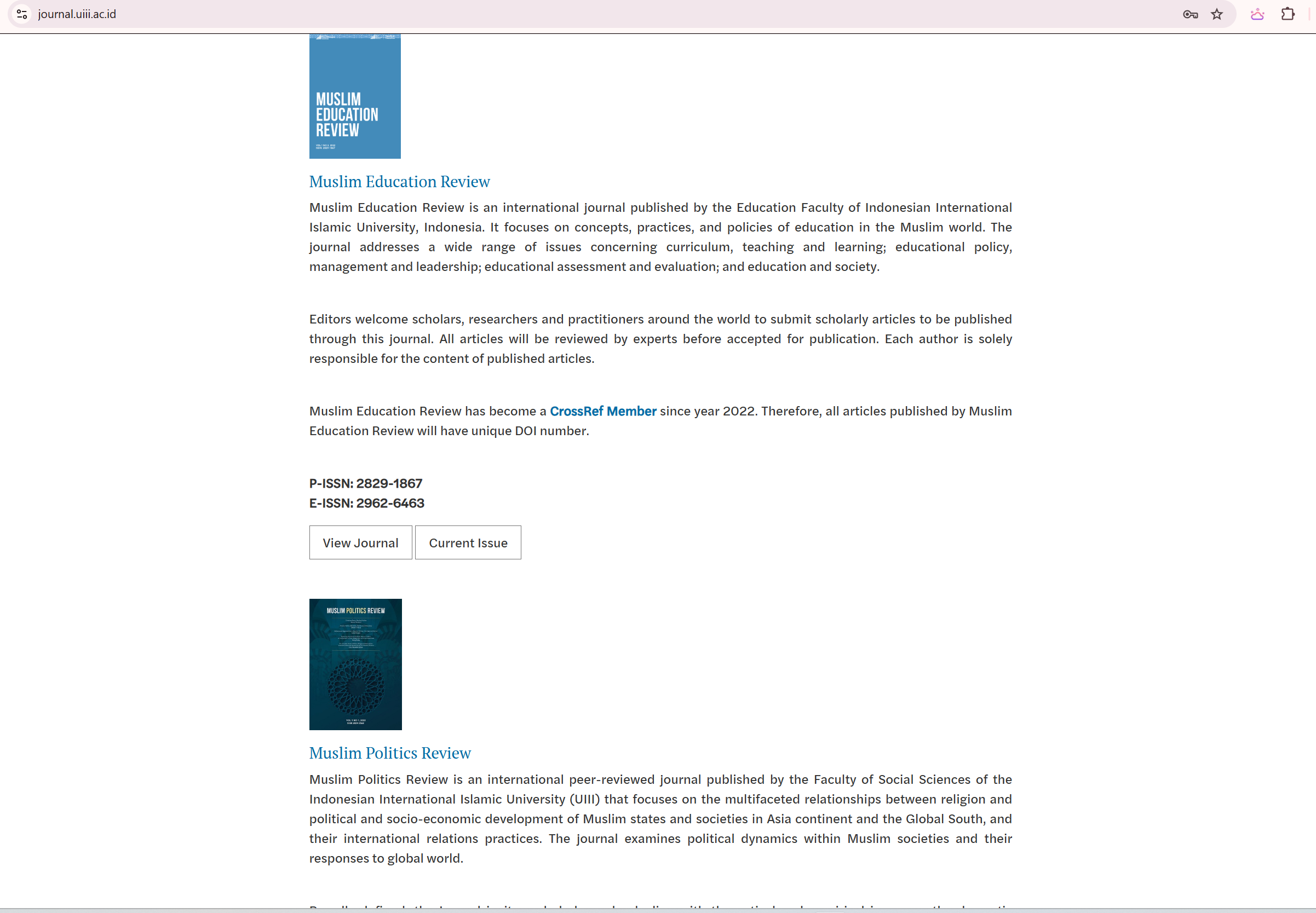
https://journal.uiii.ac.id/ https://journal.uiii.ac.id/index.php/mer https://journal.uiii.ac.id/index.php/mpr https://journal.uiii.ac.id/index.php/mber https://journal.uiii.ac.id/index.php/isr
5.2 UIII Institutional Repository
The UIII Institutional Repository at repository.uiii.ac.id is built on DSpace 7 and is managed by the Jusuf Kalla Library. It collects, preserves and makes publicly available the research and teaching outputs of the University: master's theses, doctoral dissertations, journal articles, book chapters, reports, conference proceedings and datasets. The repository is organised into 15 communities corresponding to the four faculties, the research centre COMPOSE, the degree programmes and the University's administrative structures, and it is browsable and searchable by any internet user without a login.
At the time of verification the repository held 783 items: 424 theses, 125 articles, 18 dissertations, 7 book chapters, 5 reports, 2 conference proceedings and 1 dataset. The theses and dissertations of the 2025 graduating cohorts were deposited during the year; the master's thesis of a graduate of the Climate Change programme on path dependence in Indonesia's domestic market obligation for coal, for example, was deposited in August 2025. Items designated open access may be downloaded directly, while a small number of recent theses carry a time limited restriction at the request of their authors. The library publishes the governing documents of the repository on its Rules and Guides page: the terms of use for primary data and research output, the repository licence agreement, the notice and takedown policy and the digital preservation policy.
The repository gives the public direct access to the primary research produced at UIII, much of which concerns Indonesian and Muslim world development, education, religion and economics and is of practical use to policymakers, teachers and community organisations. It supports UN Target 4.7 and the principle of open science.
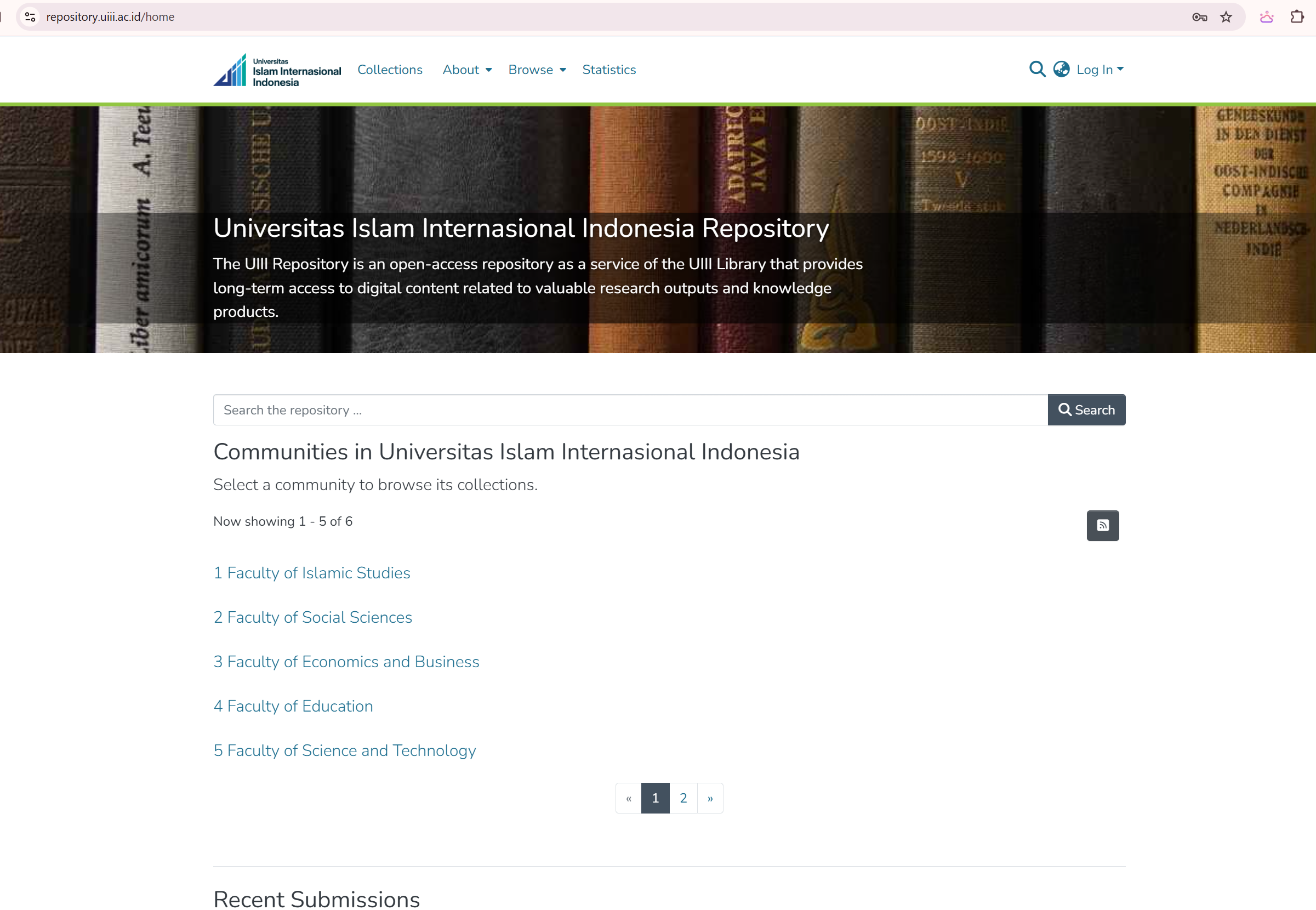
https://repository.uiii.ac.id/home
5.3 Library Open Access Electronic Resources Gateway and Public Catalogue
The Jusuf Kalla Library maintains an Electronic Resources page that curates, for any user inside or outside the University, the principal open access databases relevant to its disciplines: the Directory of Open Access Journals, the Directory of Open Access Books, OAPEN, CORE, PubMed Central, Garuda and MORAREF for Indonesian scholarship, DREAMSEA and Khastara for Southeast Asian manuscripts, Zenodo and the Open Access Theses and Dissertations database, among others. The page distinguishes these open resources clearly from the subscribed databases, such as JSTOR, Cambridge Core, Emerald, ProQuest and Taylor and Francis, which are licensed for the campus network only, so that a member of the public knows exactly which resources are available to them without restriction.
The same gateway links to the UIII Digital Collections and to the library's online public access catalogue at catalogue.uiii.ac.id, which runs on the SLiMS platform and allows anyone to search the University's print and digital holdings by title, author and subject. Together the gateway and the catalogue constitute an open reference service: a teacher in a provincial school or a student at a small private college can use the library's curation to locate reliable open literature in Islamic studies, education, social sciences and economics without visiting the campus and without a subscription.
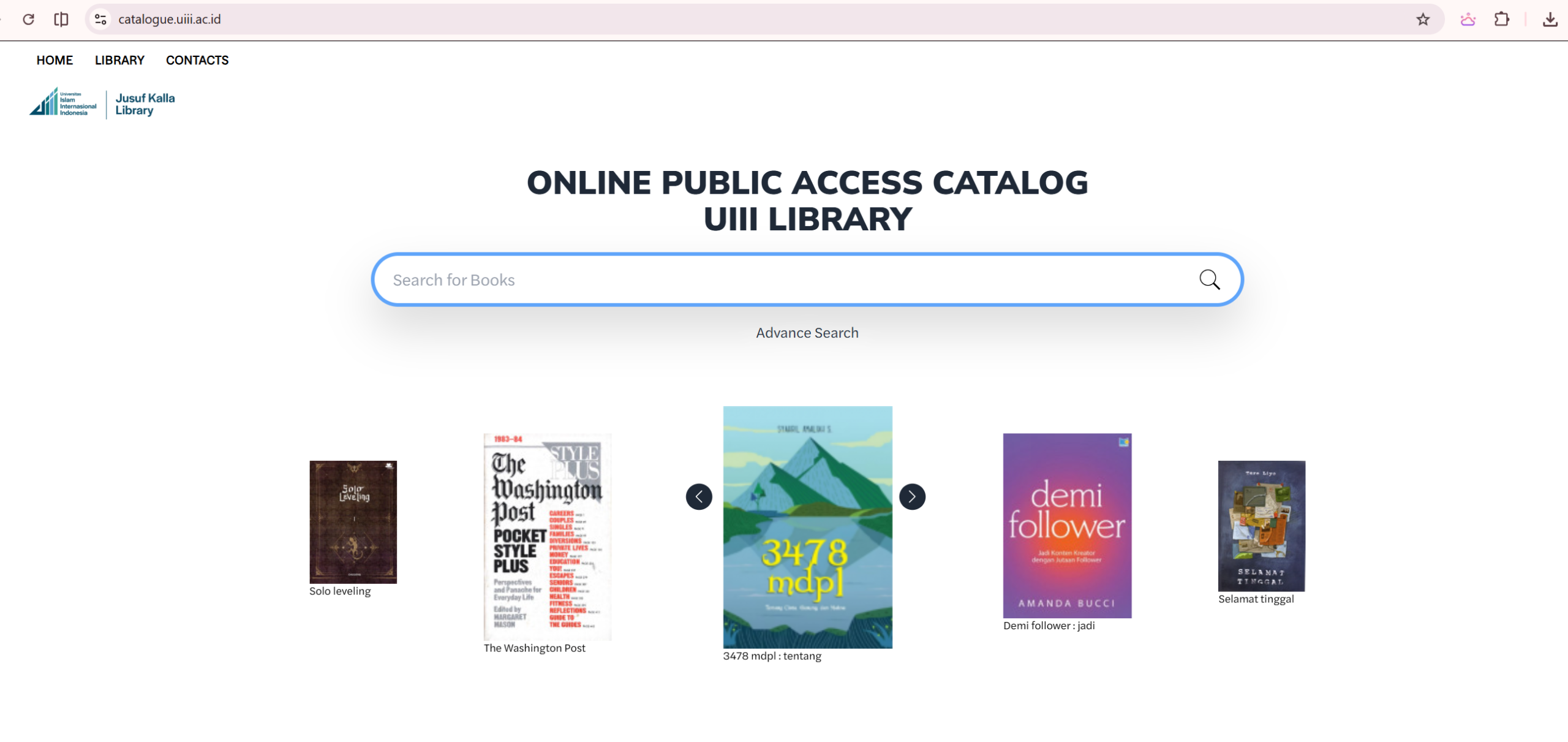
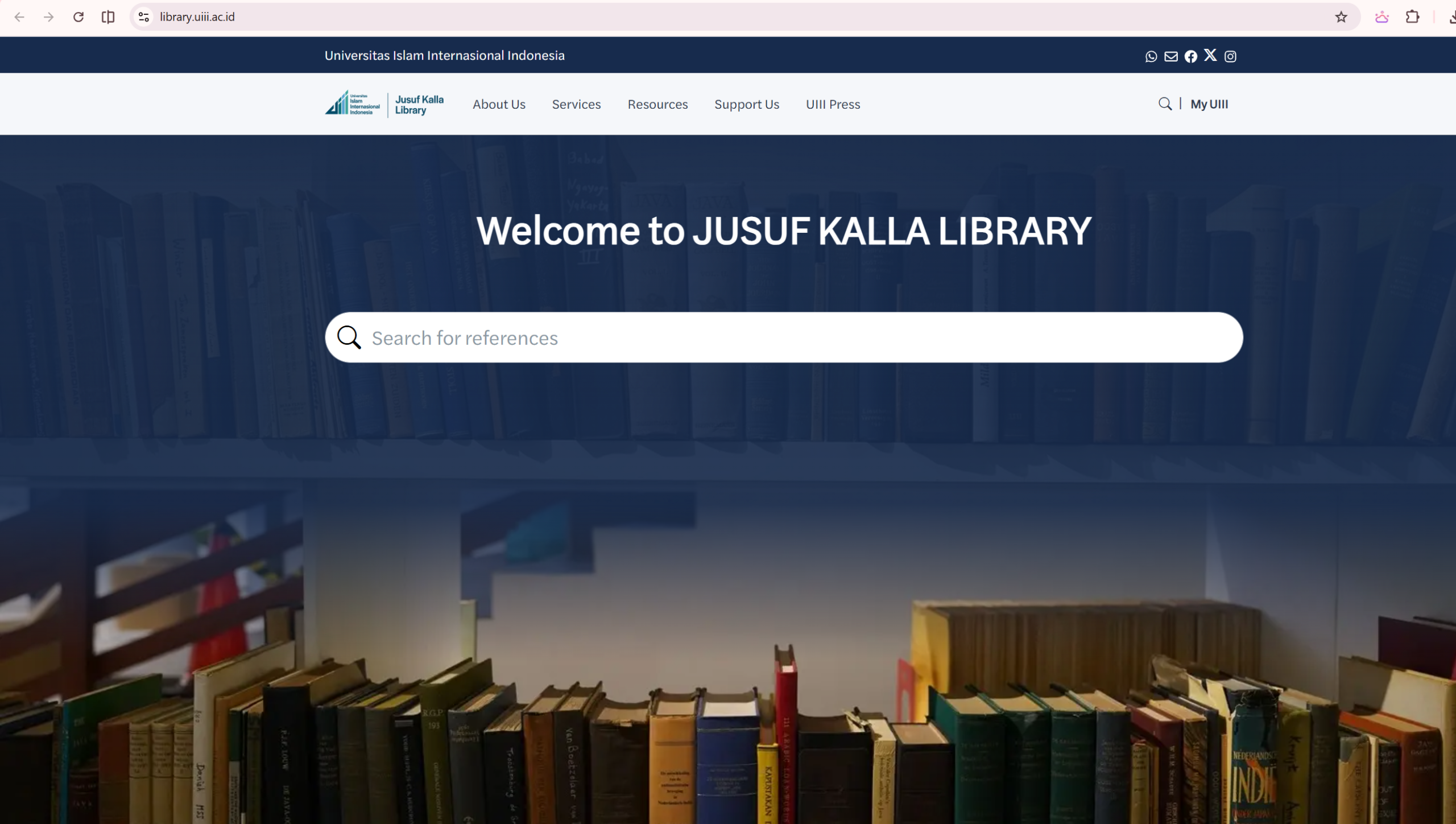
https://catalogue.uiii.ac.id/ https://library.uiii.ac.id/
5.4 Global South Forum
The Global South Forum is an online analysis platform launched on 17 January 2025 by the Faculty of Social Sciences of UIII together with the Global South Unit of the London School of Economics, co-founded by Prof. Chris Alden and Prof. Alvaro Mendez. Modelled on established regional platforms such as East Asia Forum, Fulcrum and New Mandala but focused on the Global South as a whole, it is produced and edited at UIII, where it now sits under the Centre for Global South Studies of the Indonesian Institute for Foreign Affairs. Its editorial board combines UIII scholars (Moch Faisal Karim, Philips J. Vermonte, Farish A. Noor, Nanda Silatsa Serge and Yusya' A. Fitrachman) with Lena Rethel of the University of Warwick and Chris Alden of the London School of Economics.
The platform publishes short analytical essays on international relations, politics and society, history, economics, the environment and the thinkers of the Global South, covering Africa, East Asia and the Pacific, Latin America, the Middle East and South and Central Asia. All content is free to read without registration or paywall. By the end of 2025 the Forum listed 24 contributors, including UIII students writing alongside established scholars, and in December 2025 alone it published essays on Afghan women's use of social commerce, on mountain forests and drought in Central Afghanistan, on poverty and uneven development in the Philippines, and on financial sovereignty in the Global South. The Forum held its first research workshop, “New Global Cooperation, Decolonization, and the Bandung Spirit,” on 18 December 2025.
As a freely accessible educational resource that translates scholarship into analysis for policymakers, journalists, students and general readers, the Global South Forum extends the University's teaching mission to a global online public and supports UN Target 4.7 on global citizenship education.
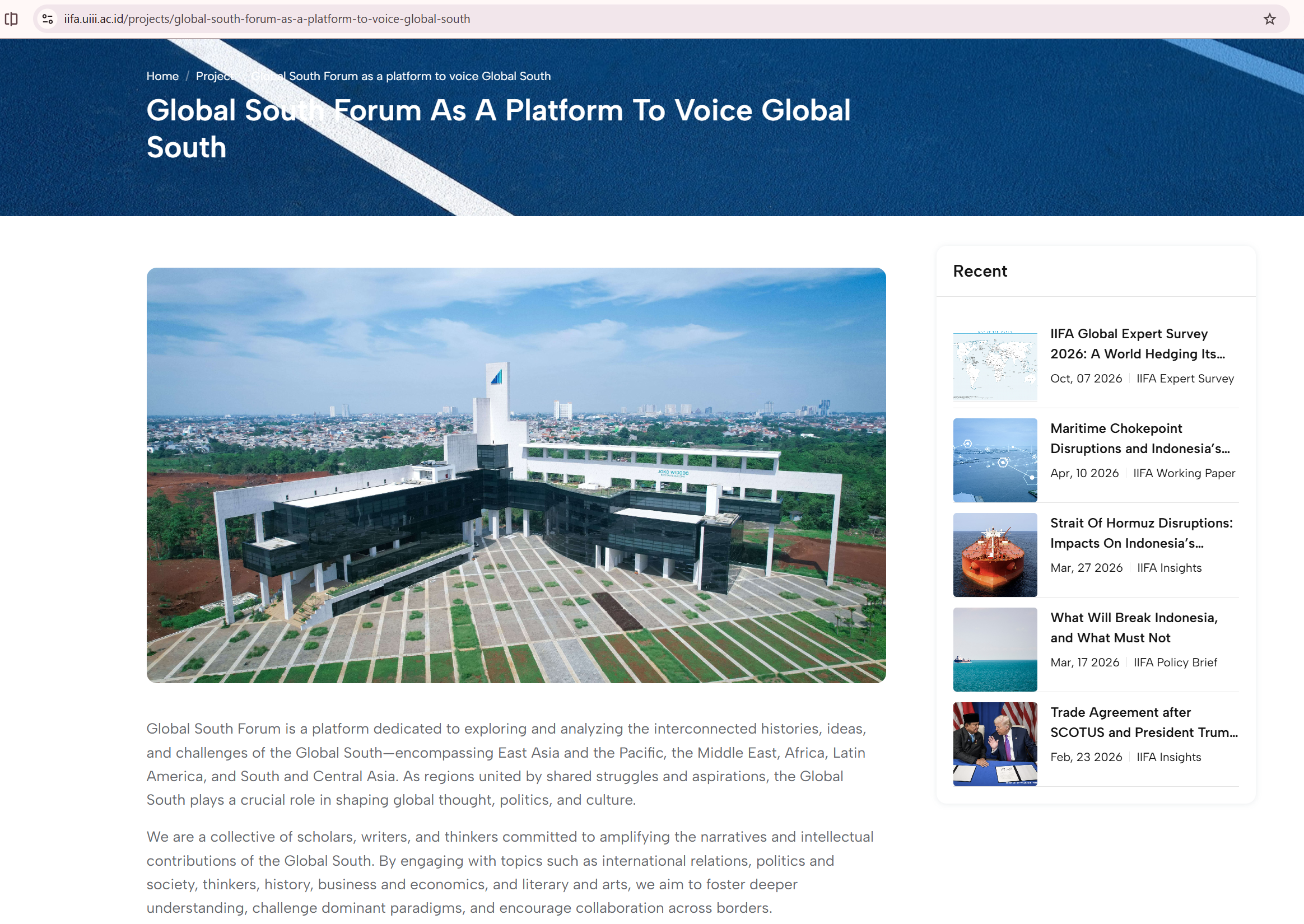
Link: https://iifa.uiii.ac.id/projects/global-south-forum-as-a-platform-to-voice-global-south
5.5 UIII Perspectives
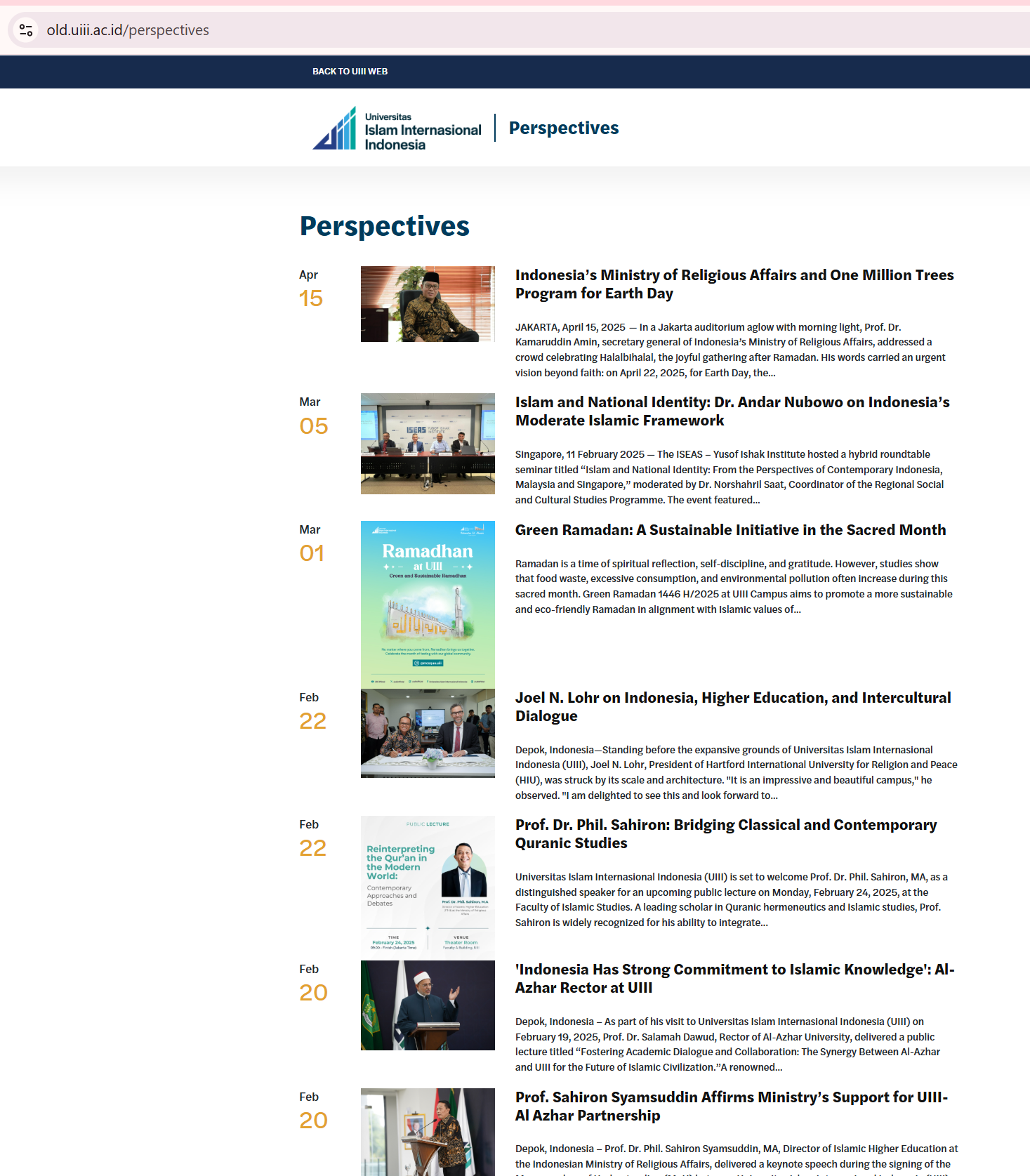
UIII Perspectives is the University's public commentary series, in which UIII academics write for a general readership on current issues in education, economics, religion, the environment and public policy. The pieces are published on the University website, are free to read and are frequently taken up by the national press. In the first four months of 2025 alone the series published at least 15 commentaries, including an analysis of the Government's plan to reinstate national examinations (7 January 2025), an assessment of impact investing as a route to balancing profit and sustainability (10 February 2025), an essay titled “A Green Awakening” on environmental consciousness (17 February 2025), the Green Ramadan commentary that accompanied the mosque programme (1 March 2025) and a reflection on the One Million Trees programme for Earth Day (15 April 2025).
By placing expert analysis in plain language before the public, UIII Perspectives functions as an open educational resource in its own right and complements the research articles of the journals with accessible interpretation. It contributes to UN Target 4.7 by informing public understanding of sustainable development and civic questions.
5.6 Free Online Webinars, Symposia and Video Channels
In 2025 the faculties delivered a series of online academic events that were free and open to external participants, extending the reach of the public lecture programme to audiences who could not travel to Depok. The Faculty of Islamic Studies and the Alwaleed Centre of the University of Edinburgh held a joint webinar on 25 February 2025 titled “Blurring Identities: Sense, Islam, and Secularity among Malabaris in Malaysia,” with Dr. Waseem Naser as speaker and Dr. Hew Wai Weng and Dr. Zezen Zaenal Mutaqin as discussants, delivered over Zoom. The Faculty of Economics and Business delivered the eighth episode of its Sustainable Finance Public Lecture online on 13 January 2025, with Prof. Adel Mohammed Yaslam Sarea of Ahlia University, Bahrain, on the European Sustainability Reporting Standards. The Faculty of Social Sciences and the International Dialogue Centre held a public webinar on 13 May 2025 on best practices and challenges of interreligious dialogue for peace in Southeast Asia, with Alissa Wahid of the GUSDURian Network, Dr. Alwani Ghazali of Universiti Malaya and Teresita C. Mirafuentes, as one of three pre-conference webinars in the “10 Years of Dialogue and Regional Action” programme.
The Faculty of Education held its third joint webinar with the University of Melbourne on 3 July 2025 on spatial reasoning to support numeracy learning, following two joint webinars in 2024, and on 11 August 2025 it convened its first symposium, delivered entirely online, on culturally informed educational leadership in Asia, which examined how cultural values, beliefs and social norms shape leadership practice across the region. The Faculty's monthly LunchTalk forum was also delivered online on occasion; the 39th LunchTalk on 25 March 2025, with Dr. Teguh Khaerudin of UIN Syarif Hidayatullah Jakarta on teachers' informal professional learning, is documented on the University website.
Recordings and highlights of University events are published on the UIII Official channel and the UIII Library Center channel on YouTube, both of which are public. The channels carried 2025 material including the presentation of AICIS+ 2025 published on 23 September 2025. These online events and recordings give teachers, researchers and students outside the University free access to the same scholarly exchange that takes place on campus, in support of UN Targets 4.4 and 4.7.
Figure 17. Screenshot of the online webinar “Best Practices and Challenges of Interreligious Dialogue for Peace in Southeast Asia,” Faculty of Social Sciences and the International Dialogue Centre, 13 May 2025, showing external participants on Zoom.
https://uiii.ac.id/foss-to-host-southeast-asias-event-for-kaiciids-10-years-of-dialogue-regional-action/
https://uiii.ac.id/teachers-teaching-themselves-is-it-the-end-of-teachers-formal-development-program/
Table summary of UIII public resources for lifelong learning available free of charge to non-students in 2025
| No | Indicator component | Provision and organising unit | Dates or period in 2025 | External beneficiaries and scale | Access | Public verification |
|---|---|---|---|---|---|---|
| A1 | Free courses leading to a certificate or award | Interfaith Dialogue Training for Young Leaders in Greater Jakarta (COMPOSE, Faculty of Social Sciences) | Open call 23 August; registration to 5 October; training 27 to 28 October 2025 | 25 selected young leaders from religious communities and universities in Jakarta and Depok (30 recorded in attendance); certificate for every participant | Free (selective admission through open call) | https://uiii.ac.id/call-for-participants-compose-uiii-to-hold-interfaith-dialogue-training-for-young-leaders-in-greater-jakarta/ |
| A2 | Free courses leading to a certificate or award | Training on Research Methods in Islamic Economics and Finance (Faculty of Economics and Business, Community Engagement Programme) | Registration 11 to 20 September; training 4 October 2025 | 27 external students, researchers, civil society staff, government personnel and community leaders; completion certificates for all 27 | Free (selective admission through open call) | Call for participants on feb.uiii.ac.id (direct page address to be inserted); FEB Annual Report 2025 |
| A3 | Free courses leading to a certificate or award | 8th Certificate Course on International Humanitarian Law and Islamic Law Related to Armed Conflict (Faculty of Islamic Studies with ICRC Jakarta and INSANIA) | 6 to 10 October 2025 | 40 academics, researchers and students from seven countries (Indonesia, Nigeria, Pakistan, Afghanistan, the Philippines, the Gambia, Malawi); certificate on completion | Free (selective admission by application) | https://uiii.ac.id/uiii-icrc-and-insania-strengthens-global-humanitarian-dialogue-through-the-8th-certificate-course/ |
| A4 | Free courses leading to a certificate or award | SantriPreneur Academy: Incubation of Santri Sociopreneurs Based on Islamic Philanthropy (Faculty of Economics and Business with UIN Kiai Ageng Muhammad Besari Ponorogo, BankZISKA and BAZNAS Ponorogo) | 26 to 27 September 2025, Baitul Mukhlisin Mosque, Ponorogo | Santri from seven pesantren in Madiun and Ponorogo working in seven groups; awards to the three strongest business plans (first place Pesantren Subulul Huda, Madiun) | Free | https://uiii.ac.id/feb-uiii-launches-santripreneur-academy-to-nurture-islamic-social-entrepreneurs/ |
| A5 | Free courses leading to a certificate or award (supplementary) | Business Model Canvas Workshop for Sekolah Terbuka Madani (Faculty of Economics and Business); community education programme at MAN 1 Cilegon with Posyantek Harapan Denok (Faculty of Education) | 23 January 2025 (per FEB record); 16 December 2025 (seven sessions) | Secondary school pupils; pupils, teachers and parents of MAN 1 Cilegon | Free | Faculty Annual Reports 2025; public web pages in preparation |
| B1 | Free access to campus facilities and equipment | Jusuf Kalla Library: Great Reading Hall, Working Space, Tribunes, Children's Reading Area, collections and public catalogue | Throughout 2025; weekdays to 21.00, with weekend opening from 2025 | General public on registration at reception, mainly school pupils and university students from Greater Jakarta, professionals and families; daily visits above 1,200 after the public opening; Accreditation A (Excellent) awarded 12 September 2025 | Free | https://catalogue.uiii.ac.id/ and https://library.uiii.ac.id/ |
| B2 | Free access to campus facilities and equipment | Rahmatan Lil 'Alamin Mosque and the Green Ramadan 2025 public programme | Mosque open all year; Green Ramadan programme March 2025 (Ramadan 1446 H) | Residents of Depok and the wider public; daily kultum, tarawih led by imams from Indonesia and abroad, 250 free iftar meals each evening, Ramadan market, zakat and infaq distribution | Free | https://uiii.ac.id/uiii-embraces-a-green-ramadan-a-month-of-worship-and-sustainability/ |
| B3 | Free access to campus facilities and equipment | Public lecture and dialogue programme in the lecture halls of Faculty A and Faculty B buildings, the Teleconference Room and the Bank Indonesia Corner | Throughout 2025 | More than 30 public lectures, talks and policy dialogues open to scholars and students of other universities, practitioners, diplomats, journalists, religious leaders and the public, including three dialogues with serving Vice Ministers | Free | https://uiii.ac.id/indonesia-has-strong-commitment-to-islamic-knowledge-al-azhar-rector-at-uiii/ ; https://uiii.ac.id/rethinking-the-religion-of-java-prof-greg-fealy-on-mysticism-and-santri-abangan-relations/ ; https://uiii.ac.id/iifa-discussion-series-explores-indonesias-free-trade-strategies-with-global-powers/ ; https://uiii.ac.id/uiiis-econinsight-explores-taxation-fiscal-sustainability-and-islamic-principles/ ; https://uiii.ac.id/uiii-hosts-public-lecture-on-pakistan-indonesia-relations-with-ambassador-zahid-hafeez-chaudhri/ |
| B4 | Free access to campus facilities and equipment | Campus auditoria, lecture halls, conferencing equipment and grounds as venue for national and international academic gatherings | AICIS+ 2025, 29 to 31 October; Decolonizing Social Sciences and Humanities conference, 29 to 30 April; KAICIID regional conference and curriculum review, 17 to 19 June; UIII and HCHF conference, 29 to 30 July | Thousands of participants from other institutions: 2,434 abstracts and 234 presentations at AICIS+; 411 abstracts from 23 countries and 48 papers at the decolonizing conference; fellows from six Southeast Asian countries; more than 200 participants at the HCHF conference | Free | https://uiii.ac.id/announcement-aicis-2025/ ; https://uiii.ac.id/southeast-asian-interreligious-fellows-gather-at-uiii-to-reshape-kaiciid-curriculum/ ; https://uiii.ac.id/uiii-hchf-international-conference-concludes-with-jakarta-declaration-on-human-fraternity/ ; https://fis.uiii.ac.id/activities/events/global-thought-leaders-decolonize-knowledge-uiii-2025-3055/ |
| C1 | Free access to online educational resources | Four peer reviewed open access journals on the UIII Open Journal System under CC BY-SA 4.0: Muslim Politics Review, Muslim Education Review, Islamic Studies Review, Muslim Business and Economics Review | Two issues of each journal in 2025 (Volume 4 Numbers 1 and 2), plus Islamic Studies Review Volume 3 Number 2 on 13 January 2025 | Any reader worldwide; full text downloadable without an account | Free, no login | https://journal.uiii.ac.id/ |
| C2 | Free access to online educational resources | UIII Institutional Repository (DSpace 7, managed by the Jusuf Kalla Library) | Continuous; 2025 theses and dissertations deposited during the year | 783 items at verification (424 theses, 125 articles, 18 dissertations, 7 book chapters, 5 reports, 2 proceedings, 1 dataset) in 15 communities, browsable by any user | Free, no login | https://repository.uiii.ac.id/home |
| C3 | Free access to online educational resources | Jusuf Kalla Library Electronic Resources gateway to open access databases and the public SLiMS catalogue | Continuous | Curated open access databases (DOAJ, DOAB, OAPEN, CORE, PubMed Central, Garuda, MORAREF, DREAMSEA, Khastara, Zenodo, OATD) and a searchable catalogue for any user, with subscribed databases clearly marked as campus only | Free, no login | https://library.uiii.ac.id/ and https://catalogue.uiii.ac.id/ |
| C4 | Free access to online educational resources | Global South Forum (Faculty of Social Sciences and IIFA Centre for Global South Studies with the LSE Global South Unit) | Launched 17 January 2025; first research workshop 18 December 2025 | 24 contributors by the end of 2025; analytical essays free to read for policymakers, journalists, students and general readers | Free, no registration | https://iifa.uiii.ac.id/projects/global-south-forum-as-a-platform-to-voice-global-south |
| C5 | Free access to online educational resources | UIII Perspectives public commentary series | At least 15 commentaries published January to April 2025, continuing through the year | General readership in Indonesia and abroad; pieces taken up by the national press | Free | https://old.uiii.ac.id/perspectives |
| C6 | Free access to online educational resources | Free online webinars and symposia (with the University of Edinburgh, the University of Melbourne and KAICIID) and public YouTube channels (UIII Official, UIII Library Center) | 13 January, 25 February, 25 March, 13 May, 3 July and 11 August 2025; recordings published through the year | External online participants in Indonesia, Southeast Asia and beyond: teachers, researchers, students, interfaith practitioners and finance professionals | Free | https://uiii.ac.id/foss-to-host-southeast-asias-event-for-kaiciids-10-years-of-dialogue-regional-action/ ; https://uiii.ac.id/teachers-teaching-themselves-is-it-the-end-of-teachers-formal-development-program/ |
Free courses leading to a certificate or award. In 2025 UIII delivered three structured courses to people who are not its students, each announced through an open public call on a UIII website, each selecting its participants from external applicants, each delivered without charge on the UIII campus, and each concluding with a certificate issued by the University and its partners. The Interfaith Dialogue Training for Young Leaders in Greater Jakarta (27 to 28 October 2025) certificated 25 selected young leaders, with 30 recorded in attendance; the Training on Research Methods in Islamic Economics and Finance (4 October 2025) certificated 27 external researchers, students, civil servants and community leaders; and the 8th Certificate Course on International Humanitarian Law and Islamic Law Related to Armed Conflict (6 to 10 October 2025) certificated 40 participants from seven countries. Together these courses reached at least 92 certificated external participants. The SantriPreneur Academy (26 to 27 September 2025) extended award based training to santri from seven Islamic boarding schools in Madiun and Ponorogo, and two further community training activities for school pupils, teachers and parents are recorded in the faculty annual reports.
Free access to campus facilities and equipment. The Jusuf Kalla Library was open to the general public throughout 2025 on registration at the reception desk, with daily visits that rose from about 200 to more than 1,200 after its public opening, weekend opening from 2025, and national Accreditation A (Excellent) awarded on 12 September 2025. The Rahmatan Lil 'Alamin Mosque remained open to all and, during March 2025, turned its Green Ramadan programme into a daily open learning space for the community of Depok with lectures, tarawih and 250 free iftar meals each evening. The lecture halls and conferencing equipment of the Faculty A and Faculty B buildings hosted more than 30 public lectures, talks and policy dialogues open to external audiences, including three with serving Vice Ministers of the Republic of Indonesia, and the campus served as the venue for national and international gatherings, among them AICIS+ 2025 with 2,434 submitted abstracts, that brought thousands of participants from other institutions onto the campus without charge.
Free access to online educational resources. UIII places the whole of its scholarly publishing in the public domain through four peer reviewed journals under a Creative Commons Attribution ShareAlike 4.0 licence, each of which published two issues in 2025 that may be read and downloaded without an account; maintains an institutional repository of 783 items that is browsable worldwide; curates, through its library, an open access electronic resources gateway and a public catalogue that distinguish open resources clearly from campus only subscriptions; produces the Global South Forum, launched on 17 January 2025 with the Global South Unit of the London School of Economics and carrying essays by 24 contributors by the end of the year; publishes plain language commentary through UIII Perspectives; and delivered free online webinars and symposia with the University of Edinburgh, the University of Melbourne and the International Dialogue Centre, with recordings on public video channels.
Taken together, the evidence shows that in the reporting year 2025 UIII provided all three forms of public resource for lifelong learning that the indicator describes, that each was available to people who are not students of the University, that each was provided free of charge, and that each is documented on a public UIII web page that can be opened without login. The faculty annual reports for 2025 provide the supporting institutional record, and the event level detail for the public lecture and dialogue programme is set out in the companion document for Metric 4.3.2, Public Events for Lifelong Learning. Two items remain to be completed by the faculties before submission: the direct page address for the Training on Research Methods in Islamic Economics and Finance, and the public web reports for the two supplementary community training activities listed under item A5.