

UIII SDG 17.2.1 Report 2025 – Relationships with Government and NGOs for SDG Policy
Relationships with regional NGOs and government for SDG policy
Have direct involvement in, or input into, national government or regional non-government organisations, SDG policy development – including identifying problems and challenges, developing policies and strategies, modelling likely futures with and without interventions, monitoring and reporting on interventions, and enabling adaptive management.
Universitas Islam Internasional Indonesia (UIII) contributes directly to the development of national SDG policy in Indonesia. Working with ministries, a national regulator, the House of Representatives and international non-governmental partners, UIII provides research-based input that helps identify policy problems, develop strategies, model likely futures and build the capacity of public officials to manage change.
The cases presented here cover three areas of policy involvement in 2025. The Ministry of Foreign Affairs and Bappenas consulted UIII, as knowledge partner, on the Grand Design of Indonesia's International Development Cooperation (Indonesia Aid), the national strategy for development cooperation. The UIII–Higher Committee of Human Fraternity collaboration produced the Jakarta Declaration on Human Fraternity, with commitments to policy frameworks on rights, displacement, media and climate justice, and launched the Indonesian Institute for Human Fraternity with the Coordinating Minister for Human Development and Cultural Affairs. UIII faculty also hold standing policy roles in a national regulator, the national climate delegation and a parliamentary committee. Further supporting evidence, including UIII's KOMITMEN climate-economics programme, is summarised in Section 4.
Across these cases UIII contributes research, policy analysis, convening and academic leadership. All activities took place between January and December 2025.
Knowledge partner to KEMLU and Bappenas.
UIII–HCHF collaboration and launch of IIHF.
OJK, Indonesia's COP30 delegation and the DPR's BKSAP.
1. Grand Design of Indonesia's International Development Cooperation
1.1 Policy Context
Indonesia has provided development assistance to other countries since 1977 and now presents itself as an emerging development partner rather than an aid recipient. Its development cooperation is delivered through the Indonesian Agency for International Development (LDKPI, known as Indonesian AID), with responsibilities shared across the Ministry of Foreign Affairs (KEMLU), Bappenas and the Ministry of State Secretariat. In 2025 the government began drafting the Grand Design of Indonesia's International Development Cooperation (Grand Design Kerja Sama Pembangunan Internasional, GDKSPI) to give this cooperation a clear vision, priorities and institutional arrangements.
Preliminary findings presented to the consultation identified the problem the policy must address: Indonesia lacks a clear vision for its development cooperation, and spending is driven by budget absorption rather than impact. The national medium-term development plan (RPJMN) has also shifted the framing of cooperation from sovereignty and solidarity towards economic diplomacy.
1.2 Consultation Process and Participants
On 22 September 2025 UIII hosted a focus group discussion on the GDKSPI at its Depok campus. It was organized by UIII's Indonesian Institute for Foreign Affairs (IIFA) with KEMLU and Mandala Consulting, the consultant preparing the draft. The discussion was the first academic consultation stage of the grand design.
| Institution | Participant | Role in the FGD |
|---|---|---|
| Ministry of Foreign Affairs (KEMLU) | Rina Setyawati, Director of International Development Cooperation | Government lead |
| Bappenas | Maharani Putri, Director of Foreign Relations | Government participant |
| Ministry of State Secretariat | Noviyanti, Head of the Bureau of International Technical Cooperation | Government participant |
| UIII | Prof. Jamhari Makruf, Rector; Philips J. Vermonte, Ph.D., Dean of Social Sciences | Host; opening and policy input |
| IIFA, UIII | Teguh Yudo Wicaksono, Ph.D. (panellist); Sirojuddin Arif, Ph.D. | Policy input |
| Universitas Indonesia; CSIS | Asra Virgianita, Ph.D.; Lina A. Alexandra, Ph.D. | Panellists |
| BRIN; Universitas Kristen Indonesia; LPEM FEB UI | Irine Gayatri, Ph.D.; Prof. Angel Damayanti; Rhapsagita Pamasiswi | Participants |
Table 1.1. Participants in the GDKSPI focus group discussion, UIII, 22 September 2025. Source: IIFA news, 24 September 2025.
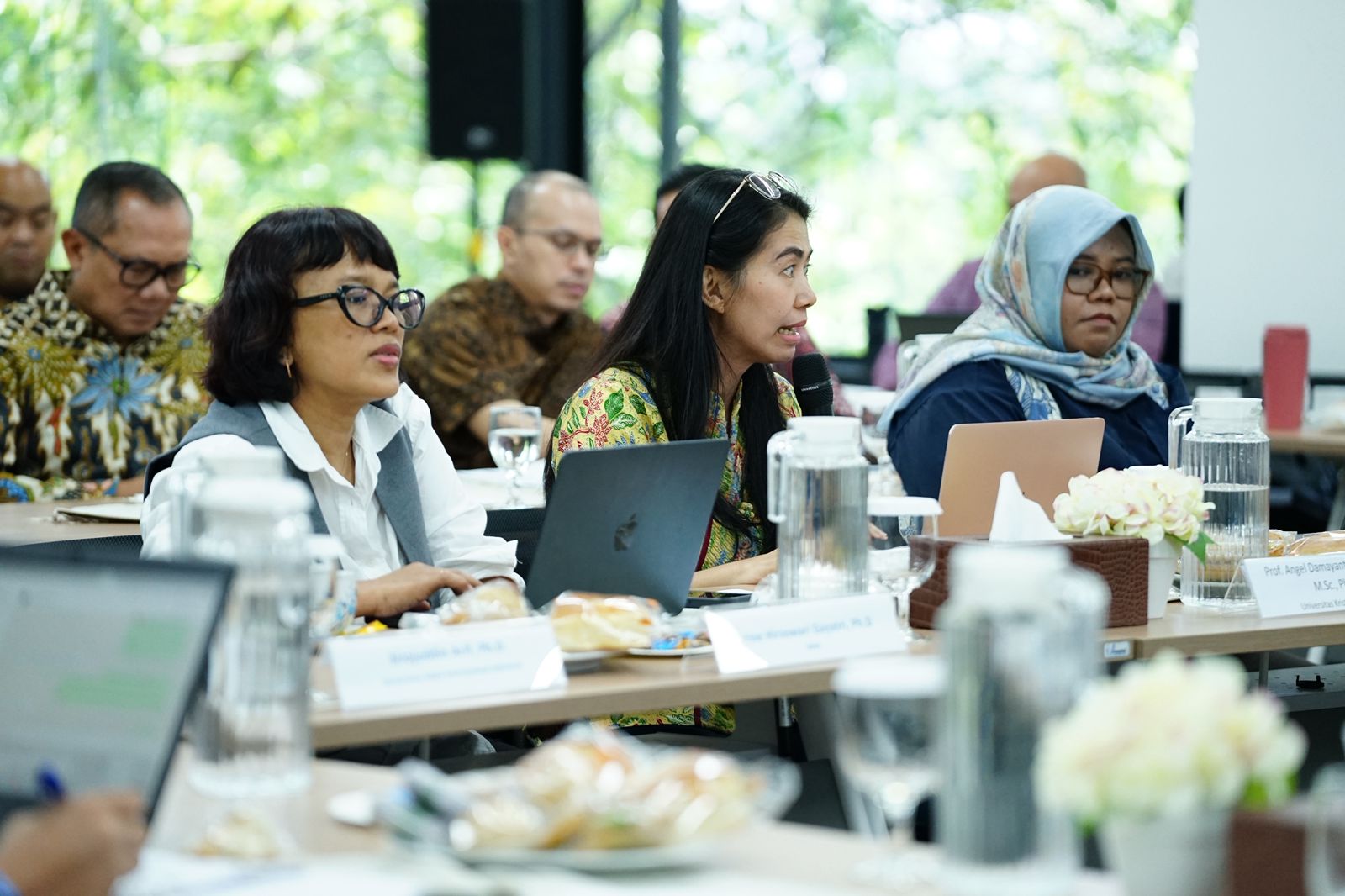
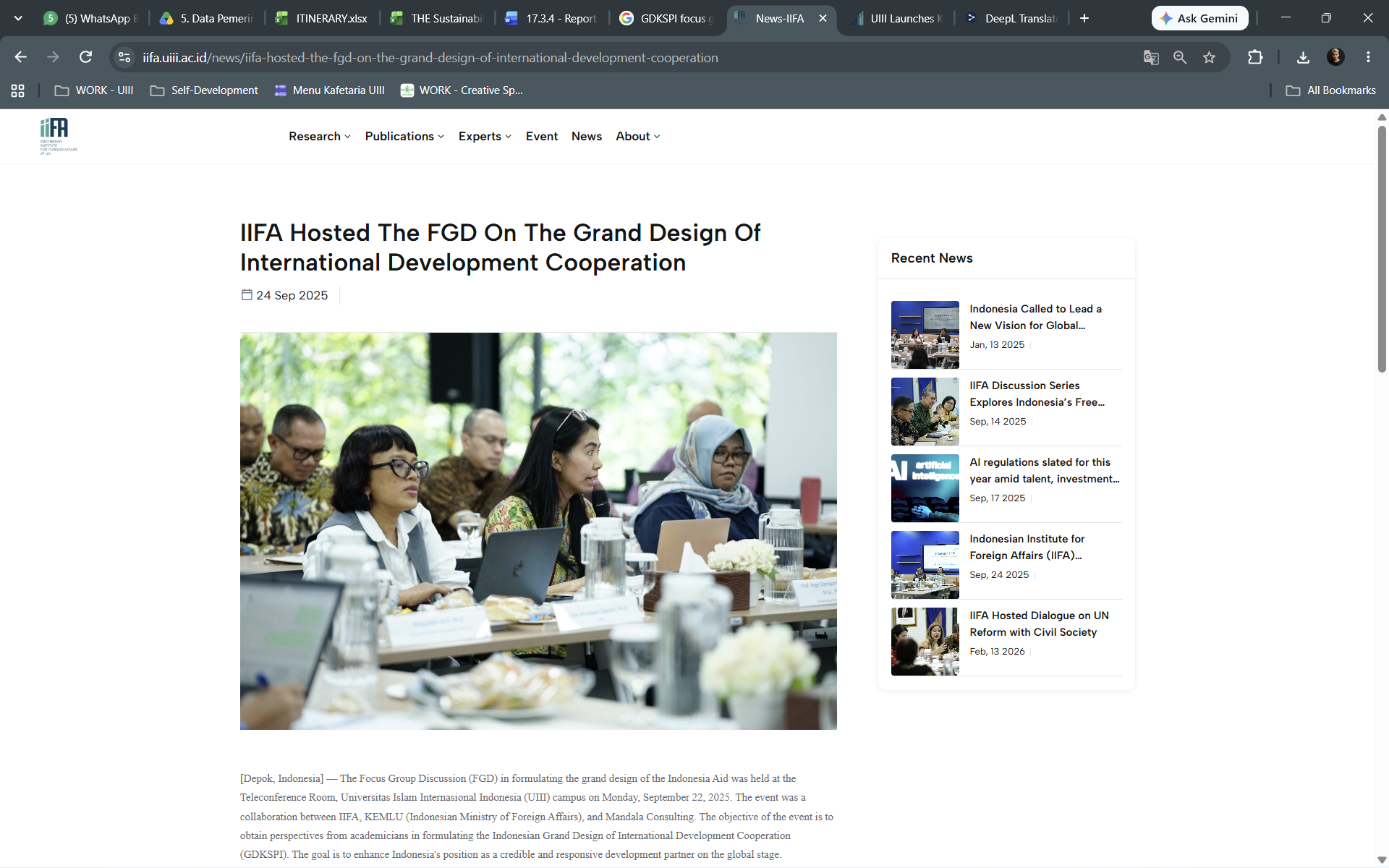
Image 1.1. The GDKSPI focus group discussion in the UIII Teleconference Room, 22 September 2025, and the IIFA news report. Source: IIFA news, 24 September 2025.
1.3 UIII's Input into the Grand Design
UIII was selected as knowledge partner for the consultation through its Faculty of Social Sciences and IIFA, a campus-based policy institute founded with UIII's support to link diplomacy with international economic and development policy from a Global South perspective. UIII's contributions addressed three elements of the draft:
- National interest and priorities. Teguh Yudo Wicaksono argued that national interests must anchor the grand design. Philips J. Vermonte proposed that priority areas be selected by their economic return to Indonesia, so that aid disbursement and outward investment are coordinated.
- Strategic orientation. Sirojuddin Arif argued that Indonesia must change its perspective "from inward looking to outward looking" to act as a credible development partner.
- Access and solidarity. The Rector framed the policy as Indonesia's shift "from a recipient to a donor", and the Dean linked it to scholarships for students from Global South countries, which UIII already delivers with KEMLU and Indonesian AID.
Other participants addressed institutional design. Bappenas proposed that LDKPI become a professional, independent agency; CSIS proposed an integrated authority comparable to JICA or AusAID; and CSIS and UKI argued that KEMLU should act as gatekeeper to align aid with national interests.
1.4 Outcomes and Next Steps
The consultation fed directly into a national policy document at the drafting stage. The agreed timeline was to present a first draft of the GDKSPI to the academic community in early December 2025, finalize the grand design by the end of the year, and draft the regulatory framework for international development cooperation in the following year. UIII's continued role as knowledge partner was confirmed in November 2025, when its Faculty of Social Sciences signed a Memorandum of Commitment with KEMLU's Foreign Policy Strategy Agency (BSKLN) for joint research supporting evidence-based foreign policy.
1.5 IIFA's Policy Dialogue Programme in 2025
The GDKSPI consultation was part of a regular series in which IIFA brought government officials and researchers together on policy questions:
| Date | Dialogue | Government participants | Policy question |
|---|---|---|---|
| 3 July 2025 | High-level roundtable on global development cooperation | KEMLU, Director of International Cooperation | How Indonesia should lead development cooperation as aid systems weaken |
| 4 August 2025 | IIFA Discussion Series on free trade strategies | Ministry of Investment/BKPM, Deputy for Investment Cooperation; KEMLU, Director for American and European Cooperation | Indonesia's position in IEU-CEPA and a possible US reciprocal trade agreement |
| 16 September 2025 | Monthly AI roundtable | Vice Minister of Communication and Digital Affairs, Nezar Patria | Content of Indonesia's AI roadmap and AI ethics regulation, then in preparation as presidential regulations |
| 22 September 2025 | GDKSPI focus group discussion | KEMLU, Bappenas, Ministry of State Secretariat | Vision, priorities and institutions of Indonesia's development cooperation |
Table 1.2. IIFA policy dialogues with government officials, 2025. Sources: UIII and IIFA news.
1.6 SDGs Relevance
The grand design advances SDG 17 Partnerships for the Goals, particularly Target 17.3 on mobilizing financial resources for developing countries and Target 17.9 on international support for capacity building through North–South, South–South and triangular cooperation. UIII's input on priorities and institutional design helps define how Indonesia will deliver that support.
Its emphasis on scholarships for students from developing countries relates to SDG 4 Quality Education, Target 4.b. The wider IIFA programme on trade and digital policy relates to SDG 8 Decent Work and Economic Growth and SDG 9 Industry, Innovation and Infrastructure.
2. Jakarta Declaration on Human Fraternity and the Indonesian Institute for Human Fraternity
2.1 Purpose and Partnership
UIII and the Higher Committee of Human Fraternity (HCHF) jointly convened the International Conference on Human Fraternity in Jakarta on 29–30 July 2025. HCHF is an independent international committee formed in 2019 after the Document on Human Fraternity was signed in Abu Dhabi, and the conference implemented the UIII–HCHF MoU of 3 September 2024. More than 200 participants attended, including scholars, policymakers, civil-society practitioners and representatives of several embassies.
The conference had a policy purpose. Its deliberations were designed to produce shared commitments, and the Rector stated that UIII aims to carry the resulting values "into classrooms, communities and policy". This section presents the collaboration from the angle of indicator 17.2.1: how UIII and an independent international partner produced policy commitments with the involvement of the national government. The same collaboration is reported under indicator 17.2.4 from the angle of comparative review and best practice.
2.2 Government Involvement
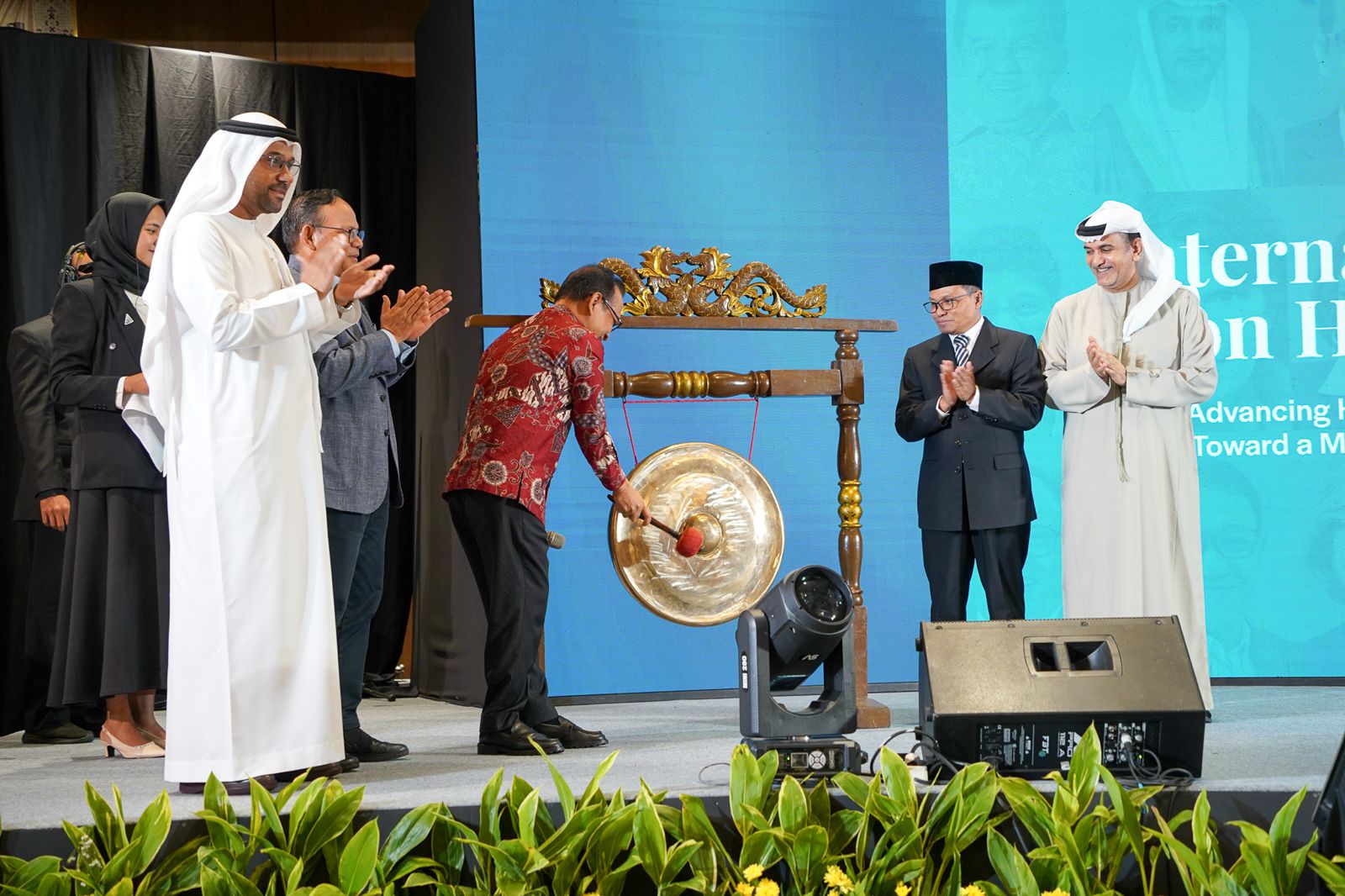
The Coordinating Minister for Human Development and Cultural Affairs, Prof. Pratikno, officiated the launch of the Indonesian Institute for Human Fraternity (IIHF) on 29 July 2025. The UAE Ambassador to Indonesia and ASEAN, H.E. Abdulla Salem Al Dhaheri, the HCHF Secretary General, Dr. Khalid Al-Ghaith, and representatives of the embassies of the United Kingdom, Uzbekistan, Morocco and Malaysia also attended. Representatives of the Indonesian Press Council took part in the panel on media.
2.3 Policy Deliberation across Four Thematic Panels
The Declaration was drafted from deliberations in four thematic panels. UIII provided academic leadership through panel moderators Nina Nurmila, Dian Masyita and Philips J. Vermonte, and through Farish A. Noor's presentation on representations of other communities.
| Panel | Problems identified | Approaches reviewed | Participants named in UIII and conference records |
|---|---|---|---|
| Cross-border fraternity: migration and displacement | Protection of displaced people and their long-term integration | Humanitarian corridors as safe and legal pathways, with free language and cultural education; refugee protection frameworks and Indonesia's humanitarian response | Valeria Martano |
| Rights and social justice | Unequal standing of minorities and marginalized communities | Azerbaijan's multiculturalism model (education, media, employment, legal protection); conditions for effective interfaith collaboration | Irina Kunina; Azza Karam |
| Media and societal divides | Polarization, hate speech and exclusion of victims' voices | Public-service, market-oriented and ideological media models compared with V-Dem data for India, the US and Indonesia; investigative and community-centered reporting | Farish A. Noor (UIII); Cherian George; Indonesian Press Council; TRENDS |
| Environmental justice in global crises | Climate responses that leave vulnerable communities behind | Blended finance, results-based finance and catalytic philanthropy; faith-based climate initiatives | Fitrian Ardiansyah (ADM Capital, Asia Climate-smart Landscape Fund); Nouhad Awwad (Greenpeace MENA) |
Table 2.1. Thematic panels of the UIII–HCHF conference. Sources: UIII news, July 2025; UIII evidence report for indicator 17.2.4.
2.4 Policy Commitments in the Jakarta Declaration
The Jakarta Declaration on Human Fraternity was adopted at the closing session on 30 July 2025. It turns the panels' findings into commitments for policy, education and community action:
- Rights and inclusive institutions: legal, educational and policy frameworks that protect human rights and pluralism; action on systemic injustice; equitable access to education, healthcare and opportunity for marginalized communities.
- Displacement and poverty: cooperation on poverty and displacement, and platforms that protect migrants' dignity.
- Media and information: ethical journalism, education against misinformation, partnerships with media professionals, and inclusion of grassroots and marginalized voices in media production.
- Climate justice: cooperation across sectors and borders for climate resilience and environmental justice; support for indigenous knowledge, youth leadership and science-based sustainable-development solutions; integration of fraternity into climate diplomacy and multilateral policies.
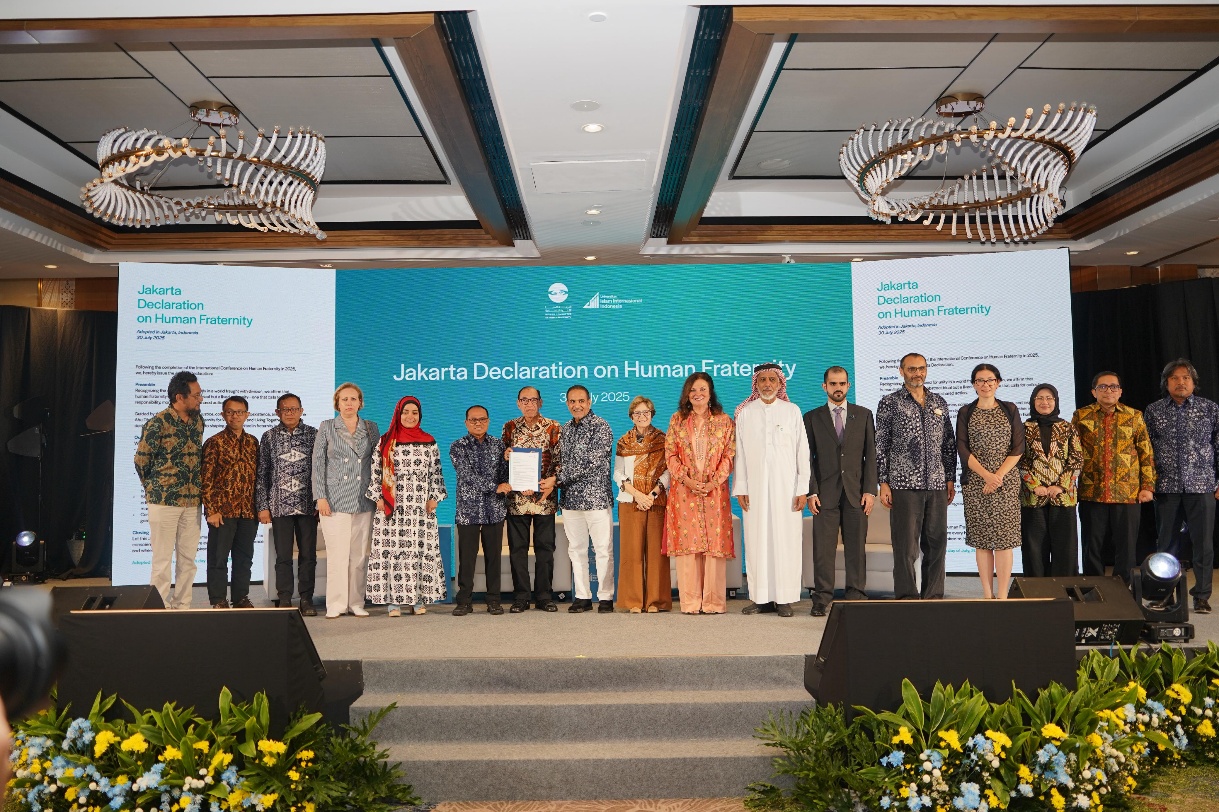
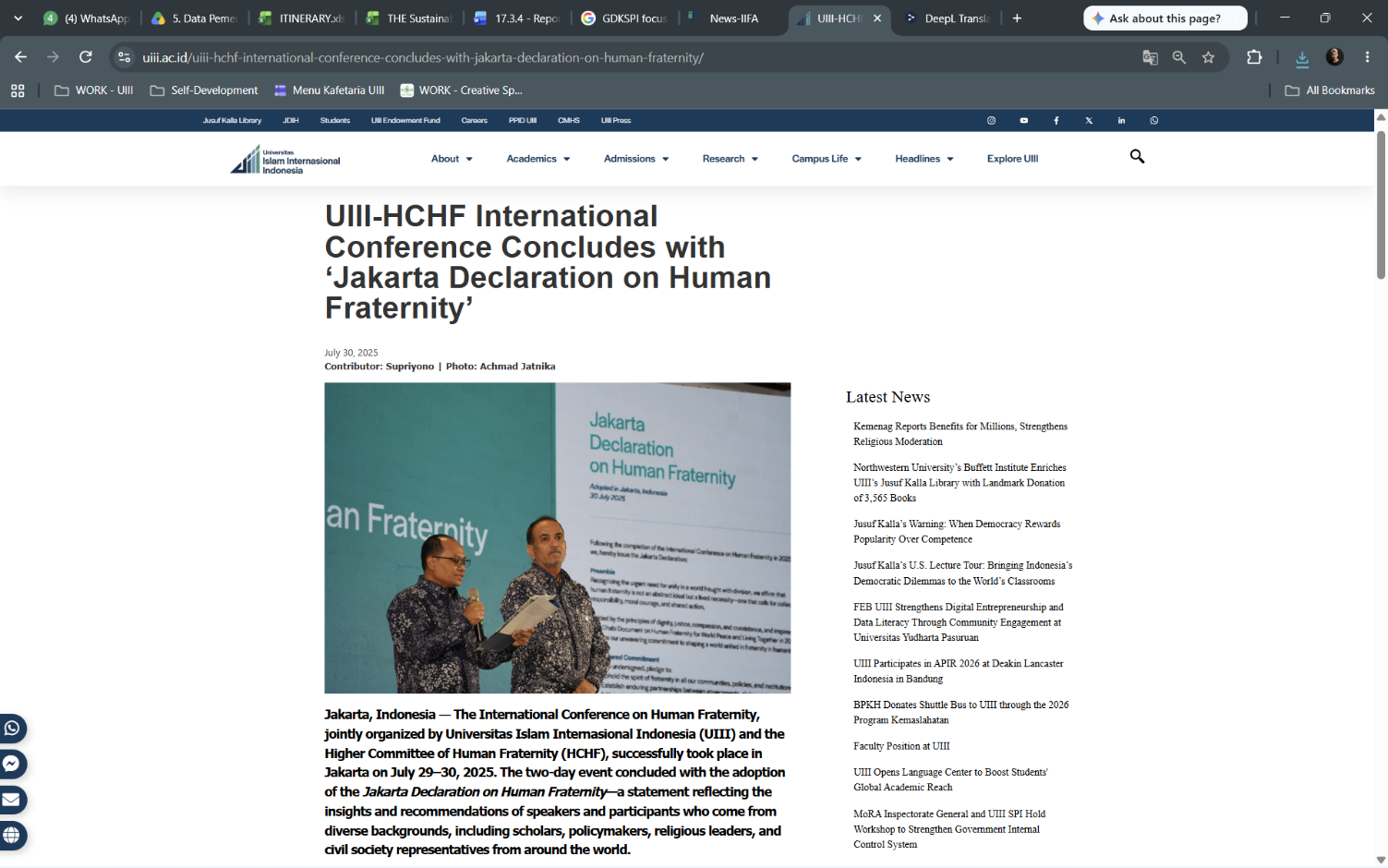
Image 2.2. The Jakarta Declaration on Human Fraternity, 30 July 2025. The full text is linked from the UIII news article of 30 July 2025.
2.5 Institutional Follow-up
IIHF was established to continue the collaboration through interdisciplinary research, dialogue and evidence-based programmes. The Rector described its purpose as turning shared values into "sustainable programs and policies" for global cooperation, equitable development and lasting peace. The Declaration serves as IIHF's guiding document, giving the policy commitments a permanent home at UIII.
2.6 SDGs Relevance
The Declaration's commitments to legal and policy frameworks for human rights, ethical journalism and inclusive institutions support SDG 16 Peace, Justice and Strong Institutions, including Target 16.7 on inclusive and participatory decision-making and Target 16.10 on public access to information. Its commitments on displacement, minorities and access to services support SDG 10 Reduced Inequalities, Target 10.7 on safe and orderly migration. The climate-justice commitments and the review of climate finance support SDG 13 Climate Action. The emphasis on education against misinformation relates to SDG 4 Quality Education, Target 4.7. The collaboration between a university, an independent international committee, civil-society organizations and the national government advances SDG 17 Partnerships for the Goals, Target 17.17.
3. Standing Policy Roles of UIII Faculty
3.1 Overview
In 2025 three UIII appointments placed the university inside national policy processes rather than alongside them. Each was made by, or agreed with, the government body concerned, and each continues beyond a single event.
| Policy body | UIII role | Holder | Period | Policy area |
|---|---|---|---|---|
| Financial Services Authority (OJK), Sharia Finance Development Committee (KPKS) | Committee member | Prof. Dian Masyita, Dean, Faculty of Economics and Business | 1 June 2025 – 31 May 2027 | Development of Islamic finance |
| Indonesian delegation to the UN Climate Change Conference (COP30) | Delegation member | Dr. Sonny Mumbunan, Head, Master of Public Policy in Climate Change | November 2025 (member since COP18, 2012) | Climate and forest finance |
| House of Representatives (DPR), Committee for Inter-Parliamentary Cooperation (BKSAP) | Strategic knowledge partner | UIII, through the Faculty of Social Sciences and IIFA | Agreed 19 May 2025 | Parliamentary diplomacy, climate change, digital policy |
Table 3.1. Standing policy roles of UIII and its faculty, 2025.
3.2 OJK Sharia Finance Development Committee
OJK's Board of Commissioners appointed Prof. Dian Masyita to the Sharia Finance Development Committee (Komite Pengembangan Keuangan Syariah, KPKS) after a selection process. The appointment was formalised on 21 May 2025 and the contract signed on 3 June 2025, for a term to 31 May 2027. According to UIII's report, OJK expects her expertise to help strengthen Islamic finance in Indonesia and keep its growth aligned with national goals and international standards. She brings UIII's work on Islamic social finance, including zakat, waqf and the Center of Excellence in Islamic Finance for SDGs established with UNDP and the IsDB Institute.
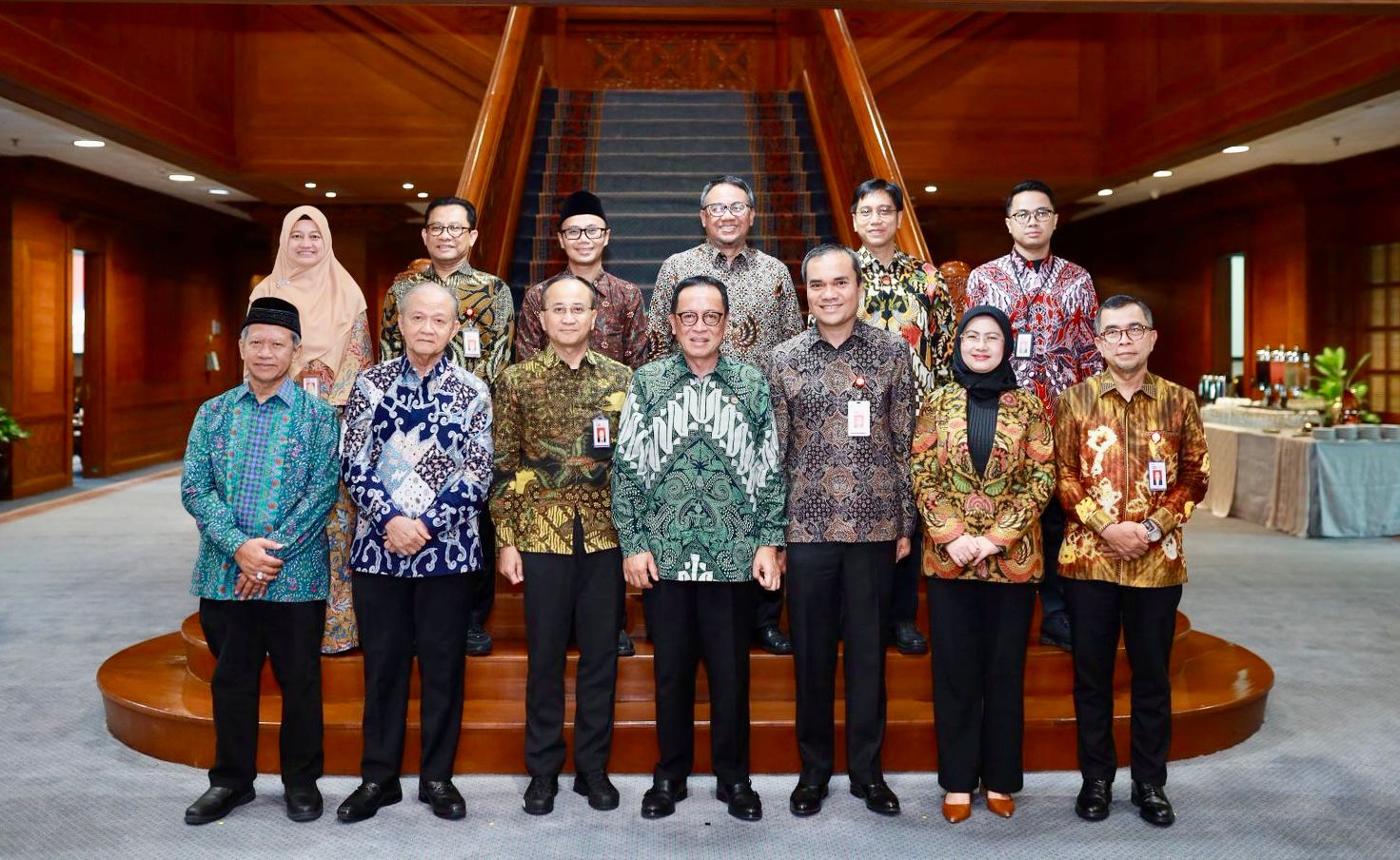
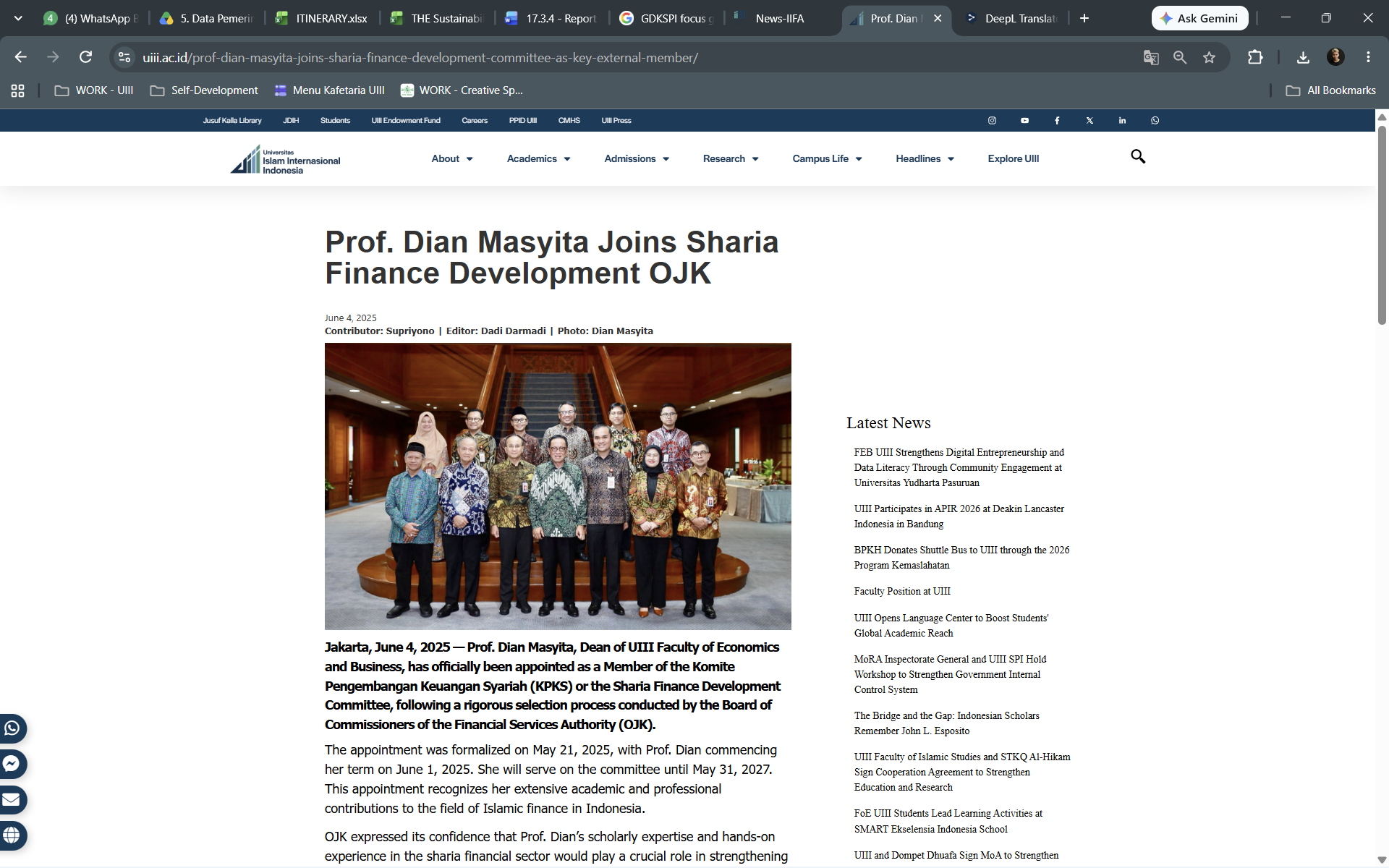
Image 3.1. Prof. Dian Masyita and the UIII news article on her appointment to OJK's Sharia Finance Development Committee, 4 June 2025.
3.3 Indonesia's Delegation to COP30
Dr. Sonny Mumbunan represented Indonesia as a member of the official delegation to COP30 in Belém, Brazil, in November 2025, a role he has held since COP18 in Doha in 2012. He took part in high-level side events on forest finance and equitable climate policy. COP30 launched the Tropical Forest Forever Facility, endorsed by 66 tropical forest nations, with pledges of US$6.7 billion, including US$1 billion from Indonesia.
Earlier in 2025, at the Global Tipping Points Conference (University of Exeter, 30 June–3 July), he presented research on Indonesia's fiscal transfers that reward provinces and districts for forest cover. UIII reports that this policy mobilised about US$1 billion of domestic resources in 2023, arguably the largest REDD+ funding in the world. This work monitors and reports on a national policy intervention and informs Indonesia's position in forest-finance negotiations.
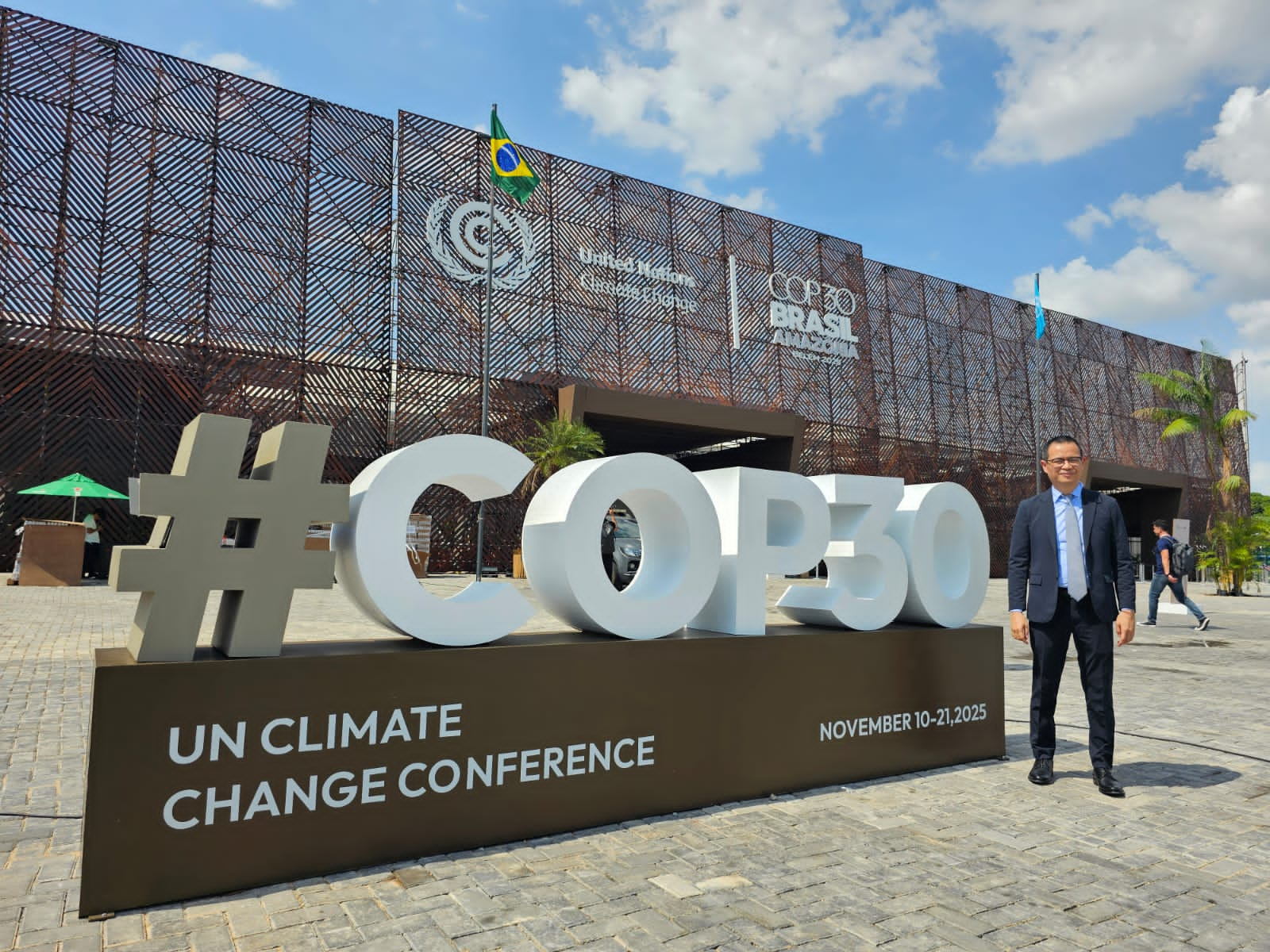
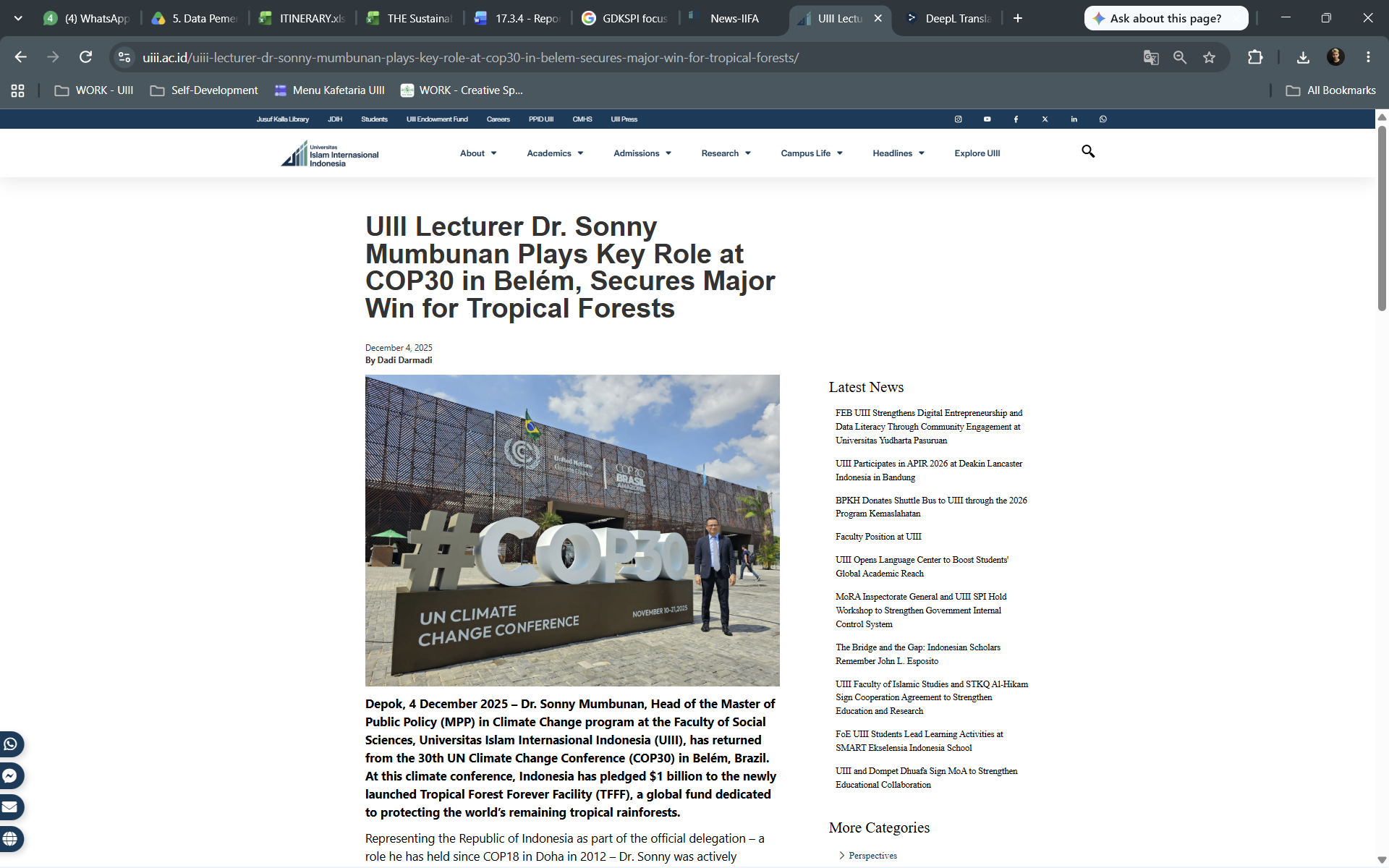
Image 3.2. Dr. Sonny Mumbunan at COP30, Belém. Source: UIII news, 4 December 2025.
3.4 Knowledge Partner to the DPR's BKSAP
On 19 May 2025 a BKSAP delegation led by its Chairman, Dr. Mardani Ali Sera, with members Ravindra Airlangga, Bramantyo Suwondo and Mohamad Sohibul Iman, Ph.D., visited UIII to seek policy perspectives for Indonesia's parliamentary diplomacy. UIII committed to serve as a strategic knowledge partner to BKSAP. The Dean of Social Sciences said UIII aims to be an active actor, not only an observer, supporting policymaking and negotiations through track 1.5 and track 2 diplomacy via IIFA. BKSAP named climate change, cyber security and the rule of law for artificial intelligence as topics for collaboration through its rotating working committees.
3.5 SDGs Relevance
The OJK role supports SDG 8 Decent Work and Economic Growth, Target 8.10 on access to financial services, and SDG 1 No Poverty through the development of Islamic social finance. The COP30 delegation role and the research on ecological fiscal transfers support SDG 13 Climate Action and SDG 15 Life on Land, Target 15.b on financing for sustainable forest management. The BKSAP partnership supports SDG 16 Peace, Justice and Strong Institutions, Target 16.7, and SDG 17 Partnerships for the Goals.
4. Further Supporting Evidence in 2025
The following activities also show UIII working with government and regional bodies on SDG-related policy in 2025. They support the three cases above.
| Date | Activity | Government or regional partner | UIII contribution | SDGs | Source |
|---|---|---|---|---|---|
| 11 Jun and 29–31 Oct 2025 | AICIS+ 2025, rebranded and aligned with national priorities (eco-theology, food and energy security, human capital); 2,434 submissions from 31 countries | Ministry of Religious Affairs, Director General of Islamic Education and Director of Islamic Higher Education | Host and organizing committee | 4, 13 | UIII |
| 16–18 Jul 2025 | International Conference on Religious Environmentalism | Minister of Religious Affairs and Minister of Primary and Secondary Education (keynotes); Embassy of the Netherlands; PPIM UIN Jakarta | Host, Faculty of Social Sciences | 4, 13 | UIII |
| 16 Jul–17 Dec 2025 | KOMITMEN climate-responsive economic policy programme: launch (16 Jul), Demak field study (19 Sep), policy dialogue with the International Growth Centre (11 Dec), Danantara study (17 Dec) | Capacity building for central and regional government officials; supported by ViriyaENB | Climate-responsive macro-fiscal framework; stranded-asset valuation (modelling future scenarios) | 7, 8, 13 | UIII |
| 24 Jul 2025 | Meeting with the Foreign Minister at the Ministry | Foreign Minister Sugiono; Director General for Asian, Pacific and African Affairs | Offered think-tank support and a database for international cooperation | 17 | UIII |
| 5 Aug 2025 | Visit of the Minister of Transmigration | Minister M. Iftitah Sulaiman Suryanagara; Director General of Economic Development and Community Empowerment | Offered doctoral research and climate expertise for transmigration areas | 8, 10, 11 | UIII |
| Nov 2025 | 7th World Indonesianists Congress, co-hosted with MoFA; Memorandum of Commitment with BSKLN (12 Nov) | Ministry of Foreign Affairs | Co-host; eight policy takeaways on South–South and triangular cooperation | 17 | UIII |
| 1–5 Dec 2025 | Seminar-Training for ASEAN Officials on interreligious and intercultural dialogue, Manila | ASEAN Institute for Peace and Reconciliation and KAICIID (intergovernmental); 24 participants, mostly government officials | COMPOSE Director Ridwan, Ph.D., as regional expert | 16 | UIII |
| May 2025 | Indonesian Collaborative Research Program (RKI 2025) on radicalism and intolerance in higher education | National research programme with 24 state universities | Research team, Faculty of Social Sciences | 4, 16 | UIII |
Table 4.1. Further supporting evidence of UIII's work with government and regional bodies on SDG-related policy, 2025.
5. Contribution to Indicator 17.2.1
The three cases show UIII's direct involvement in, and input into, national government SDG policy development in 2025, together with an independent international partner; the supporting evidence in Section 4 adds further examples. Each policy role named in the indicator is evidenced at least once.
| THE policy role | Evidence | Case / section |
|---|---|---|
| Identifying problems and challenges | Preliminary findings on the lack of a clear vision and the budget-absorption mindset in Indonesian aid (GDKSPI); problems identified in the four human fraternity panels; KOMITMEN field observations on coastal flooding in Demak (Section 4) | 1, 2, 4 |
| Developing policies and strategies | Input into the Grand Design of International Development Cooperation; policy commitments of the Jakarta Declaration; OJK Sharia Finance Development Committee; KOMITMEN climate-responsive macro-fiscal framework (Section 4) | 1, 2, 3, 4 |
| Modelling likely futures with and without interventions | KOMITMEN stranded-asset valuation method and study of Danantara's climate and sustainable-development effects (Section 4) | 4 |
| Monitoring and reporting on interventions | Analysis of Indonesia's ecological fiscal transfers for forest cover, presented by a member of Indonesia's COP30 delegation | 3 |
| Enabling adaptive management | IIFA policy dialogues with ministries; knowledge partnership with the DPR's BKSAP; IIHF as a continuing platform; training of ASEAN government officials (Section 4) | 1, 2, 3, 4 |
Table 5.1. THE policy roles evidenced by each case (1–3) and by the supporting evidence (Section 4).
References
- Indonesian Institute for Foreign Affairs (2025). IIFA Hosted the FGD on the Grand Design of International Development Cooperation. IIFA, UIII, 24 September 2025.
- UIII (2025). MoFA and Bappenas Gather Insights for Indonesia Aid Strategy at UIII. 23 September 2025.
- UIII (2025). Indonesian Institute for Human Fraternity Officially Launched as UIII-HCHF International Conference Kicks Off in Jakarta. 29 July 2025; and UIII-HCHF International Conference Concludes with 'Jakarta Declaration on Human Fraternity'. 30 July 2025.
- UIII (2025). Prof. Dian Masyita Joins Sharia Finance Development Committee as Key External Member. 4 June 2025.
- UIII (2025). UIII Commits to Support Indonesia's Inter-Parliamentary Cooperation as a Strategic Knowledge Partner. 20 May 2025.
- UIII (2025). UIII Launches KOMITMEN Initiative to Build Climate-Responsive Economic Policies. 17 July 2025.
- UIII (2025). UIII Lecturer Dr. Sonny Mumbunan Plays Key Role at COP30 in Belém, Secures Major Win for Tropical Forests. 4 December 2025.