

SDG 17 · Indicator 17.2.5
Collaboration with NGOs for SDGs: Research Programmes
UIII research partnerships with nongovernmental organisations in 2025
Collaborate with NGOs to tackle the SDGs through: student volunteering programmes, research programmes, or development of educational resources.
Universitas Islam Internasional Indonesia (UIII) advanced SDG-related research addressing climate change, sustainable livelihoods and inclusive education involving nongovernmental partners in 2025. The programmes connect UIII’s research expertise with partner resources and community knowledge to address climate change, sustainable livelihoods and inclusive education.
Climate-economics research toward a climate-responsive Indonesia and net zero emissions.
Research on community renewable energy and the role of Islamic microfinance in Gunungkidul.
Joint research on literacy teaching, children’s literature and inclusive learning.
1. KOMITMEN Climate Economics Research with ViriyaENB
Overview
KOMITMEN examines how physical climate risks and the transition towards a low-carbon economy affect Indonesia’s economic stability, public finances, businesses and communities. The programme brings together economic modelling, financial-risk analysis and research on institutions and public policy, connecting national macroeconomic policy with sectoral exposure and local adaptation challenges.
It has four connected areas of work: climate-responsive macroeconomic and fiscal frameworks; climate-related stranded assets; capacity for climate-economic analysis; and research-informed policy dialogue. Priority sectors include coal, palm oil, and climate-exposed land and property.
Partners and Institutional Roles
| Party | Role |
|---|---|
| UIII | Implementing institution; provides the interdisciplinary research team, conducts the programme and administers the grant. |
| ViriyaENB | Grant funding, programme oversight, monitoring, evaluation and learning (MEL), and facilitation of access to partner and government networks. |
| CSIS Indonesia | Independent non-profit policy research organisation; methodological discussion on climate-related macroeconomic modelling. |
Research Activities in 2025
Programme launch at UIII Depok campus with researchers, policymakers and partners, including ViriyaENB Executive Director Suzanty Sitorus. A research office was established for researchers, visiting fellows and policymakers.
Workshop with CSIS on modelling the economic effects of climate change — model selection, data limitations, transparent assumptions and integration of modelling approaches.
Shared MEL process developed with ViriyaENB to review progress, identify challenges and adjust programme delivery.
Dialogue with the International Growth Centre (IGC) on climate-responsive development, advanced modelling, stranded assets, financial risks and a just transition.
Discussion with Lestari Advisors on Indonesia’s sovereign wealth fund landscape and Danantara, linking investment governance with climate change.
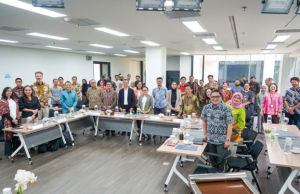
Figure 1.1. KOMITMEN launch at UIII in July 2025.
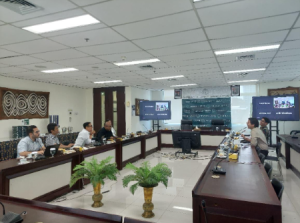 Figure 1.2. Methodological discussion with CSIS Indonesia on climate-related macroeconomic modelling.
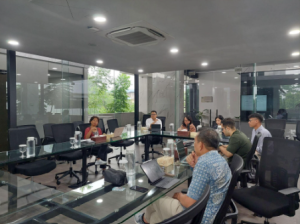 Figure 1.3. Monitoring, evaluation and learning activities involving KOMITMEN and ViriyaENB.
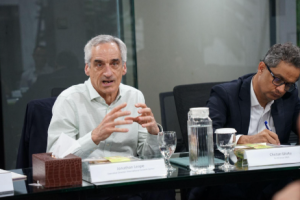 Figure 1.4. KOMITMEN dialogue with the International Growth Centre at UIII.
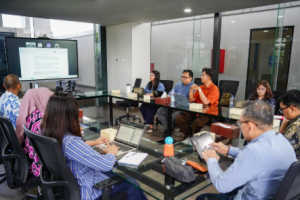 Figure 1.5. KOMITMEN discussion with Lestari Advisors.
Research Development and Outputs
The partnership initiated in 2025 developed into modelling reports, working papers, policy briefs and a capacity-building framework (some outputs are dated 2026):
- Macroeconomic and financial analysis — computable general equilibrium modelling of transition policy and carbon-tax scenarios, tracing effects on inflation, energy costs, public finances, corporate conditions and banking exposure.
- Stranded assets — analysis of 35 listed coal companies and 38 listed banks, plus frameworks for palm oil and climate-exposed land and property.
- Subnational climate policy — field research in Brebes, Pekalongan, Demak and East Kalimantan, and analysis of development plans from 60 districts and cities.
- Islamic climate finance — green sukuk, Islamic banking, zakat, waqf and Cash Waqf Linked Sukuk for renewable energy and community energy access.
| Research area | Associated outputs |
|---|---|
| Macroeconomic & financial climate risks | Report Modelling – Dampak Perubahan Iklim terhadap Perekonomian Indonesia, and accompanying policy brief |
| Economic & sustainable finance outlook | Economic Outlook 2026 – Navigating Global Fragmentation, Domestic Adjustment, and Climate Risk |
| Coal & banking exposure | Stranded Coal and Bank Fragility: Evidence from Indonesia |
| Regional climate policy | Perkembangan Kebijakan Tanggap Iklim di Daerah: Integrasi Isu Perubahan Iklim dalam Perencanaan Pembangunan |
| Palm oil transition risks | Stranded Assets in Indonesia’s Palm Oil Sector: A Method to Assess its Impacts on Indonesia’s Financial System |
| Land & property risks | Stranded Assets in Land Use: A Preliminary Research for Assessing the Property Sector and Climate-Driven Asset Devaluation |
| Islamic climate finance | Islamic Finance as an Alternative Climate Financing Mechanism: A Study Case Indonesia |
| Regional analytical capacity | Concept note for a capacity-building programme on regional public finance and climate change |
Research Exchange and Pathways to Application
KOMITMEN engages public institutions, researchers, financial-sector stakeholders and civil society, including discussions with Bank Indonesia and OJK on climate risks, carbon pricing, monetary policy and financial stability, alongside methodological exchange with CSIS and international dialogue with IGC.
SDGs Relevance
- SDG 13 — integrates physical and transition climate risks into economic analysis, fiscal planning and financial-risk assessment.
- SDG 8 — sustainable growth, sectoral adjustment, labour reallocation, reskilling and social protection.
- SDG 10 — distributional effects of climate risks across sectors, regions and vulnerable coastal communities.
- SDG 7 — Islamic financial instruments for renewable energy and community energy access.
- SDG 17 — sustained UIII–ViriyaENB partnership connecting academic analysis with civil-society expertise and policy practice.
2. Community Renewable Energy Research with Serikat Surya Handayani
Research Overview
UIII studied Serikat Surya Handayani, a community renewable energy initiative led by BMT Ummat, examining institutional roles, community benefits, success factors and challenges, and proposing a conceptual model to inform similar initiatives. UIII’s contribution comprised research design, field data collection, analysis and preparation of the research outputs.
Programme Background
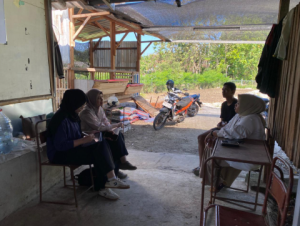
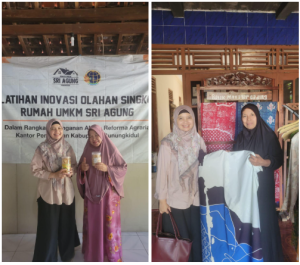
SSH was launched on 6 February 2022 at Graha BMT Ummat in Wonosari through collaboration between UGM’s Centre for People’s Economy Studies and Bank Indonesia. It connects solar electricity with productive activities — herbal-product processing, batik production, drinking-water services and agricultural irrigation — with drinking-water revenue intended to fund maintenance of the solar installations.
Research Findings
The study reports more reliable and affordable electricity for women-led microenterprises, solar-powered irrigation supporting approximately 14 farmers, and drinking-water profits supporting a weekly rice programme for around 80 low-income families. The researchers propose clearer monitoring, risk mitigation and technical maintenance arrangements, and a conceptual model connecting institutional capacity and social capital with programme governance.
Research outputs include a final report, a presentation and a manuscript on social capital and institutional roles in community renewable energy.
SDGs Relevance
- SDG 7 — Islamic microfinance and community institutions supporting access to solar energy.
- SDG 8 — reliable electricity sustaining microenterprise production and local employment.
- SDG 5 — income generation for women in batik and herbal-product enterprises.
- SDG 2 — solar irrigation and a community rice-distribution scheme.
- SDG 9 — integration of solar technology, microfinance and community-managed infrastructure.
- SDG 13 — reduced reliance on fossil-fuel-based electricity.
- SDG 17 — collaboration among community organisations, microfinance institutions, donors and technical partners.
3. Literacy Research with Yayasan Litara
Research Partners
| Researcher | Affiliation | Role |
|---|---|---|
| Tati Lathipatud Durriyah (Assoc. Prof. Tati D. Wardi) | UIII Faculty of Education | First and corresponding author |
| Sofie Dewayani | Yayasan Litara Bandung | Co-author from the NGO partner |
| Firman Parlindungan | Universitas Teuku Umar | Co-author from the partner university |
About Yayasan Litara
Yayasan Litara is a Bandung-based nonprofit literacy foundation that advances children’s literacy through quality books, teacher and community training, and literacy research. It also participates in the Indonesian SDG Book Club initiative organised by the United Nations in Indonesia.
Research Purpose, Methods and Findings
The study examines how Indonesian teachers exercise professional agency when integrating children’s literature into literacy instruction. Using an ecological framework, it explored three teachers in different school and regional settings through a focus group discussion, individual interviews and classroom observations.
Findings show how teachers use children’s literature to introduce gender equality, respect for differences and cultural diversity. Supportive school leadership, professional relationships and access to appropriate reading materials help teachers adapt instruction to students’ needs and local contexts. The publication is classified under SDG 4 in Scopus.
Research Continuity
The 2025 chapter builds on an earlier UIII-funded study, Indonesian literacy teachers’ efforts to integrate children’s literature in literacy classrooms (The Australian Journal of Language and Literacy, vol. 47, 2024), in which Sofie Dewayani of Yayasan Litara contributed to conception, design, data collection and manuscript preparation.
Related Literacy Collaboration in 2025
UIII and Yayasan Litara extended their partnership through Narratives for Change, a community writing initiative led by Assoc. Prof. Tati D. Wardi with Dr. Sofie Dewayani, supporting parents in developing children’s stories that promote tolerance, diversity and moderate values.
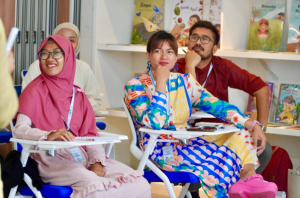
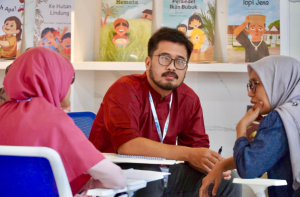
Figure 3.2. Discussion during the related literacy workshop.
SDGs Relevance
- SDG 4 — literacy instruction, teacher development and children’s literature for cultural understanding.
- SDG 5 — classroom discussions about gender roles.
- SDG 10 — diversity, respect for differences and inclusive learning.
- SDG 17 — UIII, Yayasan Litara and university partners collaborating on research design, data collection and publication.
Contribution to Indicator 17.2.5
Through KOMITMEN with ViriyaENB, community renewable energy research with Serikat Surya Handayani and BMT Ummat, and literacy research with Yayasan Litara, UIII demonstrates sustained research programmes with NGOs that tackle the SDGs — from climate-economic policy and community energy access to inclusive education.
References
- Yumna, A., and Wicaksono, T. Y. (2025). Understanding the Roles of Islamic Finance in the Community Based Renewable Energy Project: Case Study of Serikat Surya Handayani in Gunung Kidul, Yogyakarta. Final Report, Faculty of Economics and Business, UIII.
- Yumna, A., and Wicaksono, T. Y. Understanding the Roles of Islamic Microfinance in the Community-Based Renewable Energy Project: Case Study of Serikat Surya Handayani. Research presentation.
- Yumna, A., and Wicaksono, T. Y. Social Capital and Institutional Roles of a Microfinance Institution in Fostering the Development of the Community Renewable Energy Program: Evidence from a Rural Area of Indonesia. Research manuscript.
- Universitas Gadjah Mada (2022). UGM dan BI Optimalkan Pemanfaatan PLTS untuk UMKM dan Pertanian. Institutional news, 7 February 2022.
- Yayasan Rumah Energi. Modul 2: Model Kanvas Bisnis dan Rantai Pasok Koperasi Hijau. Training module.
- Scopus. UIII publication export, SDG 4. EID 2-s2.0-105012149714.
- Durriyah, T. L., Dewayani, S., and Parlindungan, F. (2025). Navigating Teacher Agency: Implementing an Innovative Literacy Teaching Model in Indonesian Classrooms. In Zainuddin, Z., Sumintono, B., and Perera, C. J. (eds.), Resilient and Sustainable Education Futures. Springer, Chapter 17, pp. 237–251.
- UIII Faculty of Education. Assoc. Prof. Tati D. Wardi, Ph.D. Official academic profile.
- Yayasan Litara. About Us. Institutional profile.
- Tambunan, S. M. G., Hapsarani, D., and Hakim, H. (2018). Going Beyond Celebratory Multiculturalism: Developing a Self-Reflective Children Story Project. Proceedings of CONAPLIN and ICOLLITE 2017, pp. 493–498.
- United Nations in Indonesia (2020). The United Nations in Indonesia publishes the SDG Book Club. Institutional news, 23 April 2020.
- Durriyah, Dewayani and Parlindungan (2025). Full text of the chapter, ResearchGate upload, 10 January 2026.
- Durriyah, T. L., Parlindungan, F., Dewayani, S., Silvhiany, S., and Amos, Y. (2024). Indonesian literacy teachers’ efforts to integrate children’s literature in literacy classrooms. The Australian Journal of Language and Literacy, 47, 161–179.
- UIII (2025). Stories That Shape Values: UIII Workshop Train Parents to Become Storytellers. Institutional news, 3 October 2025.
- Wicaksono, T. Y., and Artha, R. P. (2026). Stranded Coal and Bank Fragility: Evidence from Indonesia. 16 February 2026.
- Perkembangan Kebijakan Tanggap Iklim di Daerah: Integrasi Isu Perubahan Iklim dalam Perencanaan Pembangunan. Kertas Kerja No. 02/2026, July 2026.
- Islamic Finance as an Alternative Climate Financing Mechanism: A Study Case Indonesia.
- Stranded Assets in Indonesia’s Palm Oil Sector: A Method to Assess its Impacts on Indonesia’s Financial System. July 2026.
- Stranded Assets in Land Use: A Preliminary Research for Assessing the Property Sector and Climate-Driven Asset Devaluation.
- Policy Brief – Dampak Perubahan Iklim terhadap Perekonomian Indonesia. July 2026.
- Economic Outlook 2026 – Navigating Global Fragmentation, Domestic Adjustment, and Climate Risk.