

SDG 17 · Indicator 17.2.4
Collaboration for SDG Best Practice
International collaboration, comparative review and SDG practice recommendations
Through international collaboration and research, review comparative approaches and develop international best practice on tackling the SDGs.
Universitas Islam Internasional Indonesia (UIII) advances international collaboration to review approaches and develop research-informed recommendations for tackling the Sustainable Development Goals. Working with researchers, academic institutions and international organisations, UIII contributes to comparative analysis and knowledge exchange that connect scientific findings with policy and practice.
Across these collaborations, UIII contributes through research review, methodological supervision, scholarly publication and academic leadership. Their collective contribution is the development of transparent assessment methods and shared directions for action on climate change, food security, social inclusion and institutional cooperation.
Comparing emissions-allocation methods to assess national mitigation responsibilities and international support.
Comparing crop suitability across climate scenarios and evaluating alternative adaptation measures.
UIII–HCHF international conference culminating in the Jakarta Declaration on Human Fraternity.
1. Equitable Climate Commitments and International Mitigation Support
International Research Collaboration
UIII participated through Michiel Schaeffer in international research examining how equity principles can guide the assessment of national climate commitments. Schaeffer contributed to reviewing the research data and writing the manuscript, supporting the interpretation and communication of the comparative findings.
Comparative Research Approaches
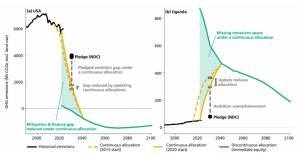
The study addresses how the starting point of an emissions-allocation pathway affects the evaluation of a country’s climate ambition. Conventional continuous pathways begin at observed national emissions and gradually move towards equity-based allocations — an assumption that can preserve advantages associated with high existing emissions. The collaboration compared these with discontinuous allocations that apply equity principles immediately, examining national emissions allowances, gaps between pledges and fair shares, and the balance between domestic mitigation and international support.
Findings and Contribution to International Practice
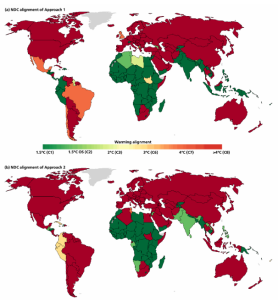
The comparison shows that repeatedly updating allocations from current emissions levels can reward past inaction. Applying equity principles directly makes historical responsibility and capability more visible in assessing national climate commitments. The research provides a transparent approach for comparing climate ambition across countries and contributes to improved practice in assessing equitable contributions to the Paris Agreement.
International Dissemination
Utrecht University communicated the findings through its research news release, Countries’ carbon budget math is broken (3 September 2025). The study was also presented in the programme and book of abstracts of the Overshoot Conference (30 September – 2 October 2025).
SDGs Relevance
- SDG 13 Climate Action — a method for assessing national mitigation commitments against equity-based global pathways.
- SDG 10 Reduced Inequalities — examines how methodological choices distribute obligations among countries with different historical responsibilities and capabilities.
- SDG 17 Partnerships for the Goals — combines international research expertise and examines how mitigation can be complemented by financial support and cooperation.
2. Climate Resilient Agriculture through Comparative Crop Suitability Research
International Research Collaboration
UIII participated through Michiel Schaeffer in an international study assessing how climate change affects crop suitability and how adaptation measures can alter projected outcomes. Schaeffer supervised and reviewed the methodology and results and participated in manuscript review.
Comparative Research Methods
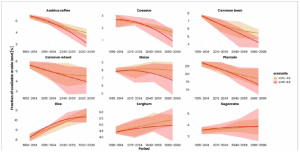
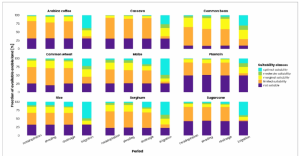
The team developed a climatic crop-suitability method combining temperature and precipitation through water-balance calculations, applied to nine crops — Arabica coffee, cassava, common beans, common wheat, maize, plantain, rice, sorghum and sugarcane — using five global climate models under SSP2-4.5 and SSP5-8.5, across four periods from 1995–2014 to 2080–2099. The study also compared projected suitability with and without irrigation, drainage and shading.
Findings and Adaptation Practice
The study identifies declining optimal suitability for several crops, including Arabica coffee, cassava, common beans, common wheat and plantain. Irrigation, drainage and shading can improve modelled suitability in different ways, providing a basis for comparing responses before selecting locally appropriate measures. The research contributes a transferable assessment approach that supports informed decisions about crop selection, agricultural investment and adaptation priorities.
Relevance to International Agricultural Planning
The International Coffee Organization’s Joint Committee document JC 12/25 (1 May 2025) cites the study in a proposed climate-change assessment for the coffee sector, describing a water-balance suitability approach for examining climate impacts and adaptation benefits across coffee-producing regions.
Research Dissemination and Accessibility
The accepted manuscript is available through UIII’s institutional repository, and the publisher version through Utrecht University’s repository. The article is also indexed in FAO AGRIS (entry dated 6 November 2025).
SDGs Relevance
- SDG 2 Zero Hunger — assesses climate-related risks to crop suitability and adaptation options for future production.
- SDG 13 Climate Action — assesses climate impacts under alternative scenarios and compares adaptation measures.
- SDG 15 Life on Land — recognises constraints on agricultural expansion into forests and protected areas.
- SDG 17 Partnerships for the Goals — brings together researchers and international agricultural and development institutions.
3. International Collaboration on Human Fraternity and SDG Practice
Purpose and Principal Outcomes
UIII and HCHF jointly convened the conference, bringing together international scholars, policymakers and civil-society practitioners to review research, policy approaches and practical experiences concerning displacement, social inclusion, media polarisation and climate justice. Participants examined approaches from different countries and formulated shared recommendations.
Partnership and UIII Contribution
UIII contributed academic leadership through panel moderators Nina Nurmila, Dian Masyita and Philips J. Vermonte, and through Farish A. Noor’s presentation on historical and contemporary representations of other communities.
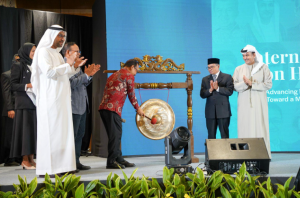
Image 3.1. Opening of the UIII–HCHF International Conference on Human Fraternity and launch of the Indonesian Institute for Human Fraternity, Jakarta, 29 July 2025. Photo: Achmad Jatnika.
Comparative Review of Media and Polarisation
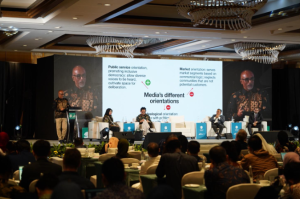
The media panel — with UIII’s Farish A. Noor, Cherian George (Hong Kong Baptist University), the Indonesian Press Council and TRENDS Global Offices — compared public-service, market-oriented and ideological media approaches, drawing on V-Dem polarisation data for India, the United States and Indonesia. Recommendations included treating hate speech as an organised campaign to be investigated, and community-centred reporting that highlights trust-building, such as interfaith cooperation examples from Ambon.
Review of Climate Financing Approaches
The climate panel reviewed blended finance, results-based finance and catalytic philanthropy, with practical experiences from mangrove and shrimp-production initiatives in Thailand, Malaysia and Indonesia, as well as agroforestry coffee, smallholder rubber and organic coconut sugar. Recommended approaches included financing that reaches frontline communities, locally owned programme design, transparency and capacity development. Faith-based climate initiatives, including a Green Guide for Hajj, were also reviewed.
Migration and Inclusive Institutions
Presentations reviewed humanitarian corridors as safe and legal pathways for displaced people across several European receiving countries, Azerbaijan’s multiculturalism model, and conditions for effective interfaith and intercultural collaboration.
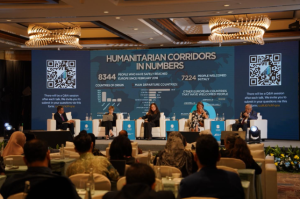
Image 3.3. Review of humanitarian corridor experiences and cross-country data on refugee reception, Jakarta, July 2025.
Collective Outputs
The Jakarta Declaration on Human Fraternity, adopted on 30 July 2025, established shared commitments concerning refugee solidarity, human rights, ethical communication and climate justice. The Indonesian Institute for Human Fraternity (IIHF) provides a platform for continuing interdisciplinary research, dialogue and evidence-based programmes.
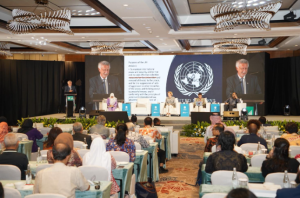
Image 3.4. Conference presentation addressing international peace, justice and collective action, Jakarta, July 2025.
SDGs Relevance
- SDG 4 — education for tolerance, cultural understanding and media literacy; language education for displaced populations.
- SDG 8 — livelihoods, smallholder activities and inclusive climate financing.
- SDG 10 — refugee solidarity, minority rights, representation and access to resources.
- SDG 13 — climate-financing mechanisms and environmental justice for vulnerable communities.
- SDG 16 — human rights, ethical journalism, accountability and inclusive institutions.
- SDG 17 — international academic and civil-society cooperation.
Contribution to Indicator 17.2.4
Together, these collaborations demonstrate how UIII engages in international collaboration and comparative review to develop best practice on the SDGs — from transparent methods for assessing equitable climate commitments, to transferable frameworks for agricultural adaptation, to shared recommendations through the Jakarta Declaration on Human Fraternity.
References
- Robiou du Pont, Y., Dekker, M., van Vuuren, D., and Schaeffer, M. (2025). Effect of discontinuous fair-share emissions allocations immediately based on equity. Nature Communications, 16, article 8020.
- Utrecht University (2025). Countries’ carbon budget math is broken. University research news, 3 September 2025.
- Overshoot Conference (2025). Book of Abstracts. 30 September – 2 October 2025.
- Mombo, V.-G., Duvallet, M., Schaeffer, M., and Baarsch, F. (2025). Have crops already reached peak suitability: assessing global climatic suitability decreases for crop cultivation. Environmental Research Letters, 20(3), article 034009.
- International Coffee Organization (2025). Proposed initiatives and mandatory reports. Joint Committee document JC 12/25, 1 May 2025.
- UIII Institutional Repository. Accepted manuscript of Mombo, Duvallet, Schaeffer and Baarsch (2025).
- FAO AGRIS. Bibliographic record for Mombo et al. (2025), entry dated 6 November 2025.
- UIII–HCHF. ICHF Updated Rundown. International Conference on Human Fraternity, Jakarta, 29–30 July 2025.
- UIII–HCHF. Minutes of Meeting, International Conference on Human Fraternity, Jakarta, 29–30 July 2025.
- UIII (2025). UIII-HCHF International Conference Concludes with Jakarta Declaration on Human Fraternity. Institutional news, 30 July 2025.
- UIII (2025). Indonesian Institute for Human Fraternity Officially Launched as UIII-HCHF International Conference Kicks Off in Jakarta. Institutional news, 29 July 2025.
- UIII–HCHF (2025). Jakarta Declaration on Human Fraternity. Adopted 30 July 2025.
- UIII (2025). UIII and Abu Dhabi’s HCHF to Host International Conference on Human Fraternity in Jakarta. Institutional news, 26 June 2025.
- George, C. To fight polarisation and hate, media must rethink assumptions about society. Conference presentation, Jakarta, July 2025.
- Ardiansyah, F. (2025). Unlocking Sustainable and Climate Financing: Catalysing Collaborative Solutions for Environmental Justice. Conference presentation, 30 July 2025.
- Martano, V. Building fraternity across the borders: migration, poverty alleviation and refugee solidarity. Conference presentation.
- Kunina, I. Intersections of civilizational heritage and rights discourse: Cultural policy and social equity in contemporary Azerbaijan. Conference presentation.
- Karam, A. Fraternity Alone Won’t Save Us: Why Collective Action Based on Rights and Justice Must Complete the Moral Equation. Conference presentation.